

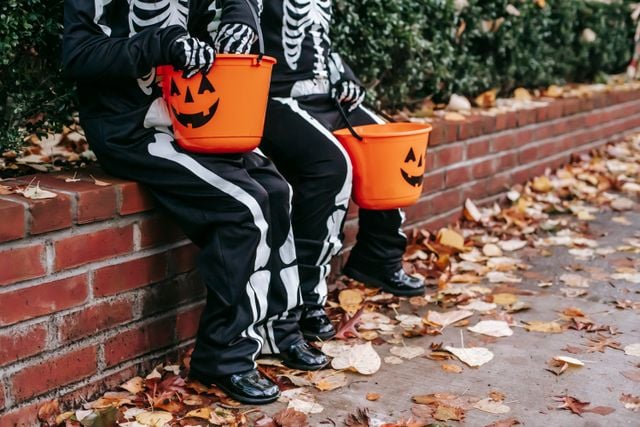
What do bonfires, nightmares, and skeletons have in common? Apart from being perfect for Halloween, their names have some surprisingly creepy origins. The word bonfire originally referred to a fire made with bones. The mare in nightmare wasn’t a horse, but a supernatural creature believed to sit on people’s chests while they slept. And skeleton comes from an ancient Greek word meaning “dried up.”
Even Halloween itself has a history that might surprise you. Long before October 31 became associated with costumes, candy, and pumpkin carving, its name referred to an important date in the Christian calendar.
These words are fascinating examples of etymology, the study of where words come from and how their meanings change over time. They also reveal something about the people who first used them: what they believed, what frightened them, and how they explained things they couldn’t understand.
So, before you put on your costume or head out trick-or-treating, let’s explore the hidden origins of Halloween words, from ancient religious traditions to the monsters and superstitions that have left their mark on the English language.
→Sign Up Now: Free Trial English Lesson With a Native Teacher!←
Where Does the Word Halloween Come From?
The word Halloween comes from All Hallows’ Eve, an old name for October 31, the evening before the Christian celebration of All Saints’ Day.
Over the centuries, the expression went through several changes. In Scottish English, All Hallows’ Even gradually became Hallowe’en, with the apostrophe marking the missing letters. Eventually, the apostrophe disappeared, leaving us with the familiar spelling Halloween.
This is an example of contraction, a linguistic process in which a word or expression becomes shorter. English is full of contractions, from everyday examples like don’t and can’t to older forms that have become words in their own right.
What’s particularly interesting about Halloween is that, although we now associate it with ghosts, witches, and monsters, its name originally had nothing to do with frightening people. In fact, it referred to something holy.
The Meaning of All Hallows’ Eve
To understand what All Hallows’ Eve means, we need to look at its individual parts.
- All: Refers to all the saints honored during the Christian celebration.
- Hallows: An old English word meaning “saints” or “holy people.” It comes from Old English halga, meaning a holy person.
- Eve: Means the evening or day before an important occasion, just as it does in Christmas Eve and New Year’s Eve.
Put everything together, and All Hallows’ Eve literally means the evening before All Saints’ Day, which falls on November 1.
Although we rarely use hallow as a noun today, the word hasn’t completely disappeared from English. You can still find a related form in the expression hallowed ground, meaning a place considered sacred or deeply respected. The verb hallow, meaning “to make holy,” also survives in religious language, including the phrase “hallowed be thy name” from the Lord’s Prayer.
This connection between Halloween, hallow, and holy is a reminder of how much English vocabulary has changed. A word that once referred to saints and religious observances is now the name of a holiday filled with plastic skeletons, scary movies, and trick-or-treating.
Halloween, Samhain, and the Holiday’s Celtic Roots
If Halloween is a Christian name, why do so many of its traditions involve spirits, supernatural creatures, and the dead?
Part of the answer lies in Samhain, an ancient Gaelic festival associated with the end of the harvest season and the beginning of winter.
The word Samhain comes from Irish, where it is traditionally associated with November and the beginning of the colder half of the year. In modern Irish, it is generally pronounced something like “SOW-in,” although pronunciation varies by dialect.
For communities in ancient Ireland, this seasonal transition carried considerable cultural importance. Samhain was associated with gatherings, feasting, and beliefs about supernatural beings. In Irish folklore, the period was also linked to the Aos Sí, otherworldly beings connected with the landscape and the fairy realm.
As Christianity spread through Ireland and Britain, older seasonal customs continued alongside Christian celebrations. All Saints’ Day eventually became firmly associated with November 1, placing All Hallows’ Eve on October 31. Over time, various religious, folkloric, and community traditions contributed to the holiday we recognize today.
However, there’s an important distinction: the word Halloween doesn’t come from Samhain. Its linguistic roots are Christian and English, even though some of the customs associated with the holiday have connections to older Gaelic traditions. Historians also debate how directly particular modern Halloween practices can be traced to ancient Samhain celebrations.
The two names offer an interesting glimpse into how languages preserve different aspects of cultural history. Samhain reflects an older Gaelic seasonal tradition, while Halloween preserves the English name of a Christian observance.
And as we’ll see, the history of Halloween vocabulary gets even stranger when we move beyond the holiday’s name and start looking at the words for its most recognizable symbols.
Jack-o’-Lantern Origins: From Irish Folklore to Halloween Pumpkins
It’s hard to imagine Halloween without glowing pumpkins. Every October, millions of people carve frightening faces into them, place candles or lights inside, and display them on their porches. But the original jack-o’-lanterns weren’t pumpkins at all. And even more surprisingly, the name didn’t originally refer to a carved vegetable.
The term jack-o’-lantern was used in English as early as the 17th century to describe mysterious, flickering lights sometimes seen over marshes, bogs, and other wet areas. These lights were also called will-o’-the-wisps, and people once believed they were supernatural beings trying to lead travelers astray.
Today, scientists generally explain these mysterious lights through natural phenomena associated with wetlands, although the precise causes of some reported sightings remain debated. Centuries ago, however, a glowing light moving through the darkness was much more likely to inspire a ghost story.
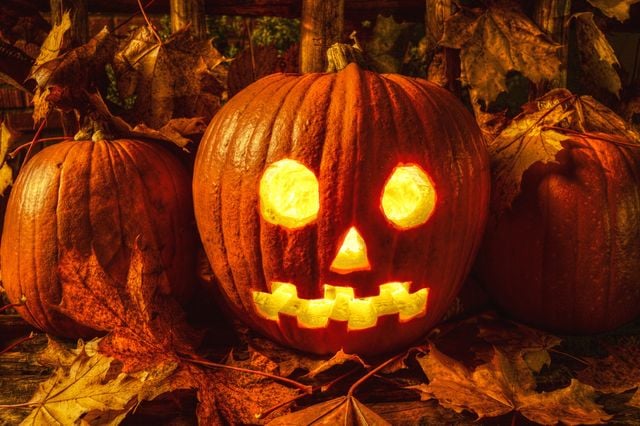
Why Is It Called a Jack-o’-Lantern?
The name jack-o’-lantern literally means “Jack of the lantern.” In older English, Jack was commonly used as a generic name for an ordinary man, particularly someone associated with a particular job or characteristic.
In this case, the name suggested a mysterious figure wandering around with a lantern. Similar expressions appeared in English folklore, including will-o’-the-wisp, which imagined a character named Will carrying a torch.
But the story most famously associated with jack-o’-lanterns comes from Ireland, where a legendary character known as Stingy Jack supposedly managed to outsmart the Devil.
According to one popular version of the folktale, Jack was a clever but dishonest man who tricked the Devil into promising not to claim his soul. When Jack eventually died, he was refused entry into Heaven because of his behavior. Unfortunately for Jack, the Devil also refused to let him into Hell.
Condemned to wander the earth forever, Jack was given a burning ember to light his way. He placed it inside a hollowed-out turnip, creating a makeshift lantern.
The wandering figure became known as Jack of the Lantern, or Jack-o’-Lantern.
Of course, this is folklore rather than a documented account of how the word was invented. The expression was already associated with mysterious lights, and the story of Stingy Jack became one of the traditional explanations for those lights and the lanterns that later carried his name.
It’s a wonderful example of how language and storytelling influence each other. A mysterious natural phenomenon receives a colorful name, people invent stories to explain it, and those stories help keep the expression alive for centuries.
The History of Carving Turnips and Pumpkins for Halloween
Long before pumpkins became the universal symbol of Halloween, people in Ireland and Scotland carved frightening faces into turnips, rutabagas, and other root vegetables.
They hollowed out the vegetables, carved openings for the eyes and mouth, and placed a candle or another source of light inside. These homemade lanterns were associated with Halloween customs and could be used to frighten others or evoke supernatural figures.
And if you’ve ever tried carving a raw turnip, you’ll understand why the tradition eventually changed!
When Irish and Scottish immigrants brought their Halloween customs to North America, they encountered pumpkins, which were abundant in the region and much easier to hollow out and carve.
Pumpkins also had a practical advantage: their large, rounded shape provided plenty of room for elaborate faces, while their bright orange color made them particularly striking when illuminated.
Over time, the pumpkin jack-o’-lantern became one of Halloween’s most recognizable decorations, particularly in the United States.
What’s fascinating from a linguistic perspective is that the name remained the same even though the object changed. A word that once described mysterious lights in the darkness eventually became associated with carved turnips, then with the glowing pumpkins we see every October.
Bonfire: The Surprising Origin of the Word Bone Fire
When you hear the word bonfire, you probably picture people gathered around a large outdoor fire, perhaps roasting marshmallows or enjoying a chilly autumn evening.
But the original meaning of bonfire was considerably less cozy.The word comes from Middle English bonefire, a combination of bone + fire. And yes, it meant exactly what it sounds like: a fire in which bones were burned.
In medieval England, large outdoor fires sometimes contained animal bones, which could be burned along with other materials. Early uses of the word specifically referred to these fires, rather than to the recreational bonfires we know today.
Over time, however, the meaning began to expand. By the 16th century, bonfire was also being used for large outdoor fires associated with celebrations and public gatherings, regardless of whether they contained bones.
Eventually, the original connection to bones faded from everyday use, and bonfire became the general term for a large open-air fire.This process is known as semantic broadening, which happens when a word’s meaning becomes more general than it originally was.
For example, the English word holiday developed from holy day, originally referring to religious observances. Today, it can describe vacations and celebrations that have no religious significance.
Something similar happened to bonfire. The word kept its familiar sound while gradually losing the specific meaning of its original components.
And although bonfires are often associated with Halloween, the word itself wasn’t invented for the holiday. Its connection to Halloween comes through the broader history of seasonal fires, celebrations, and autumn traditions.
Next time you’re enjoying a bonfire, you can impress your friends with a particularly unsettling piece of English vocabulary trivia: the word you’re using once described a fire fueled, at least in part, by bones.
Nightmare: The Supernatural Creature Behind the Word
Here’s a question you might never have considered: Why does the word nightmare contain the word mare?
If you’re picturing a frightened horse galloping through your dreams, you’re on the wrong track. The mare in nightmare has nothing to do with horses. Instead, it comes from an ancient Germanic word referring to a supernatural creature believed to torment people while they slept.
The English word nightmare is recorded from around the 13th century. Originally, it referred to an evil spirit that supposedly attacked sleeping people, particularly by causing frightening sensations of pressure or suffocation.
The word combines night with mare, a term related to Old English mære, which referred to a terrifying supernatural being.
Over the centuries, its meaning gradually changed. Instead of referring primarily to the creature believed to cause the experience, nightmare began describing the frightening experience itself. By the 19th century, it had acquired the familiar meaning of a disturbing or frightening dream.
Today, we also use nightmare figuratively to describe situations that are extremely unpleasant or difficult.
For example:
- The traffic on the way to the airport was a nightmare.
- Organizing the event turned into a logistical nightmare.
- I had a nightmare about missing an important exam.
None of these expressions requires the presence of an ancient demon. Nevertheless, the original supernatural meaning remains hidden inside the word every time we use it.
The Mare Demon in European Folklore
The idea of a supernatural being attacking sleepers wasn’t unique to England. Similar creatures appeared in folklore across Europe, particularly in Germanic and Slavic cultures.
The mare was often imagined as a spirit that entered people’s bedrooms at night and sat on their chests, making it difficult for them to move or breathe.
These traditions are especially interesting because related words survive in several European languages:
| Language | Word | Meaning |
| German | Nachtmahr | Nightmare; an older term associated with a night demon |
| Dutch | Nachtmerrie | Nightmare |
| Swedish | Mara | A supernatural being associated with nightmares |
| Polish | Zmora | A nightmare spirit in traditional folklore |
| French | Cauchemar | Nightmare |
The French example is particularly fascinating. The word cauchemar combines an element derived from an Old French verb meaning “to press” or “to trample” with mar, which is related to the Germanic supernatural creature.
In other words, both English nightmare and French cauchemar preserve the ancient belief that a terrifying being could physically press down on someone during sleep.
Today, experiences like these are often associated with sleep paralysis, a phenomenon in which a person becomes conscious while temporarily unable to move as they are falling asleep or waking up.
Some people experiencing sleep paralysis also report a feeling of pressure on their chest or the impression that someone else is present in the room. Without a scientific explanation, it’s easy to understand why earlier generations interpreted such experiences as supernatural attacks.
One of the most famous artistic representations of this belief is The Nightmare, painted by Henry Fuseli in 1781. It depicts a sleeping woman with a disturbing creature sitting on her chest, visually capturing the centuries-old association between nightmares and supernatural oppression.
The history of nightmare offers a remarkable example of how vocabulary can preserve ancient explanations for human experiences long after those explanations have been replaced.
We may no longer believe that a demon is responsible for a bad dream, but every time we use the word nightmare, we’re keeping a small piece of that folklore alive.
Ghost: Why Does This Halloween Word Have a Silent H?
Ghosts have been frightening people for centuries, but there’s something mysterious about the word ghost itself. Why does it contain an h that we never pronounce?
The answer has less to do with supernatural beliefs than with the history of English spelling. The word ghost comes from Old English gāst, which could mean “breath,” “spirit,” or “soul.” It was also used to describe supernatural beings, including both benevolent and malevolent spirits.
Over time, the word developed into the Middle English gost, which looks considerably closer to the modern English pronunciation.
So where did that extra h come from?The change is connected to the influence of Dutch and Flemish spelling conventions on early English printing.
When printing developed in England during the late 15th century, English spelling was far from standardized. Writers and printers regularly used different spellings for the same words, and foreign printing practices could influence how English words appeared on the page.
William Caxton, who introduced the printing press to England in the 1470s, had spent time in the Low Countries, where Dutch and Flemish were spoken. In Middle Dutch, the word for “spirit” was written gheest, with a gh at the beginning.
The spelling ghost appeared under this influence and gradually became established in English, particularly during the 16th century. The h didn’t represent a new sound. It was essentially a spelling addition that survived.
Interestingly, you can still recognize the word’s Germanic relatives in other modern languages:
| Language | Word | Meaning |
| English | Ghost | Spirit or apparition |
| German | Geist | Spirit, mind, or ghost |
| Dutch | Geest | Spirit, mind, or ghost |
Notice how closely these words resemble one another, even though their spelling and meanings have developed somewhat differently.
This is one of the fascinating things about English: not every unusual spelling reflects the way a word was originally pronounced. Sometimes, letters survive because of historical contact between languages.
And in the case of ghost, a spelling convention influenced by printers working with Continental European languages helped give us the Halloween word we recognize today.
Skeleton: From an Ancient Greek Word to a Halloween Symbol
Skeletons are everywhere at Halloween, from plastic decorations hanging on front doors to glow-in-the-dark costumes. But the word skeleton has an origin that’s surprisingly literal.
It comes from the ancient Greek word skeletós, meaning “dried up” or “dried out.”
The word is related to the Greek verb skéllein, meaning “to dry up” or “to parch.” In ancient Greek, the expression skeletòn sôma referred to a dried-up body, such as a mummy.
The term eventually passed into Latin as sceleton and entered English during the 16th century, when it began to be used for the bones that form the framework of the human or animal body.
So, while we now think of skeletons as collections of bones, the original Greek expression described something that had dried out.
What’s particularly interesting is that other European languages borrowed versions of the same word. For example:
- Spanish: Esqueleto
- French: Squelette
- Italian: Scheletro
- German: Skelett
- Portuguese: Esqueleto
Although the spelling and pronunciation vary, these words all preserve a recognizable connection to the same Greek origin.
But the story doesn’t end with anatomy. Over time, skeleton also developed several figurative meanings in English.
Think about the expression skeleton crew, which describes the minimum number of people needed to keep an organization or operation running. The idea is that only the essential framework remains, just as a skeleton provides the basic structure of a body.
Similarly, a skeleton outline contains only the most important points of a plan or document, without the additional details.
And then there’s the wonderfully spooky expression “a skeleton in the closet,” which refers to an embarrassing or unpleasant secret that someone wants to keep hidden.
For example, if someone says, “Every family has a few skeletons in the closet,” they mean that most families have secrets they’d rather not discuss.
This idiom became established during the 19th century, when the image of a concealed skeleton provided a memorable metaphor for something disturbing hidden from public view.
From a dried-up body in ancient Greece to a Halloween decoration and a metaphor for family secrets, skeleton shows just how far a word can travel, both geographically and figuratively.
More Halloween Words With Surprising Origins
So far, we’ve seen how Halloween vocabulary can preserve ancient religious traditions, supernatural beliefs, and even historical spelling conventions. But English also has plenty of spooky words that originated in other languages.
Some have been part of English for more than a thousand years. Others arrived much more recently, carried by folklore, literature, migration, and popular culture.
Let’s look at four familiar Halloween creatures whose names reveal some particularly interesting linguistic connections.
Witch: The Old English Origins of a Halloween Icon
Pointed hats, broomsticks, bubbling cauldrons, and black cats. The modern Halloween witch has a very recognizable appearance, but the word witch is much older than most of these familiar images.
It comes from Old English, which had two related words:
- Wicce: A female practitioner of magic or sorcery.
- Wicca: A male practitioner of magic or sorcery.
Both were associated with the Old English verb wiccian, meaning “to practice witchcraft.”
Over time, the words developed into the Middle English wicche, which could refer to practitioners of magic of either sex. Eventually, the modern spelling witch became established.
One interesting detail is that the word wasn’t originally exclusive to women. Although witch became overwhelmingly associated with female figures, particularly during the early modern period, the earlier English vocabulary included both masculine and feminine forms.
The deeper linguistic origin of wicce and wicca remains uncertain. Linguists have proposed several explanations, including connections to other Germanic words associated with magic, divination, or supernatural knowledge, but no single theory is universally accepted.
The meaning of witch also changed as European attitudes toward magic evolved.
During the medieval and early modern periods, accusations of witchcraft became closely associated with fears about supernatural harm, religious conflict, and supposed dealings with the Devil. These associations influenced how witches appeared in popular stories and eventually helped shape the frightening image that became familiar in Halloween decorations.
There’s another linguistic connection worth mentioning: Wicca, the name of a modern Pagan religion, draws on the Old English word wicca. However, modern Wicca developed during the 20th century and shouldn’t be confused with the historical meanings of the medieval word.
So, while today’s Halloween witches usually wear pointed hats and ride broomsticks, their name has a much longer and more complicated history involving language, religion, and changing beliefs about magic.
Vampire: A Word With Slavic Roots
Few Halloween monsters are as recognizable as the vampire. From Dracula‘s elegant black cape to the romantic vampires of modern television, these blood-drinking creatures have become an enormous part of popular culture.
But the word vampire didn’t originate in English. It entered the language during the 18th century, largely through reports of supposed vampire sightings and supernatural events in Eastern and Central Europe.
The English term was influenced by words such as German Vampir and French vampire, which were themselves connected to Slavic forms, including Serbian vampir.
Related words also appear in several Slavic languages, although their precise historical relationships and the ultimate origin of the term are still debated.
English speakers became particularly interested in vampires during the 1720s and 1730s, when reports circulated about bodies supposedly returning from the dead in parts of southeastern Europe. These accounts helped introduce the word and the associated folklore to a wider Western European audience.
However, the vampires described in traditional folklore weren’t always the charming, sophisticated figures we know from modern fiction. They were frequently imagined as disturbing corpses that returned from their graves to harm the living.
The vampire’s transformation into a fashionable, aristocratic figure happened largely through literature.One of the most influential examples is Dracula, published by Bram Stoker in 1897. Although Stoker didn’t invent the vampire, his novel helped establish many of the characteristics that later became standard in vampire fiction.
And there’s another interesting linguistic detail. In modern English, vampire can also describe someone who exploits others, particularly by draining their energy or resources.
This figurative meaning reflects the same idea that made the supernatural creature frightening in the first place: taking something essential from another person.
Zombie: From Haitian Creole to Hollywood Horror
When most people hear the word zombie, they imagine a decaying corpse wandering through abandoned streets, usually in search of human brains.
But the modern movie zombie is quite different from the figure that originally helped bring the term into English-speaking popular culture.
The word is closely associated with Haitian Creole zonbi, and its deeper linguistic history is generally traced to African languages, although scholars disagree about the precise route by which it developed.
Possible connections include Kikongo words such as zumbi, associated with spirits, and related terms found in Central and West African linguistic traditions.
These connections reflect the history of Haiti, where enslaved Africans brought languages, religious practices, and cultural traditions that contributed to the development of Haitian Creole and Haitian Vodou.
In Haitian traditions, a zonbi is not necessarily a flesh-eating monster. The term has been associated with a person deprived of independent will or brought under another person’s supernatural control, as well as with concepts involving spirits and the dead.
These beliefs are culturally distinct from the fictional zombie apocalypse scenarios familiar to contemporary audiences.
The word became increasingly familiar to English-speaking readers during the early 20th century, particularly through sensationalized accounts of Haitian culture.
One influential book was The Magic Island, published by William Seabrook in 1929. Its descriptions of Haitian beliefs, although shaped by the author’s outsider perspective, helped popularize the idea of zombies in the United States.
Hollywood quickly became interested.The 1932 film White Zombie presented zombies as people controlled by a sinister figure. Later films transformed them into the independent, flesh-eating undead, particularly after Night of the Living Dead helped establish the modern zombie genre.
What’s remarkable is how dramatically the meaning changed as the word moved between cultures. A term rooted in Haitian cultural and religious traditions eventually became the name of one of Hollywood’s most recognizable monsters.
Today, English speakers even use zombie figuratively to describe someone who is exhausted, distracted, or moving without much energy. For example, “I only slept three hours last night, so I’ve been walking around like a zombie all day.”
The linguistic journey of zombie is a reminder that borrowing a word doesn’t necessarily mean preserving its original meaning. Sometimes, the new culture transforms it almost beyond recognition.
Ghoul: The Arabic Origins of a Horror Movie Monster
The word ghoul sounds perfectly at home in an English-language horror story. But its origins take us to Arabic folklore, where supernatural beings were imagined haunting lonely places and threatening unsuspecting travelers.
The English word comes from Arabic ghūl (غول), referring to a frightening supernatural creature. The term is connected to the Arabic root gh-w-l, associated with ideas of seizing, destroying, or overwhelming someone.
In traditional Arabic folklore, the ghūl was often depicted as a dangerous being that could change its appearance, deceive travelers, and lure people into isolated or dangerous places.
Some accounts also associated ghouls with graveyards and the consumption of human flesh.
The word entered English during the late 18th century, partly through European literary works inspired by stories from the Middle East.
One early appearance was in the English translation of Vathek, a Gothic novel by William Beckford published in English in 1786.
As the term became familiar to English speakers, its meaning gradually broadened.In Western horror literature and popular culture, ghouls became creatures strongly associated with cemeteries, corpses, and feeding on the dead. The modern English image often emphasizes these gruesome characteristics more than the shape-shifting abilities found in some older Arabic traditions.
The word also developed a figurative meaning.Today, a ghoul can describe someone who takes an unhealthy or disturbing interest in death, suffering, or other people’s misfortunes.
Similarly, the adjective ghoulish can describe behavior that seems morbid or disturbingly insensitive. For example, “The reporter’s ghoulish fascination with the crime scene made everyone uncomfortable.”
And here’s a final linguistic connection: the Arabic word ghūl also appears in the name Algol, a star traditionally known as the Demon Star. The name comes from Arabic raʾs al-ghūl, meaning “the head of the ghoul” or “the demon’s head.”
It’s a fascinating example of how a word associated with ancient supernatural fears can leave its mark on literature, everyday English, and even astronomy.
Halloween Monsters Around the World and the Meaning Behind Their Names
Not every culture celebrates Halloween, but almost every culture has stories about frightening creatures, restless spirits, and mysterious beings that appear when the sun goes down.
And just like vampire, zombie, and ghoul, the names of these creatures often tell us something about the languages and beliefs of the people who imagined them.
From Ireland’s wailing spirits to Japan’s shape-shifting creatures, let’s meet a few legendary beings whose names have fascinating linguistic histories.
Banshee: The Irish Meaning of Bean Sí
The word banshee comes from the Irish expression bean sí, which can be translated as “fairy woman” or, more literally, “woman of the fairy mound.”
The name combines bean (“woman”) with sí, a word connected to the supernatural fairy world of Irish tradition. Its older form, síd, referred to a mound or hill associated with otherworldly beings.
In Irish folklore, a banshee is a female spirit whose mournful cries are believed to announce an approaching death, usually within a particular family. Rather than causing the death herself, she traditionally acts as a supernatural messenger.
Her appearance varies between stories. Sometimes she’s described as a beautiful woman with long hair, while other accounts portray her as an elderly figure dressed in gray or white.
The word also survives in the English expression “to scream like a banshee,” which describes someone screaming or wailing very loudly.
For example: “The kids were screaming like banshees on the roller coaster.”
This is a wonderful example of a word borrowed from Irish folklore that has become part of everyday English, even among speakers who know very little about the original legend.
La Llorona: The Meaning of Mexico’s Weeping Woman
One of Mexico’s most famous supernatural figures has a name that’s easy to understand if you speak Spanish.
La Llorona means “the Weeping Woman.” The name comes from the Spanish verb llorar (“to cry” or “to weep”), while llorona describes a woman who cries frequently or intensely.
According to the most familiar versions of the legend, La Llorona is the ghost of a woman who wanders near rivers and other bodies of water, mourning the loss of her children.
Some versions say she drowned them herself, while others describe different circumstances surrounding their deaths. The details vary considerably across Mexico and other parts of Latin America.
Her most recognizable cry is ¡Ay, mis hijos! (“Oh, my children!”), which echoes through the night as she searches for them.
What makes the name particularly interesting is that it’s a description rather than a personal name. We aren’t told who the woman originally was. Instead, she’s identified by the action that defines her story: weeping.
And unlike some folkloric names whose meanings have become obscure over time, La Llorona remains immediately understandable to Spanish speakers today.
Yōkai: The Meaning Behind Japan’s Supernatural Creatures
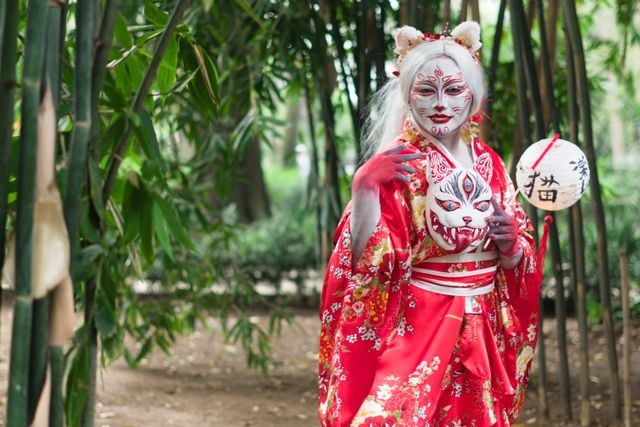
Japan has an extraordinarily rich tradition of supernatural storytelling, and many of its strangest creatures belong to a category known as yōkai (妖怪).
The term combines two Japanese characters: 妖 (yō), associated with the mysterious or uncanny, and 怪 (kai), meaning something strange or unusual.
Together, they’re commonly understood as referring to strange or supernatural phenomena and beings.
But yōkai doesn’t describe one particular type of monster. It’s a broad category that includes spirits, shape-shifting animals, mysterious apparitions, and other creatures that don’t fit neatly into Western ideas of ghosts or demons.
For example, a kappa (河童) is a water-dwelling creature often depicted with a turtle-like shell and a water-filled hollow on its head. Its name combines characters associated with “river” and “child.”
Another famous example is the kitsune (狐), the Japanese word for “fox.” In traditional folklore, foxes may possess supernatural powers, including the ability to transform into human beings.
Some yōkai are frightening, while others are mischievous, protective, or even helpful. That’s why translating yōkai simply as “monster” doesn’t quite capture the full meaning.
It’s also a good example of why learning a language involves understanding cultural categories that don’t always have exact equivalents in English.
Baba Yaga: The Name Behind the Slavic Witch
Deep in the forests of Slavic folklore lives one of Europe’s most memorable supernatural figures: Baba Yaga, an elderly witch often described as living in a hut that stands on chicken legs.
Her name appears in various Slavic languages, including Russian, where it’s written Баба-яга.
The first part, baba, is relatively easy to explain. In several Slavic languages, it means “grandmother,” “old woman,” or simply “woman,” depending on the language and context.
The second part, Yaga, is much more mysterious.Linguists have proposed connections to older Slavic words associated with fear, anger, pain, and supernatural beings, but its precise etymology remains uncertain. So, although Baba Yaga is sometimes loosely interpreted as “Grandmother Yaga,” the full meaning of her name isn’t firmly established.
The stories themselves are just as unpredictable. Baba Yaga sometimes threatens to eat unfortunate travelers, particularly children, but in other tales she provides magical objects, information, or assistance to a deserving hero.
She’s also famous for traveling through the air in a large mortar, propelling herself with a pestle and sometimes sweeping away her tracks with a broom.
Unlike the relatively standardized witches of modern Halloween imagery, Baba Yaga can be an enemy, a helper, or something in between. Her name and stories have survived for generations because she remains such a fascinating and unpredictable character.
Aswang and Saci: Supernatural Creatures From the Philippines and Brazil
Our final two creatures come from opposite sides of the world, and both demonstrate how folklore can preserve linguistic traditions that are much older than modern national cultures.
In the Philippines, the term aswang refers to a variety of frightening supernatural beings, rather than one creature with a single appearance.
Depending on the region and the story, an aswang might be described as a shape-shifter, a witch-like figure, a vampire-like predator, or a creature that feeds on human flesh.
The word appears in several Philippine languages, including Tagalog and Cebuano, with related forms found across the region.
Its precise etymology remains unresolved, although the term has deep roots in Philippine linguistic and folkloric traditions. Researchers have proposed various explanations, but there isn’t enough evidence to establish one definitive origin.
What’s particularly interesting is that aswang functions as an umbrella term. Just as the Japanese word yōkai covers many kinds of supernatural beings, aswang can refer to different creatures whose characteristics vary from one community to another.
Brazil’s Saci, also known as Saci-Pererê, is a very different kind of supernatural figure.
Usually depicted as a one-legged boy wearing a magical red cap, Saci is famous for playing tricks, hiding objects, frightening animals, and creating small whirlwinds.
His name has roots in Indigenous Brazilian languages, particularly Tupi linguistic traditions. One commonly cited explanation connects Saci with sa’si, a name associated with a bird, while Pererê has been linked to words suggesting hopping or jumping.
The precise historical development of these forms is complicated, but the name preserves a connection to the Indigenous traditions in which the character’s story developed.
Over time, the legend incorporated influences from African and European traditions as it spread throughout Brazil. The familiar figure wearing a red cap and smoking a pipe reflects this long process of cultural exchange.
And although Saci can certainly be frightening in some versions of the story, he’s more often remembered as a mischievous trickster than a truly evil monster.
His story provides a fitting conclusion to our journey through international folklore. From the Irish banshee to the Brazilian Saci, the names of legendary creatures offer clues about the languages, histories, and cultural traditions that shaped them.
Just as importantly, they remind us that translating a supernatural creature’s name is only the beginning. Understanding what that creature represents often requires knowing something about the people who have been telling its stories for generations.
Discover the Stories Behind Words With Language Trainers
The history of Halloween vocabulary shows us that words are much more than definitions in a dictionary. They carry centuries of stories, beliefs, and cultural traditions, from the supernatural creatures of Irish folklore to the ancient Greek origins of words we use every day.
And the more you learn about another language, the more fascinating these connections become. Understanding why Germans talk about corpses in cellars, why Japanese folklore has so many different types of yōkai, or what a Spanish expression means beyond its literal translation gives you a much richer understanding of how people communicate.
That’s where learning with a native-speaking teacher can make a real difference. At Language Trainers, our personalized, face-to-face language lessons help you explore the vocabulary, idioms, cultural references, and everyday expressions that textbooks don’t always explain. Whether you’re interested in Spanish, French, German, Japanese, or another language, your teacher can tailor each lesson to your interests, goals, and learning pace.
Ready to discover the stories behind a new language? Explore our personalized language courses and start learning with a native-speaking teacher who can help you understand not just what words mean, but how people actually use them.
→Sign Up Now: Free Trial English Lesson With a Native Teacher!←
FAQs About Halloween Words and Their Origins
1. What Is the Oldest Halloween Word?
It’s difficult to identify one definitive oldest Halloween word because many existed long before they became associated with the holiday. Words such as ghost and witch have roots in Old English, while skeleton ultimately derives from ancient Greek. The important distinction is that the age of a word doesn’t necessarily tell us how long it has been connected to Halloween. Some of the oldest words in our modern Halloween vocabulary originally had completely different cultural associations.
2. Is Halloween an Irish or Scottish Word?
The word Halloween developed from the English expression All Hallows’ Eve, with the shortened form Hallowe’en becoming particularly established in Scottish usage. However, many Halloween traditions have strong historical connections to Ireland and Scotland, including customs associated with the Gaelic festival of Samhain. So, while the name developed through English and Scottish linguistic traditions, the holiday’s cultural history includes important Irish and Scottish influences.
3. What Does Samhain Mean in English?
Samhain is an Irish word associated with November and the beginning of winter, traditionally marking the transition from the harvest season into the colder part of the year. It’s often pronounced approximately “SOW-in” in English, although the pronunciation varies across Irish dialects. The ancient festival of Samhain was an important seasonal celebration in Gaelic culture and is frequently discussed in connection with the historical development of Halloween.
4. Why Are Witches, Ghosts, and Skeletons Associated With Halloween?
Witches, ghosts, and skeletons became associated with Halloween through a combination of religious traditions, folklore, and popular culture. Halloween falls immediately before All Saints’ Day and All Souls’ Day, which are associated with remembering the dead in Christian traditions. Older beliefs about spirits and supernatural beings, along with centuries of ghost stories and later influences from Gothic literature, horror films, and Halloween decorations, helped establish these figures as familiar symbols of the holiday.
5. Which Halloween Words Come From Other Languages?
Many familiar Halloween words have origins outside English. Vampire entered English through European languages and is ultimately connected to Slavic vocabulary, while zombie comes through Haitian Creole and has deeper African linguistic connections. Ghoul derives from Arabic ghūl, and banshee comes from the Irish expression bean sí, meaning “fairy woman.” The Japanese word yōkai, meanwhile, refers to a broad category of supernatural beings and phenomena. These examples show how English has borrowed words from other cultures to describe creatures and concepts that have become part of its own supernatural vocabulary.