

Arabic is not just one simple, uniform form that everyone uses in the same way everywhere. It is a rich language family of formal and spoken varieties, shaped by history, geography, religion, and migration. There is Modern Standard Arabic, often called MSA or fuṣḥā, which is used in writing, education, news, formal speeches, and many professional or academic settings. There is Classical Arabic, which learners often meet through religious texts and older literature. And then there are the many spoken dialects people use in daily life, from Lebanese and Egyptian to Gulf, Iraqi, Moroccan Arabic, Sudanese, Yemeni, and many more.
This is why choosing Arabic is not only a language decision. It is a life decision. Do you want to speak with your grandparents? Travel through Jordan? Understand Egyptian films? Read the Qur’an? Work in the Gulf? Connect with Lebanese culture? Follow Arabic news? Each of these goals may lead you toward a different balance of formal Arabic and spoken Arabic.
In my own teaching, I do not begin by asking students to choose between “right Arabic” and “wrong Arabic.” I ask a much more useful question: What do you want to be able to do with Arabic? Once we understand that, we can decide whether your first step should be Modern Standard Arabic, a spoken dialect, or a personalized combination of both.
→Sign Up Now: Free Trial Arabic Lesson With a Native Teacher!←
Modern Standard Arabic vs Arabic Dialects
One of the first things Arabic learners need to understand is the difference between Modern Standard Arabic and the spoken dialects. This distinction can feel confusing at first, but it becomes much clearer when we think about where each form of Arabic lives.
Modern Standard Arabic, or MSA, is the formal standard used across the Arabic-speaking world. You will see it in books, newspapers, official documents, school materials, subtitles, news broadcasts, public signs, and formal speeches. It is the Arabic of writing, education, journalism, public communication, and many academic and professional contexts. If you want to read Arabic confidently, follow the news, study literature, write formal emails, understand official announcements, or build a strong foundation in grammar and vocabulary, MSA is extremely valuable.
Spoken dialects, on the other hand, are the Arabic people use naturally in everyday life. This is the Arabic you hear at home, in cafés, in taxis, in markets, between friends, in family conversations, in many songs, in TV series, on social media, and in spontaneous speech. If you are in Beirut, Cairo, Amman, Casablanca, Dubai, Baghdad, or Khartoum, people will not usually speak to each other in full formal MSA while ordering coffee or joking with a friend. They will use their local spoken Arabic.
This does not mean that MSA is “real Arabic” and dialects are somehow less important. It also does not mean that dialects are casual mistakes or broken versions of the language. Arabic dialects are living, expressive, structured ways of speaking. They carry identity, humor, emotion, family history, local culture, and daily life. A Lebanese grandmother, an Egyptian taxi driver, a Moroccan shopkeeper, and a Gulf business colleague may all be using Arabic, but the Arabic they use in conversation will not sound exactly the same.
A simple way to think about it is this: MSA helps you access Arabic across countries in formal and written contexts; dialect helps you connect with people in natural spoken contexts. Most learners eventually benefit from understanding both, but the order and balance depend on the learner’s purpose.
For example, if a student wants to read Arabic literature or work with formal documents, MSA needs to be a major part of the course. If another student wants to visit Lebanon and speak with relatives, Levantine Arabic should probably be central from the beginning. If someone is moving to the UAE for work, we may need a mixture: MSA for formal reading and broader understanding, and a Gulf variety for daily interactions and workplace relationships.
This is why I never present MSA and dialect as enemies. They are different tools. The real question is not, “Which one is better?” The real question is, “Which one serves your goal right now?”
Should You Learn Modern Standard Arabic or a Dialect First?
There is no single answer that works for every Arabic learner. Some students should begin with Modern Standard Arabic. Others should begin with a spoken dialect. Many students need a combination from the start.
If your goals are connected to reading, writing, formal communication, academic study, literature, media, or long-term language foundations, then Modern Standard Arabic is often a very strong starting point. MSA gives you access to a shared formal language that is recognized across the Arabic-speaking world. It helps you understand grammar, roots, sentence structure, formal vocabulary, and written Arabic. For learners who want to study Arabic seriously over time, this foundation can be very powerful.
But if your main goal is to speak with people in everyday situations, starting only with MSA may feel frustrating. Imagine you study formal Arabic for months, then travel to Lebanon, Egypt, Morocco, or the Gulf and realize that the conversations around you sound very different from your textbook. You may know useful grammar and vocabulary, but still struggle to order food, understand a joke, follow a casual conversation, or respond naturally when someone asks how you are.
For that kind of learner, a spoken dialect may be the better first step. If you are learning Arabic to speak with family, travel to a specific country, connect with a partner’s relatives, make Arabic-speaking friends, or feel comfortable in daily life, then the dialect of that community matters. A learner preparing for a trip to Lebanon, for example, will need much more Levantine Arabic for listening and conversation, while still learning some MSA for signs, written information, and broader comprehension.
For work, the answer depends on the professional environment. If you work with formal documents, education, journalism, diplomacy, reports, presentations, or cross-regional communication, MSA may need to be central. If you work with colleagues, clients, or communities from one specific region, the relevant dialect can help you build relationships and understand the way people actually speak.
For religion, I would also ask a clarifying question. Does the learner want to understand the Qur’an, prayers, classical vocabulary, or religious texts? Then Classical Arabic and formal Arabic foundations are important. But if the learner also wants to communicate with Arabic-speaking communities, a modern spoken dialect may still be needed.
This is why my favorite teaching question is always: What do you want to be able to do with Arabic? The answer determines the learning path. One student may need 70% spoken Arabic and 30% MSA. Another may need 70% MSA and 30% spoken Arabic. And that balance does not have to stay fixed forever. As the learner’s confidence grows, their needs may change, and the course should change with them.
I do not believe in forcing every learner into the same Arabic journey. The goal is not to choose the Arabic that sounds most impressive online. The goal is to build the Arabic that opens the doors you actually want to walk through.
What Are the Main Arabic Dialects?
The main Arabic dialects learners usually hear about are Egyptian Arabic, Levantine Arabic, Gulf Arabic, Iraqi Arabic, Maghrebi or North African Arabic, Sudanese Arabic, and Yemeni Arabic. These are broad regional groupings, not perfectly fixed categories, and each one includes internal variation. So when a learner says, “I want to learn Egyptian,” “I want to learn Levantine,” or “I want to learn Gulf Arabic,” that is a very useful starting point, but it is still only the beginning of the conversation.
For example, Levantine Arabic usually refers to the varieties spoken in Lebanon, Syria, Jordan, and Palestine, but Lebanese Arabic is not exactly the same as Syrian, Jordanian, or Palestinian Arabic. Gulf Arabic can refer to varieties connected to Saudi Arabia, Kuwait, Qatar, Bahrain, the UAE, and Oman, but those varieties are not identical either. Even inside one country, speech can change from city to city, village to village, and between different communities.
This is something researchers also point out. In A Novel Dialect-Aware Framework for the Classification of Arabic Dialects and Emotions (2025), Nasser Alsadhan writes that Arabic dialects “can differ not only across countries but also within the same country or city.” I find this important because it reminds learners that a dialect is not just a label on a map. It is a living way of speaking, shaped by geography, history, family, education, media, and daily contact with other people.
The differences can appear in pronunciation, vocabulary, grammar, rhythm, and even in very basic everyday questions. For example, the MSA question ماذا؟ [mādhā / what?] may become إيه؟ [ēh] in Egyptian Arabic, شو؟ [shū] in Levantine Arabic, شنو؟ [shinu/shno] in some Gulf and Iraqi contexts, and شنو؟ or آشنو؟ [shno/āshno] in Moroccan Arabic. The meaning is simple, but the natural spoken form changes depending on where you are and who you are speaking with.
This is why I always tell learners not to think of Arabic dialects as mistakes, shortcuts, or “less correct” forms of Arabic. They are complete spoken systems with their own rules, histories, and emotional worlds. MSA gives you a formal shared foundation, while dialect gives you access to how people speak naturally in daily life.
Egyptian Arabic for Learners
Egyptian Arabic is often one of the first dialects learners hear about, and there is a good reason for that. Egypt has had a huge cultural influence through cinema, television, music, theatre, and popular media, so many Arabic speakers outside Egypt have been exposed to Egyptian Arabic for years. Because of that exposure, Egyptian Arabic is often familiar to people across the Arab world, even when it is not their own dialect.
Compared with Modern Standard Arabic, Egyptian Arabic often uses different everyday vocabulary, a different rhythm, and some very recognizable pronunciation changes. For example, the MSA question كيف حالك؟ [kayfa ḥāluka? / how are you?] is not what you would usually hear in casual Egyptian conversation. A more natural Egyptian form is إزيك؟ [izzayyak? / how are you?]. MSA أريد أن أذهب [urīdu an adhhab / I want to go] becomes something like عايز أروح [ʿāyiz arūḥ] for a male speaker or عايزة أروح [ʿāyza arūḥ] for a female speaker.
One famous pronunciation feature is the way many Egyptian speakers pronounce the letter ج [jīm] as a hard g sound. So the MSA word جمل [jamal / camel] may be pronounced more like gamal in Egyptian Arabic. Another well-known feature, especially in urban Egyptian Arabic, is that ق [qāf] is often pronounced as a glottal stop. For example, قهوة [qahwa / coffee] may sound like أهوة [ʔahwa] in everyday speech.
Who Should Learn Egyptian Arabic?
Egyptian Arabic is a strong choice if your life, interests, or goals connect you to Egypt. If you are travelling to Cairo or Alexandria, speaking with Egyptian friends, working with Egyptian colleagues, marrying into an Egyptian family, or spending a lot of time with Egyptian films, music, or series, Egyptian Arabic gives you immediate practical value.
It can also be a reasonable general starting point for some learners who do not yet have a strong connection to one specific region, simply because there are many resources and a lot of media exposure. But I would still be careful. Egyptian Arabic is not automatically the best dialect for everyone. If your family is Lebanese, your work is in Qatar, or your dream is to live in Morocco, then Egyptian Arabic may be interesting, but it may not be your most useful first step.
Levantine Arabic for Learners
Levantine Arabic is very close to my heart because I am Lebanese, and I know how much feeling, warmth, and identity live inside this dialect family. When we say “Levantine Arabic,” we are usually talking about the spoken varieties connected to Lebanon, Syria, Jordan, and Palestine. These varieties share many features, but they are not identical. Lebanese Arabic has its own sound and rhythm; Syrian Arabic has regional differences of its own; Jordanian and Palestinian Arabic also have their own local forms and accents.
Compared with MSA, Levantine Arabic often feels more direct, lighter in structure, and more natural for everyday interaction. MSA كيف حالك؟ [kayfa ḥāluka? / how are you?] becomes كيفك؟ [kīfak?] when speaking to a man, or كيفِك؟ [kīfik?] when speaking to a woman. MSA ماذا؟ [mādhā / what?] becomes شو؟ [shū?]. MSA أريد أن أذهب [urīdu an adhhab / I want to go] becomes بدي روح [baddī rūḥ] in many Levantine contexts.
This difference matters because learners often know a formal sentence but do not recognise the natural spoken version. A student may learn أريد [urīdu / I want] in MSA, then hear بدي [baddī / I want] in Lebanese or Palestinian Arabic and feel lost. But once you understand the relationship between formal Arabic and dialect, these differences become patterns you can learn.
Levantine Arabic is also full of expressions that carry relationship and tone. A simple word like يعني [yaʿnī / I mean] or طيب [ṭayyib / okay, fine, well] can help a speaker sound more natural in conversation. These are not just “extra words.” They help you manage rhythm, soften your tone, respond warmly, and keep the conversation moving.
Who Should Learn Levantine Arabic?
Levantine Arabic is a natural choice if your goals connect you to Lebanon, Syria, Jordan, Palestine, or Levantine communities abroad. If you want to speak with Lebanese relatives, travel through Jordan, understand Palestinian friends, work with Syrian colleagues, or enjoy Lebanese music and series, Levantine Arabic can give you the kind of Arabic you will actually hear.
I also find that many learners are drawn to Levantine Arabic because it feels very expressive. The rhythm, intonation, gestures, and emotional warmth are part of the communication. When I teach Levantine Arabic, I do not want students only to memorize phrases. I want them to understand when a phrase sounds friendly, when it sounds too formal, when it sounds distant, and when it sounds like something a real person would say at the table with family.
Gulf Arabic for Learners
Gulf Arabic is another broad label, and it should be treated carefully. It is associated with countries such as Saudi Arabia, the United Arab Emirates, Qatar, Kuwait, Bahrain, and Oman, but people across the Gulf do not all speak in one identical way. There are important differences between local varieties, and even within the same country, speech can vary by region, background, and social context.
Compared with MSA, Gulf Arabic often keeps some features that learners may recognise from formal Arabic, but it also has its own vocabulary, pronunciation, and sentence patterns. For example, MSA ماذا؟ [mādhā / what?] may be expressed as إيش؟ [ēsh?] or شنو؟ [shinu?], depending on the region. MSA أريد أن أذهب [urīdu an adhhab / I want to go] may become أبغى أروح [abghā arūḥ] or أبي أروح [abī arūḥ] in many Gulf contexts.
You may also hear differences in the pronunciation of ق [qāf]. In MSA, it has a deep q sound, but in some Gulf varieties it may be pronounced closer to a g sound. For example, قال [qāl / he said] may sound like gāl in some spoken Gulf contexts. Again, this does not mean the dialect is “wrong.” It means the sound has developed differently in that spoken variety.
Which Arabic Dialect Should You Learn for Work in the Gulf?
If you are learning Arabic for business in the Gulf, your learning plan should match your professional reality. Someone working in a formal government, legal, academic, or media environment may need a strong foundation in MSA. MSA will help with written communication, official documents, presentations, news, policies, signage, and formal speech.
But if your goal is to build relationships with colleagues, understand everyday workplace conversation, greet clients naturally, follow small talk, or feel more integrated in daily life, then local spoken Arabic becomes very important. A person moving to Dubai, Riyadh, Doha, Kuwait City, Manama, or Muscat should not only ask, “Should I learn Gulf Arabic?” They should ask, “Which people will I be speaking with, and what variety will I hear most often around me?”
For many professional learners, the best answer is a combination: MSA for formal and cross-regional understanding, plus the relevant local spoken Arabic for real human interaction.
Maghrebi Arabic for Learners
Maghrebi Arabic refers to the North African varieties spoken in places such as Morocco, Algeria, Tunisia, Libya, Mauritania, and related regions. Moroccan Arabic, often called Darija, is one of the best-known examples for learners, but it is only one part of the larger Maghrebi picture.
For speakers from the eastern Arab world, Maghrebi varieties can sometimes feel more difficult to understand because they may sound faster, use different everyday vocabulary, and include influence from Amazigh/Berber languages, French, Spanish, Italian, and other historical contacts. Maghrebi varieties include Moroccan, Algerian, Tunisian, Libyan, and Hassaniya Arabic, and they often show many differences from MSA in pronunciation, vocabulary, rhythm, and everyday usage.
Compared with MSA, Moroccan Arabic can look and sound very different in everyday phrases. MSA كيف حالك؟ [kayfa ḥāluka? / how are you?] may become كيف داير؟ [kīf dāyir?] to a man, or لاباس؟ [lā bās? / are you okay?]. MSA ماذا؟ [mādhā / what?] may become شنو؟ [shno?] or آشنو؟ [āshno?]. MSA أريد أن أذهب [urīdu an adhhab / I want to go] may become بغيت نمشي [bghīt nmshī] in Moroccan Arabic.
For a learner who has studied only MSA, these phrases may not be immediately transparent. But for someone living in Morocco or speaking with Moroccans, they are essential. This is why the learner’s destination matters so much.
Who Should Learn Moroccan Arabic or Darija?
You should learn Moroccan Arabic if your real-life goal is Morocco. If you are planning to live there, visit often, communicate with Moroccan family, work with Moroccan colleagues, or take part in Moroccan daily life, Moroccan Arabic will give you access to the conversations happening around you.
I would not tell a learner with Moroccan family to choose Egyptian Arabic only because Egyptian has more media exposure. Media exposure is useful, but it is not more important than your real communication needs. If your grandmother speaks Moroccan Arabic, if your partner’s family speaks Moroccan Arabic, or if your work takes you to Casablanca, Rabat, Marrakech, or Tangier, then this dialect is not a secondary option. It is your doorway into the people and places that matter to you.
MSA can still support your learning, especially for reading, formal contexts, and broader Arabic awareness. But for daily Moroccan life, Darija deserves a central place in the plan.
Iraqi, Sudanese, and Yemeni Arabic: When a Specific Dialect Matters More Than Popularity
“In Arabic, usefulness is not only about how many resources exist. It is about whether the Arabic you are learning brings you closer to the people you want to understand.” – Nadine Maatouk
Arabic learners often hear about Egyptian, Levantine, Gulf, and Moroccan Arabic first, but these are not the only meaningful choices. Iraqi, Sudanese, and Yemeni Arabic can be exactly the right dialects for learners whose lives connect to those communities.
Iraqi Arabic, for example, has its own history, rhythm, vocabulary, and regional diversity. A learner with Iraqi family or Iraqi friends will not necessarily feel satisfied studying a more popular dialect if the people they love speak Iraqi Arabic at home. Sudanese Arabic also has its own character and, because of Sudan’s location and history, may share some features with neighboring varieties while still remaining distinct. Yemeni Arabic includes several varieties as well, and for heritage learners or people connected to Yemen, it can be the most meaningful and practical choice.
This is why I always return to the learner’s purpose. A dialect does not have to be the most popular online to be the most useful for you. If your father is Iraqi, your neighbors are Sudanese, your partner is Yemeni, or your work connects you to a specific community, then that variety may be your best starting point.
In Arabic, usefulness is not only about how many resources exist. It is about whether the Arabic you are learning brings you closer to the people you want to understand.
Which Arabic Dialect Is Most Widely Understood?
Many learners ask me which Arabic dialect is most widely understood, and the honest answer is: Egyptian Arabic and Levantine Arabic are often widely recognized, but no spoken dialect is universally understood by everyone in every situation. Egyptian Arabic has had a very strong presence through cinema, television, music, and popular culture, so many Arabic speakers have been exposed to it for decades. Levantine Arabic is also widely heard through music, series, diaspora communities, and everyday contact across Lebanon, Syria, Jordan, and Palestine.
But recognition is not the same as complete understanding. A Moroccan speaker may understand an Egyptian actor because they grew up watching Egyptian films. A Lebanese speaker may understand some Gulf Arabic because of media, travel, work, or repeated exposure. A Gulf speaker may understand Levantine Arabic in a TV series but still find a fast, local village conversation much harder. Comprehension depends on many things: how much exposure the listener has had, how quickly the person is speaking, how local the vocabulary is, how educated or formal the situation is, and whether both speakers are trying to adjust their speech to be understood.
This is where Arabic becomes fascinating to me, because dialect is not just a technical matter. It is history, geography, movement, identity, and daily life all living inside speech. In The Diversity in Arabic Dialects: Origins and Variations (2024), Muna Alhaj-Saleh Salama Al-Ajrami concludes that Arabic dialect variation is shaped by “historical, geographical, social, and cultural factors.” That is exactly why “widely understood” can never be answered only by counting speakers. A dialect becomes familiar because people hear it, travel through it, work with it, grow up around it, or meet it through songs, films, families, and communities.
So if your goal is broad exposure, Egyptian or Levantine Arabic can be practical choices. But if your goal is to speak with your Iraqi family, live in Morocco, or work with people in the Gulf, the “most widely understood” dialect may not be the most useful dialect for you. Usefulness is not abstract. It depends on where Arabic will live in your life.
Which Arabic Dialect Is Best for Travel?
The best Arabic dialect for travel is usually the dialect of the place you are visiting. If you are travelling to Lebanon, Jordan, Syria, or Palestine, Levantine Arabic will help you most in everyday situations. If you are travelling to Egypt, Egyptian Arabic will be much more useful for casual conversation. If you are going to Morocco, Moroccan Arabic will help you understand the Arabic you actually hear in markets, taxis, cafés, and family homes. If you are travelling to the Gulf, you will want spoken Arabic that matches that region as closely as possible.
Modern Standard Arabic can still help you when you travel. It can help you recognize signs, read formal information, understand announcements, follow written instructions, or connect words across different regions. But when you ask for directions, order food, take a taxi, shop, greet someone, or ask for help, local spoken Arabic usually matters more.
For example, in MSA you may learn أين الفندق؟ [ayna al-funduq? / where is the hotel?]. This is correct and understandable, but in casual conversation in Lebanon, someone may be more likely to say something closer to وين الفندق؟ [wein el-funduq?]. In Egyptian Arabic, you might hear فين الفندق؟ [fēn el-funduq?]. In Moroccan Arabic, the question may sound different again, such as فين الفندق؟ [fin l-funduq?], depending on the speaker and region. The purpose is the same, but the travel situation changes the language you need.
The same happens with basic phrases. For “I want,” MSA gives you أريد [urīdu], but in many Levantine situations you will hear بدي [baddī], in Egyptian Arabic عايز [ʿāyiz] or عايزة [ʿāyza], and in Moroccan Arabic بغيت [bghīt]. If you only learn the formal version, you may understand written Arabic but still feel lost when real people speak quickly around you.
So for travel, I usually recommend a practical combination: learn enough MSA to recognize formal written Arabic, but focus your speaking practice on the dialect of your destination. A traveler does not need every grammar detail first. They need common Arabic phrases for greetings, directions, ordering food, shopping, and asking for help, along with good pronunciation, listening practice, and enough confidence to interact with real people.
Which Arabic Dialect Should You Learn for Family and Heritage?
When someone is learning Arabic for family or heritage, the answer becomes more personal. In that case, the best dialect is usually the one your people speak. If your parents speak Lebanese Arabic, learn Lebanese or Levantine Arabic. If your grandparents speak Iraqi Arabic, learn Iraqi Arabic. If your partner’s family speaks Moroccan Arabic, then Darija is not a secondary choice just because another dialect has more textbooks. It is the dialect that will open the door to those relationships.
This is one of the most meaningful reasons to learn Arabic. Family Arabic is not only vocabulary and grammar. It is the way people tease each other, bless each other, comfort each other, tell stories, argue, laugh, remember the past, and show love. A formal sentence may be correct, but it may not always give you the warmth or closeness you want at the family table.
For example, a learner might know the MSA phrase كيف حالك؟ [kayfa ḥāluka? / how are you?], but if their Lebanese grandmother always says كيفك؟ [kīfak? / how are you?] or كيفِك؟ [kīfik? / how are you?], that is the form that carries the family connection. The difference is not only grammatical. It is emotional. It is the sound of home.
I have seen this in my own teaching. A Lebanese student living in the United States came to me with some Arabic knowledge, and at first we worked with a combination of MSA and conversation. But after a few lessons, she told me that what she really wanted was to feel more confident speaking with her relatives in Lebanon. That changed the learning path. We moved toward more Levantine listening, Lebanese podcasts, Fairouz, role-play, and conversational grammar that supported her real goal: connecting with family in a more natural way.
For heritage learners, this emotional connection is powerful. You may have heard Arabic all your life without feeling able to answer. You may understand more than you can say. You may know family expressions but not know how the grammar works. That is not failure. It is a starting point. The right dialect can turn passive memory into active communication.
Which Arabic Should You Learn for Religion?
If your goal is religious study, the answer is different from the answer for travel or everyday conversation. Learners who want to understand the Qur’an, prayers, classical vocabulary, tafsir, or older religious texts will need Classical Arabic foundations. Depending on the learning goal, Modern Standard Arabic may also be useful because it gives access to formal grammar, vocabulary, reading skills, and contemporary religious writing or lectures.
But it is important to separate religious Arabic from everyday spoken Arabic. Egyptian Arabic, Levantine Arabic, Gulf Arabic, Moroccan Arabic, or another dialect will not by themselves give you direct access to Qur’anic language. They can help you speak with Arabic-speaking communities, attend social events, build friendships, or understand everyday conversations around religious life, but they are not the same as studying the language of the Qur’an.
This is where I would ask the learner to be very specific. Do you want to read the Qur’an with more understanding? Do you want to follow a khutbah or religious lecture? Do you want to speak with people at a mosque or community center? Do you want to understand classical vocabulary, or do you want everyday conversation with Arabic-speaking friends? These goals can overlap, but they are not identical.
For example, a learner who wants to understand بِسْمِ اللهِ الرَّحْمٰنِ الرَّحِيمِ [bismi llāhi r-raḥmāni r-raḥīm / in the name of God, the Most Gracious, the Most Merciful] is working with a very different kind of Arabic from someone who wants to ask a friend in Beirut شو عملت اليوم؟ [shū ʿmilt el-yōm? / what did you do today?]. Both are Arabic, but they belong to different contexts, registers, and learning paths.
So for religious goals, I would usually place stronger emphasis on Classical Arabic and formal reading foundations. If the learner also wants to communicate with Arabic-speaking people in daily life, then I would add a spoken dialect alongside that formal study. The balance depends on whether the learner’s main goal is textual understanding, community communication, or both.
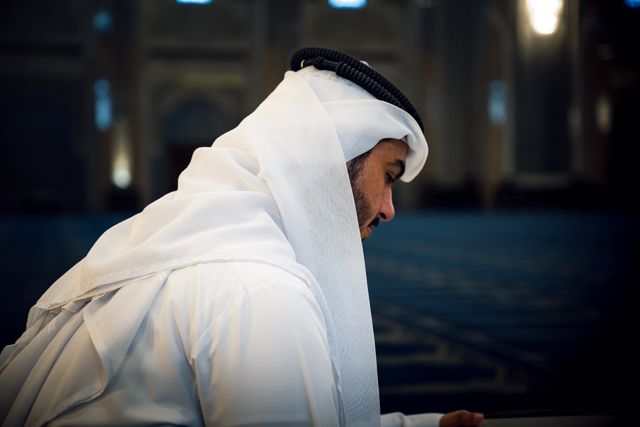
Classical Arabic vs Modern Standard Arabic
Classical Arabic and Modern Standard Arabic are closely related, but they are not exactly the same thing. Classical Arabic is associated with the Qur’an, classical literature, early Islamic texts, and older religious and literary traditions. It has a special place historically, culturally, and spiritually.
Modern Standard Arabic, or MSA, is the modern formal standard used across the Arabic-speaking world today. You see it in schools, newspapers, books, official documents, news broadcasts, formal speeches, and educated writing. It is not usually the language of casual daily conversation, but it is very important for literacy and formal communication.
Then there are the spoken dialects: Lebanese, Egyptian, Gulf, Iraqi, Moroccan, Sudanese, Yemeni, and many others. These are the varieties people use naturally in everyday life. They are the Arabic of home, friendship, humor, markets, songs, daily stories, and spontaneous conversation.
So the choice depends on the goal. For Qur’anic Arabic, you need Classical Arabic foundations. For formal reading and writing, MSA is essential. For everyday communication, you need a spoken dialect. And for many learners, the most meaningful path is not choosing only one forever, but learning how these forms of Arabic support different parts of the same journey.
Which Arabic Dialect Should You Learn for Movies, TV, and Music?
Media can be a very good reason to choose a dialect. Sometimes learners feel that choosing a dialect must be based only on work, travel, or family, but enjoyment matters too. If Arabic is already present in the songs, films, shows, voices, and stories you love, you are much more likely to return to it every day. Repeated exposure is one of the most powerful tools in language learning.
If you enjoy Egyptian cinema, Egyptian Arabic may be a natural choice. Films such as The Yacoubian Building and Asmaa give learners exposure to Egyptian speech in emotional, social, and everyday contexts, not just isolated textbook phrases. The Yacoubian Building, for example, is especially rich because so much of the story lives inside Cairo society, with different characters, relationships, tensions, and registers moving through the same urban space.
If you are drawn to Lebanese or Levantine culture, films such as Caramel, West Beirut, Capernaum, and Where Do We Go Now? can help you hear how Arabic carries humor, affection, disagreement, sadness, family closeness, and social pressure. As a Lebanese speaker, I always feel that Levantine Arabic is not only about vocabulary. It is about tone, rhythm, facial expression, warmth, and the small emotional choices people make when they speak.
For Moroccan Arabic, films such as Ali Zaoua, Horses of God, and Much Loved can introduce learners to Moroccan Arabic in powerful social and cultural contexts. Moroccan Arabic may feel challenging if you have only studied MSA or an eastern dialect, but listening to it through cinema helps you hear it as a living language, not just as a list of differences. Horses of God, for instance, is based on Mahi Binebine’s novel The Stars of Sidi Moumen and was shown in Cannes’ Un Certain Regard section, which reflects the international visibility of Moroccan storytelling.
Music is just as valuable. Songs help learners remember phrases because melody, repetition, emotion, and rhythm work together. A word you hear once in a textbook may disappear from memory; a word you hear in a chorus can stay with you for years. Arabic music can also teach pronunciation, intonation, emotional vocabulary, and cultural references. Fairouz, Umm Kulthum, Abdel Halim Hafez, Amr Diab, Nancy Ajram, Mashrou’ Leila, Cairokee, Saad Lamjarred, and many other artists can all give learners different windows into Arabic.
This is also why resources like our Arabic Spotify playlist can be so useful. A playlist gives learners repeated contact with real voices. You may not understand every word at first, and that is completely normal. The goal is to train your ear, notice repeated expressions, recognise familiar sounds, and slowly connect language with feeling.
There is even interesting research behind this idea that dialect is not only about words. In A Novel Dialect-Aware Framework for the Classification of Arabic Dialects and Emotions (2025), Nasser Alsadhan notes that “emotions in different dialects exhibit different features.” I love this observation because it confirms something teachers often feel in the classroom: dialect carries emotional texture. The way someone jokes, complains, comforts, flirts, celebrates, or expresses sadness can change from one Arabic variety to another.
So if you already love a particular part of Arabic culture, listen to that. Your favorite films and songs may be telling you which dialect will keep you motivated.
Common Mistakes When Choosing an Arabic Dialect
Choosing an Arabic dialect becomes much easier when you know what to avoid. Most mistakes happen when learners look for a single universal answer instead of asking where, how, and with whom they actually want to use Arabic. I always encourage students to slow down here, because the wrong starting point can make Arabic feel more confusing than it needs to be.
- Choosing a dialect only because someone says it is “easy”: This advice is never complete. Easy for whom? A dialect becomes easier when you have motivation, exposure, resources, a teacher who can guide you, and real opportunities to use it. If you have Lebanese family, Levantine Arabic may feel more natural to you than Egyptian. If you live in Morocco, Darija may become easier because you hear it every day.
- Learning only MSA and expecting to sound natural in casual conversation: Modern Standard Arabic is extremely valuable, especially for reading, writing, formal speech, and media. But it is not usually how people speak with friends, family, taxi drivers, shopkeepers, or neighbors. A learner may know كيف حالك؟ [kayfa ḥāluka? / how are you?], but then hear إزيك؟ [izzayyak?] in Egypt, كيفك؟ [kīfak?] in Lebanon, or لاباس؟ [lā bās?] in Morocco and feel lost. The problem is not that their Arabic is wrong; it is that they are hearing a different variety.
- Trying to learn too many dialects at once: I love Arabic diversity, but beginners need a base. If you learn one Egyptian phrase, one Lebanese phrase, one Moroccan phrase, and one Gulf phrase before you can hold a simple conversation in any of them, your Arabic may become scattered. It is usually better to build confidence in one relevant variety first, then expand your listening gradually.
- Ignoring the dialect spoken by family, friends, or your community: This is especially important for heritage learners. If your grandparents speak Iraqi Arabic, Iraqi Arabic matters. If your partner’s family speaks Moroccan Arabic, Darija matters. If your closest Arabic-speaking community is Lebanese, Levantine Arabic matters. Popularity should not be more important than real connection.
- Choosing based on popularity instead of use: Egyptian and Levantine Arabic are popular choices for good reasons, but they are not automatically the right choice for every learner. If your actual goal is to work in Qatar, live in Oman, speak with Sudanese relatives, or travel regularly to Tunisia, your best dialect may be the one that fits that situation.
- Treating MSA and dialect as enemies: I do not see them that way. MSA can give learners literacy, structure, formal vocabulary, and access to written Arabic across the Arab world. Dialect gives learners natural conversation, emotional closeness, cultural belonging, and everyday communication. The strongest learning path is often not one or the other, but the right balance between them.
How I Choose the Right Arabic Path for My Students
When I help a student choose an Arabic path, I do not begin with a dialect map. I begin with the learner. I want to understand their story, their reason, their schedule, their confidence, and the situations where Arabic will become useful or meaningful for them.
My central question is always: What do you want to be able to do with Arabic?
That question changes everything. A learner who wants to read Arabic newspapers does not need the same first plan as someone who wants to speak with a Lebanese grandmother. A student preparing for college or university does not need the same balance as someone travelling to Egypt for two weeks. A professional moving to Dubai may need MSA for formal reading and Gulf Arabic for daily interaction. A heritage learner may need conversation first, because the emotional goal is to finally answer family members in the language they have heard since childhood.
I also look at the learner’s current level. Some students are complete beginners. Others can read Arabic but cannot speak. Some understand family conversations but feel shy answering. Others know religious phrases but do not understand everyday speech. These are very different starting points, and they need different lesson plans.
Then I consider exposure. Does the learner have Arabic-speaking relatives? Do they watch Arabic films? Do they listen to Arabic music? Do they work with Arabic-speaking colleagues? Are they planning to live in a specific country? The more I know about the learner’s real environment, the more precisely I can choose the right balance of MSA, dialect, listening, speaking, reading, writing, and cultural context.
For me, the learning plan should follow the learner’s needs, not the other way around.
The Questions I Ask Before Recommending MSA or a Dialect
Before I recommend MSA, a dialect, or a combination, I usually ask questions like these:
Why are you learning Arabic?
Is it for travel, family, heritage, work, school, religion, media, or personal interest?
Where will you use Arabic?
Will you use it in Lebanon, Egypt, Morocco, the Gulf, Iraq, Sudan, Yemen, or with a diaspora community?
Who do you want to speak with?
Family, friends, colleagues, clients, teachers, religious communities, or people you meet while travelling?
Do you need reading and writing?
Some learners need formal Arabic for texts, emails, study, or news. Others need conversation first.
What Arabic do you already hear?
Music, films, family conversations, social media, podcasts, workplace speech, or religious recitation can all shape the best path.
How much time can you realistically practice?
A learner with 10 minutes a day needs a different plan from someone who can study several hours a week.
What would make you feel successful after three months?
Ordering food? Speaking with a relative? Reading a short text? Understanding a song? Having a simple conversation? Following a work meeting?
These questions help me avoid generic advice. I do not want to tell every learner, “Start with MSA,” or “Start with Egyptian,” or “Start with Levantine.” I want to understand what Arabic needs to do in that person’s life.
How I Balance MSA and Dialect in a Real Arabic Lesson
When a learner wants both formal Arabic and natural everyday conversation, I design the lesson backwards from the goal. I do not begin by saying, “Today will be 50% MSA and 50% dialect.” The number is less important than the purpose of each activity.
For example, imagine the topic is travel. We might begin with a short MSA text about booking a hotel or arriving at an airport. The learner reads for the main idea, identifies useful vocabulary, and notices formal structures. Then we listen to a short spoken dialogue in the learner’s target dialect, perhaps Levantine, Egyptian, Gulf, or Moroccan Arabic. Now the learner can hear how the same situation sounds in real conversation.
After that, we compare. How does MSA ask “Where is the hotel?” How would someone say it in Beirut, Cairo, Dubai, or Casablanca? Which words stay familiar? Which ones change? What happens to pronunciation? What sounds formal, and what sounds natural?
Then we apply the language through role-play. I might be the receptionist and the learner is the traveler. Then we switch roles. Finally, I may ask the learner to create something independently: a short voice recording, a mini-dialogue, a message, or a summary of what happened.
This is where learning becomes active. The student is doing more than remembering words. They are understanding meaning, applying the language, analyzing the difference between formal and spoken Arabic, choosing the right form for the situation, and creating their own Arabic. That is what I want in my lessons: not passive knowledge, but usable language.
For me, MSA and dialect work beautifully together when each one has a clear purpose. MSA can give structure and wider access. Dialect can give voice, relationship, and natural communication. The art of teaching Arabic is knowing how much of each the learner needs, and when that balance should change.

Learn the Right Arabic Variety With a Native Teacher
Choosing the right Arabic variety can feel overwhelming, but you do not have to make that decision alone. A native Arabic teacher can help you understand whether your goals are better served by Modern Standard Arabic, Levantine Arabic, Egyptian Arabic, Gulf Arabic, Moroccan Arabic, Iraqi Arabic, Sudanese Arabic, Yemeni Arabic, or a personalized combination of more than one variety.
This is especially important because your needs may not stay the same forever. You might begin with MSA because you want to read and write, then realize that you also need spoken Arabic for family conversations. You might start with Levantine Arabic because you are travelling to Lebanon, then later add more MSA so you can read articles, signs, or formal texts with more confidence. A good teacher can adjust that balance as your Arabic grows.
At Language Trainers, our tailor-made Arabic lessons are built around your personal goals, not a fixed program that treats every learner the same. Your course can focus on face-to-face conversation, online lessons, formal Arabic, natural spoken Arabic, cultural context, pronunciation, listening practice, travel situations, workplace communication, or family and heritage goals. The most important thing is that the lesson plan reflects the Arabic you actually want to use.
For many learners, having a teacher who can build that foundation step by step makes Arabic feel much more approachable. Michelle Ritter, who took a 40-hour Arabic course in Nashville, shared: “Everything is really going well. Yousef is great! He has been a great teacher and I highly recommend him. There’s so much to learn it will take me years to be able to speak Arabic, but Yousef has given me a great base to start from.”
There is no single Arabic that is right for everyone. The best Arabic variety is the one that connects most directly to the people, places, texts, communities, and goals that matter to you. MSA and dialect should not be treated as rivals. They can work together beautifully when the learning path is designed around a clear purpose.
If you are not sure which form of Arabic fits your goals, that is exactly where personalized guidance can help. Get in touch with Language Trainers and let us know your goals, so we can design the perfect Arabic lesson plan for you.
→Sign Up Now: Free Trial Arabic Lesson With a Native Teacher!←
FAQs About Choosing an Arabic Dialect
1. What is the easiest Arabic dialect to learn?
The easiest Arabic dialect depends on your goals, exposure, teacher, resources, and language background. A dialect usually becomes easier when you have regular chances to hear it and use it. If your family speaks Lebanese Arabic, Levantine may feel more natural to you. If you live in Morocco, Darija may become easier because it is part of your daily environment.
2. Should I learn Modern Standard Arabic or a dialect first?
It depends on what you want to do with Arabic. If your goal is reading, writing, formal communication, academic study, media, or broad literacy, Modern Standard Arabic is a strong starting point. If your goal is everyday conversation, travel, family communication, or social interaction, a spoken dialect may be more useful from the beginning. Many learners benefit from a combination of both.
3. Is Egyptian Arabic the most useful dialect?
Egyptian Arabic is widely recognized because of Egypt’s population, cinema, television, music, and cultural influence. It can be a very useful dialect, especially if you are connected to Egypt or Egyptian media. But it is not automatically the best choice for every learner. If your goals connect you to Lebanon, Morocco, the Gulf, Iraq, Sudan, Yemen, or another Arabic-speaking community, another variety may be more useful for you.
4. Is Levantine Arabic a good dialect to learn?
Yes, Levantine Arabic can be an excellent choice for learners connected to Lebanon, Syria, Jordan, Palestine, Levantine communities, or Levantine music, films, and series. It is also a very expressive and widely encountered spoken variety. However, like every dialect choice, it should match your goals. It is most useful when you have a real reason to hear it, speak it, and return to it often.
5. Can Arabic speakers understand all dialects?
Not always. Arabic speakers may understand some dialects broadly, especially if they have heard them through media, travel, family, or work. But understanding depends on the distance between the varieties, the speed of speech, vocabulary, accent, education, exposure, and context. Neighboring dialects are often easier to understand than more distant ones, but there is no guarantee that every Arabic speaker will understand every dialect easily.
6. Which Arabic should I learn for travel?
For travel, learn the spoken dialect of your destination. If you are going to Egypt, Egyptian Arabic will help you in daily situations. If you are going to Lebanon or Jordan, Levantine Arabic will be more useful. If you are going to Morocco, Moroccan Arabic should be central. MSA can still help with signs, written information, announcements, and formal contexts, but everyday travel usually depends on local spoken Arabic.
7. Which Arabic should I learn to understand the Qur’an?
To understand the Qur’an, you need Classical Arabic foundations, not a modern spoken dialect. Modern Standard Arabic can also help with grammar, vocabulary, and formal reading skills, but Qur’anic Arabic has its own religious, historical, and linguistic context. If you also want to speak with Arabic-speaking communities, you may choose to study a spoken dialect alongside your formal or classical Arabic work.
8. Can I learn more than one Arabic dialect?
Yes, you can learn more than one Arabic dialect, but beginners should usually build a strong base in one relevant variety first. If you try to learn several dialects at once too early, your Arabic may become scattered. A better path is to develop confidence in one dialect, support it with MSA if useful, and then gradually expand your listening and awareness of other varieties.