

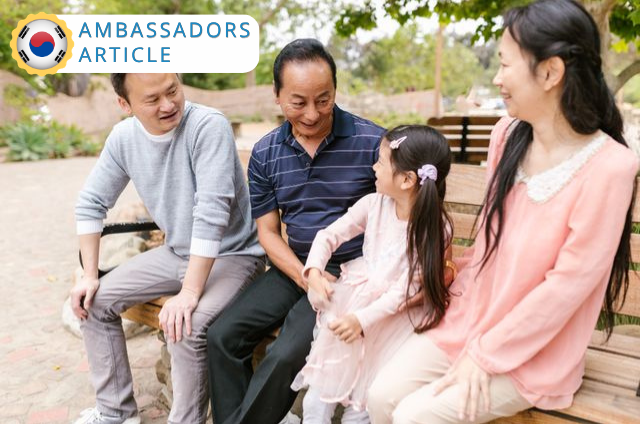
Korean family terms reveal much more than who belongs to the same family. They can tell us who is older, how close two people are, and what kind of relationship exists between them. Words such as 오빠 (oppa) and 언니 (eonni) carry information about both the speaker and the person being addressed. Choosing the right term means understanding the relationship, not simply knowing the word’s English translation.
One thing that often surprises my students is hearing a Korean woman call an older male friend oppa, even though they aren’t related. If you’ve learned that oppa means “older brother,” you might reasonably wonder why she would use it with someone outside her family. And if you’ve watched Korean dramas, you may have encountered the same word between romantic partners.
This is what makes Korean terms of address so interesting to teach. They offer a glimpse into how Korean speakers express age, familiarity and social relationships through everyday language. A word that feels natural between close friends might sound overly familiar between people who have only just met. And as two people become closer, the way they address each other may change.
When I introduce these expressions, I like to start with my students’ own lives. We talk about their siblings, then their older friends, classmates and colleagues. Connecting the vocabulary to relationships they already understand helps them see why the same word can have different uses without losing its underlying meaning.
→Sign Up Now: Free Trial Korean Lesson With a Native Teacher!←
What Do Korean Family Terms Mean?
Korean family terms, also known as kinship terms, are words used to identify relatives and, in certain situations, address people outside the family. Some are relatively straightforward to translate, while others express distinctions that English doesn’t make in the same way.
Take the English words brother and sister. They tell us someone’s gender, but not whether that sibling is older or younger. Korean makes that distinction. The word 동생 (dongsaeng) means “younger sibling,” while the term for an older sibling depends on both the sibling’s gender and the gender of the person speaking.
For example, a woman calls her older brother 오빠 (oppa), while a man calls his older brother 형 (hyeong). Similarly, a woman calls her older sister 언니 (eonni), while a man uses 누나 (nuna).
These distinctions are part of ordinary family vocabulary, but their usefulness extends well beyond the home. A woman might call a close older female friend eonni, and a man might call an older male friend hyeong. Neither necessarily means they’re pretending to be siblings. Instead, the term reflects a familiar relationship in which relative age and the speaker’s gender matter.
This is why I encourage learners to think beyond dictionary definitions. Knowing that eonni means “older sister” is a good starting point, but understanding when someone might use it with a friend is what makes the word genuinely useful in conversation.
Why Koreans Use Family Terms for People Who Aren’t Family
Koreans sometimes extend family terms to people outside their biological families because these words can express familiarity, affection and the relative positions of two people within a relationship. Linguists describe this kind of usage as extended kinship terminology: a word traditionally associated with family members also becomes a way of addressing someone who occupies a similar social role.
However, that doesn’t mean every older friend automatically becomes an oppa or eonni. The relationship needs to feel sufficiently familiar, and both people need to be comfortable with the term.
Sometimes, the older person takes the initiative and says something like, “You can call me eonni from now on.” In other situations, the younger person might ask, “Would it be okay if I called you oppa?” That question can communicate more than uncertainty about vocabulary. It may also suggest that the younger person feels comfortable with the other person or would like their relationship to become closer.
And sometimes, nobody asks at all. Two people spend enough time together, become good friends and naturally begin using a more familiar term.
I introduce this idea to my students through a simple exercise. First, I ask whether they have older siblings and which Korean terms they would use for them. I sometimes share stories about my own siblings, too, so the vocabulary feels connected to real family relationships.
Then I ask about their friends. Do they have an older friend they see regularly? Someone they turn to for advice or spend a lot of time with? Depending on the student’s gender and the friendship, I might say, “Oh, so you have two close oppas!”
That’s usually when students begin to understand that these words aren’t restricted to relatives. They describe a particular kind of relationship, and learning to use them naturally means paying attention to how that relationship develops.
Oppa, Eonni, Hyeong and Nuna: The Four Korean Terms You Need to Know
The four Korean terms for older brothers and sisters follow a useful pattern. The word you choose depends on two things: your gender and the gender of the older person you’re addressing. Once you understand that system, the four terms become much easier to remember.
| Older man | Older woman | |
| Female speaker | 오빠 (oppa) | 언니 (eonni) |
| Male speaker | 형 (hyeong) | 누나 (nuna) |
These are the traditional gender-based forms used in standard Korean. They apply to older siblings and can also extend to appropriately close older friends or acquaintances. In non-family relationships, though, age and gender are only part of the decision. Familiarity and the social setting also determine whether a term sounds natural.
Let’s look at how each word works in everyday Korean.
What Does Oppa Mean in Korean?
“The word hasn’t changed, but the relationship between the two people has.” – Kyung Eun “Kay” Heo
오빠 (oppa) is the word a woman uses to address or refer to her older brother. It can also be used for an older male friend or another older man with whom she has a sufficiently familiar relationship. The word tells us that the speaker is female and that the man she is referring to is older than she is, but it doesn’t necessarily tell us whether they’re related.
Imagine a woman introducing her older brother to a friend. She might say 우리 오빠 (uri oppa) [my older brother]. The word uri literally means “our,” but Korean commonly uses it when talking about family members and other people or things considered part of one’s own circle.
Now imagine that the same woman has an older male friend she’s known for years. If they’re close and comfortable with the term, she might also address him as oppa. In that situation, the word reflects their age difference and familiarity rather than a biological relationship.
This distinction is especially important for learners who first encounter oppa in K-dramas or K-pop. Some of my students initially assume that it means “boyfriend” because they’ve heard female characters use it with their romantic partners. But a woman can also call her actual brother or a platonic older friend oppa. The relationship and context determine how the word should be understood.
I also remind students that simply meeting an older Korean man doesn’t mean they should immediately address him as oppa. If the relationship is new or relatively formal, a name with an appropriate title may be more suitable. As the two people get to know each other, the older person might invite the younger woman to use oppa, or she may ask whether he’d be comfortable with it.
That change can be a meaningful moment in a friendship. The word hasn’t changed, but the relationship between the two people has.
What Does Eonni Mean in Korean?
언니 (eonni) is the word a woman uses for her older sister. Like oppa, it can also extend beyond family relationships: a woman may call an older female friend eonni when the two share an appropriately close relationship.
For example, a woman talking about her older sister might say 우리 언니 (uri eonni) [my older sister]. If she has a close older female friend, she might address that friend as eonni too. In both cases, the term identifies an older woman from the female speaker’s perspective, but the exact relationship depends on the context.
Among friends, eonni can communicate warmth and familiarity. It may also reflect a relationship in which the younger woman feels comfortable turning to the older one for advice, sharing personal experiences or simply spending time together. However, using the term doesn’t automatically mean that the older woman has a formal responsibility to guide or look after her younger friend.
What I find particularly interesting is how eonni can mark a change in a relationship. Two women may initially address each other using their names or more formal expressions. After spending time together and becoming friends, the older woman might say, “You can call me eonni.”
For the younger woman, that invitation can make the relationship feel more relaxed and personal. It signals that the older woman is comfortable moving beyond their previous level of formality.
Of course, the younger person can also ask first. And if she’s unsure, I generally recommend waiting until the relationship feels comfortable rather than assuming that every older woman she meets will welcome the term.
The main lesson I want students to take away is that knowing someone’s age helps you identify which Korean term might be possible. Knowing the relationship helps you decide whether you should actually use it.
What Does Hyeong Mean in Korean?
형 (hyeong) is the word a man uses to address or refer to his older brother. It can also be used for an older male friend with whom he has a close relationship. Like oppa, it reflects both the speaker’s gender and the age difference between the two people, but the relationship itself determines whether the term feels appropriate.
In Korean friendship groups, hyeong is a common way for younger men to address older male friends. Imagine a group of friends who regularly play soccer together. One of the younger men might call an older friend hyeong, even though they’re not related. The term acknowledges their age difference while reflecting the familiarity they’ve developed through spending time together.
For example, he might say 형, 오늘 뭐 해요? (Hyeong, oneul mwo haeyo?) [What are you doing today?]. Notice that the sentence uses the polite ending -yo, even though he’s addressing someone he knows well. Calling someone hyeong doesn’t automatically mean you should switch to informal speech. The appropriate speech level depends on the relationship and what both people feel comfortable with.
This distinction is particularly important when you’re meeting someone for the first time. An older male colleague, teacher or acquaintance isn’t necessarily someone you should call hyeong. In more formal situations, a name combined with an appropriate title may be preferable.
As the relationship develops, however, the older man might suggest using hyeong instead of a more formal form of address. That invitation can signal that he now sees the younger man as a friend rather than simply an acquaintance or junior colleague.
What Does Nuna Mean in Korean?
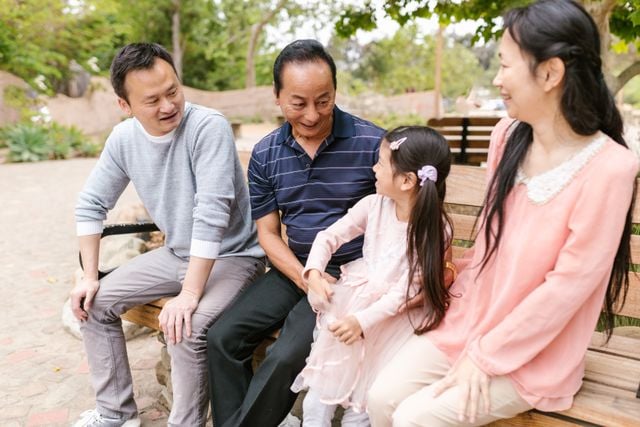
누나 (nuna) is the word a man uses for his older sister. It can also be used to address an older female friend or another woman with whom he has a sufficiently close relationship. The term identifies the speaker as male and the woman as older, but it doesn’t necessarily indicate that they’re related.
For example, a man talking about his older sister might say 우리 누나 (uri nuna) [my older sister]. He might also address an older female friend as nuna if they’ve developed a familiar relationship and are both comfortable with the term.
Imagine a younger man who becomes friends with an older woman through a university club. They may initially use their names or address each other more formally. After spending time together, she might invite him to call her nuna. From then on, the term becomes a natural part of how they communicate.
On the other hand, in a romantic relationship, the way a man addresses an older female partner as “nuna” may change. If he has always called her “nuna,” he may say, “I’m not going to call you nuna anymore.” This is different from “oppa,” which often continues to be used after a couple starts dating. Men often want to feel that they are protecting or leading their partner, but “nuna” continually reminds them that they are younger. For this reason, many men switch to calling their girlfriend by her name, “you,” or a nickname they have chosen for each other.
I encourage students to pay attention to these distinctions when watching Korean dramas. Rather than immediately associating nuna with a particular kind of relationship, try identifying who is speaking, who is older and how the two characters know each other. These clues will usually tell you much more about what the term means in that particular conversation.
How Age and Closeness Affect Korean Terms of Address
Knowing the dictionary meanings of oppa, eonni, hyeong and nuna is an important first step, but using these terms naturally requires an understanding of the relationship between the people involved. In Korean, relative age helps determine which term is possible, while familiarity and social context influence whether that term is appropriate.
Two people might have exactly the right age and gender relationship for eonni, for example, but still address each other more formally because they’ve only just met. Meanwhile, two women with the same age difference who have been friends for years might use eonni without a second thought.
This is why I encourage my students to consider the relationship as a whole. The question isn’t simply which word matches someone’s age and gender, but what that word communicates about how the two people see each other.
Does Age Matter When Choosing Korean Family Terms?
Age matters because 오빠 (oppa), 언니 (eonni), 형 (hyeong) and 누나 (nuna) traditionally refer to someone older than the speaker. Once you know whether you’re speaking to an older man or woman, your own gender determines which of the four terms applies.
In Korea, people may establish their relative ages fairly early when getting to know each other. This helps them understand how to address one another and which speech levels may be appropriate. Even a small age difference can become relevant, particularly among students or people who belong to the same friendship group.
For example, two women who meet at university might discover that one was born a year earlier. If they become close friends, the younger woman may eventually address the older one as eonni, even if they’re studying in the same year.
However, age and seniority aren’t always the same thing. Someone may be older than you but have joined your university or another organization after you. In that situation, their age and institutional position are two separate aspects of your relationship.
It’s also important to remember that age doesn’t automatically establish intimacy. You wouldn’t necessarily call an older stranger oppa or nuna simply because you’ve discovered their age. The relationship needs to support that degree of familiarity.
When Is It Appropriate to Call Someone Oppa, Eonni, Hyeong or Nuna?
It’s generally appropriate to use these terms with an older person when you’ve established a sufficiently familiar relationship and they’re comfortable being addressed that way. Although age and gender determine which word you might use, the decision to use it often develops naturally as two people get to know each other.
One situation I frequently explain to students is when the older person takes the initiative. After spending time together, they might say 이제 언니라고 불러도 돼요 (Ije eonnirago bulleodo dwaeyo) [You can call me eonni from now on]. This gives the younger person a clear indication that a more familiar form of address is welcome.
The younger person can also ask permission. For example, a woman might ask an older female friend 언니라고 불러도 돼요? (Eonnirago bulleodo dwaeyo?) [Can I call you eonni?]. The question itself may communicate that she feels comfortable with the older woman or would like their relationship to become closer.
Sometimes, neither person explicitly suggests making the change. After a friendship has developed, the younger person may simply begin using the term, and it becomes their usual way of addressing the older friend.
When my students are unsure, I advise them to pay attention to how the people around them address one another and avoid rushing into familiar language. If you’ve only recently met someone, it’s perfectly reasonable to continue using a more formal form of address until you understand the relationship better.
I also remind them that these terms aren’t titles you earn simply by being older. They’re part of an ongoing relationship, and choosing to use one can communicate a desire for greater familiarity.
Seonbae and Hubae: Understanding Korean Seniority
Korean has another important pair of relationship terms: 선배 (seonbae) and 후배 (hubae). Unlike oppa, eonni, hyeong and nuna, these aren’t family terms. Instead, they describe seniority within a shared institution, activity or field, such as a university, club or profession.
The distinction is particularly useful for learners because someone can be your seonbae without being older than you. These terms tell us about the order in which people entered a particular group or gained experience within it, rather than their age or family relationship.
Although they’re closely associated with Korean university culture, understanding seonbae and hubae also helps you recognize how Koreans distinguish institutional relationships from personal friendships.
What Does Seonbae Mean in Korean?
선배 (seonbae) refers to someone who entered a shared school, field, organization or activity before you. At university, for example, a student in a higher academic year is generally considered a seonbae by students who entered later, even if they’re the same age or younger.
Imagine that you begin studying at a Korean university and meet someone who started the same program the previous year. That person is your seonbae, regardless of whether they were born before or after you.
This is an important difference from the four kinship terms we’ve already discussed. Oppa, eonni, hyeong and nuna depend on relative age and the speaker’s gender. Seonbae describes seniority within a particular group and doesn’t depend on either person’s gender.
At university, students may address a senior as 선배님 (seonbaenim), adding the respectful suffix -님 (-nim). This acknowledges the person’s position and maintains an appropriate degree of formality, particularly when the students don’t know each other well.
In my experience, seonbae is especially useful for understanding relationships at school and university. Although it can also describe senior colleagues or experienced people within a profession, workplace employees generally address each other using job titles rather than relying on seonbae in everyday conversation.
What Does Hubae Mean in Korean?
후배 (hubae) is the counterpart to seonbae. It refers to someone who entered a shared institution, field or activity after you. If you started university two years ago and a new student joins your department this year, that student is your hubae.
Like seonbae, the term describes a particular relationship rather than an age difference. Your hubae might be younger than you, the same age or even older. What matters is that you entered the relevant institution or field before them.
There’s also an important distinction between referring to someone as a hubae and addressing them directly.
For example, you might say 제 후배예요 (Je hubaeyeyo) [They’re my junior] when introducing someone who entered your university department after you. However, that doesn’t mean you’d necessarily call out “Hubae!” whenever you wanted their attention.
In everyday interactions, seniors often address their juniors by name, with the appropriate level of politeness for their relationship. Hubae is particularly useful for explaining how two people are connected within a group.
Seonbae vs Oppa, Eonni, Hyeong and Nuna in Korean
The difference between seonbae and the four kinship terms is that seonbae identifies institutional seniority, while oppa, eonni, hyeong and nuna can express familiarity within an age-based relationship. A person may fit both descriptions, but the term you choose communicates which aspect of the relationship you’re emphasizing.
Imagine a female university student who becomes friends with an older woman from her department. When they first meet, the younger student may address her as seonbae or seonbaenim, acknowledging that the older woman started university before her.
As they spend more time together, their relationship may become less formal. They begin meeting outside university, sharing personal experiences and developing a friendship that extends beyond their academic connection.
Eventually, the older woman might say, “You can call me eonni now.” Alternatively, the younger woman might ask whether she’d be comfortable with that change.
The transition from seonbae to eonni doesn’t erase their university relationship or the fact that one entered the department earlier. Instead, it emphasizes their personal closeness over their institutional seniority.
I like using this example because it shows students that Korean terms of address can change as relationships develop. Learning the vocabulary gives you the available choices, but understanding the people and the situation helps you decide which one feels natural.
Korean Terms of Address at University, Among Friends and at Work
In Korean, the way you address someone can change depending on where you know them from and how your relationship develops. You might call someone seonbae at university, use their job title at work, or address them as eonni or hyeong when you meet outside those settings. Each choice communicates something about the relationship you share.
This is one of the aspects of Korean I particularly enjoy teaching because it shows how closely language and social relationships are connected. The person you’re speaking to hasn’t changed, but the setting and the relationship you want to express may call for a different form of address.
Korean Terms of Address at University
University is a useful place to observe Korean terms of address because students navigate relationships based on both age and academic seniority. Someone can be your classmate, your seonbae, or an older friend, and each relationship may call for a different term.
Students who enter university in the same year and are also the same age generally address each other by their first names. As they become friends, they may also use 반말 (banmal) [informal speech], which allows them to speak more casually without polite sentence endings.
However, students in the same academic year aren’t necessarily the same age. Imagine two women who start university together, but one is a year older. Once they become familiar with each other, the younger student may call the older one 언니 (eonni), even though they’re classmates.
Academic seniority introduces another distinction. If you’re a first-year student and meet someone in their third year, that person is your 선배 (seonbae), regardless of their age. When addressing someone you don’t know well, 선배님 (seonbaenim) is a respectful option, with -님 (-nim) adding an additional level of politeness.
These relationships can overlap. An older student from your department may initially be someone you address as seonbae, but if you become close friends, you might eventually call her eonni or him oppa or hyeong, depending on your gender. The change reflects your growing familiarity rather than a change in academic seniority.
I encourage students to pay attention to these distinctions when watching Korean university dramas. Instead of memorizing how each character addresses everyone else, try working out why they chose a particular term. Are the characters classmates? Did one enter university earlier? Have they recently become friends? The answers help explain the language.
Korean Terms of Address in Friendship Groups
Among Korean friends, forms of address often reflect a combination of age and familiarity. Friends who are the same age commonly use each other’s first names, while younger members of a group may use oppa, eonni, hyeong or nuna for their older friends once the relationship is sufficiently close.
For example, imagine three women who regularly meet for coffee. Two are the same age, while the third is a few years older. The two younger women may address each other by name but call their older friend eonni. The difference doesn’t necessarily make their friendship more formal. Instead, it acknowledges their relative ages within an otherwise familiar relationship.
What often surprises learners is that a familiar term of address and informal speech aren’t the same thing. You can call someone eonni or hyeong while continuing to use polite sentence endings.
Consider a younger man asking an older male friend:
형, 오늘 뭐 해요? (Hyeong, oneul mwo haeyo?) [What are you doing today?]
He’s using a familiar term of address, but the -요 (-yo) ending keeps the sentence polite.
If the two friends are comfortable using banmal, he might instead say:
형, 오늘 뭐 해? (Hyeong, oneul mwo hae?) [What are you doing today?]
The term hyeong remains the same, but the sentence becomes more informal.
When I teach these distinctions, I remind students that closeness doesn’t always lead people to abandon polite speech. Some friends continue using polite endings out of habit, personal preference or the particular nature of their relationship. The important thing is to observe what both people are comfortable with rather than assuming that friendship automatically permits banmal.
Korean Terms of Address in the Workplace
Korean workplaces generally place greater emphasis on professional titles and organizational hierarchy than on the familiar kinship terms used among friends. Even when colleagues have developed close personal relationships, they will often continue using job titles or names combined with titles while they’re at work.
For example, employees may address a manager as 김 과장님 (Gim gwajangnim) [Manager Kim], using the surname followed by the job title 과장 (gwajang) and the respectful suffix -님 (-nim). The precise title depends on the organization and the person’s position.
This is why I advise learners, particularly those undertaking corporate language training, not to transfer the conventions of a friendship group directly into a professional setting. Calling an older colleague oppa or eonni simply because you get along well may sound inappropriate if your workplace relationship is still defined primarily by professional roles.
However, the way colleagues address each other can change when their circumstances change. I’ve worked at several different companies, and I still keep in touch with many people I met through work. Some of us now use different terms of address because our relationships have continued beyond the workplace.
While we worked together, there was a certain degree of formality between us, even when we got along very well. After leaving the company and continuing to meet socially, some of those relationships became more personal. In certain cases, an older former colleague might suggest, “You can call me eonni from now on,” allowing us to move away from the titles we used at work.
I find this a particularly useful example for students because it shows that Korean terms of address aren’t fixed labels attached to a person. They reflect the relationship between two people at a particular moment. Sometimes, changing just one word can make an interaction feel more relaxed and personal.

Korean Family Terms in Dating, K-Pop and K-Dramas
Korean dramas, music and popular culture have introduced millions of international fans to words such as oppa and nuna. However, entertainment can also create misconceptions when learners associate a term with a particular type of relationship without understanding its wider everyday use.
These words still follow the basic principles we’ve discussed: the speaker’s gender, the other person’s age, their familiarity and the context all influence which term is appropriate. Romantic relationships and fandom can give certain expressions additional associations, but they don’t replace their original meanings.
Can You Call Your Boyfriend Oppa in Korean?
Yes, a woman can call her older boyfriend 오빠 (oppa), particularly if she already used the term before they began dating or if it feels natural within their relationship. However, oppa doesn’t literally mean “boyfriend.” Its basic meaning is “older brother,” and it also extends to appropriately close older male friends.
This is a distinction I often have to explain to students who have encountered the word through Korean dramas. They may hear a female character repeatedly calling her romantic partner oppa and assume that the word itself communicates romance.
In reality, a woman might use exactly the same term when speaking to her older brother or a close male friend. You need to understand the relationship between the two people to know what oppa communicates in each situation.
Traditionally, relationships in which the man was older than the woman were particularly common in Korea, so this use of oppa became familiar in romantic contexts. Today, relationships between older women and younger men are also increasingly visible, and couples may use other terms of address depending on their ages and preferences.
An older boyfriend isn’t automatically someone a woman will call oppa, either. Couples may use each other’s names, affectionate nicknames or other expressions that feel natural to them.
The same principle applies to 누나 (nuna). A younger man may call his older girlfriend nuna, especially if they were already friends and he used the term before they started dating. But , as explained earlier, it is worth noting that when the man is younger, couples often stop using “nuna” once they become romantically involved.
Whenever students encounter these words in romantic scenes, I encourage them to consider whether the couple used those terms before dating and what the terms communicate about their familiarity. The relationship gives the word its romantic associations, not the other way around.
How Korean Family Terms Are Used in K-Pop and Dramas
K-Pop and Korean dramas offer learners plenty of opportunities to hear family terms in natural-sounding conversations, but it’s important to distinguish the relationships portrayed on screen or within fandom from the full range of everyday usage.
In dramas, characters may use 오빠 (oppa), 언니 (eonni), 형 (hyeong) and 누나 (nuna) with siblings, close friends or romantic partners. Sometimes a change in the term of address becomes part of the story itself, signaling that two characters have grown closer or that their relationship has taken a different direction.
Imagine a female character who initially addresses an older male acquaintance by his name and an appropriate title. After several episodes, they become close friends, and he suggests that she can call him oppa. Even if their relationship isn’t romantic, that change may communicate growing trust and familiarity.
The same expressions appear frequently among K-Pop idols. Members of a group may call older members hyeong or eonni according to their own gender, the older member’s gender and the way their relationship has developed. These terms can help create a familiar atmosphere within the group while still acknowledging age differences.
Fandom introduces another layer. Female fans sometimes address older male idols as oppa, even though they don’t have a personal relationship with them. In that context, the term can communicate admiration or affectionate familiarity as part of fan culture. It doesn’t mean that the fan and idol share the same relationship as two close friends.
This is where I encourage students to be careful about copying expressions directly from entertainment. A term that sounds perfectly natural between drama characters or in a fan message might feel overly familiar when used with an older Korean person you’ve only just met.
When watching a drama, try paying attention to who uses each term and whether that changes throughout the story. When following a K-Pop group, notice how members of different ages address one another and how those choices differ from the language fans use.
These observations can turn entertainment into a valuable language-learning resource. Instead of simply recognizing a familiar word, you’ll start understanding the age differences, relationships and social expectations that explain why someone chose it.
Can Foreigners Use Korean Family Terms?
Yes, foreigners can use 오빠 (oppa), 언니 (eonni), 형 (hyeong) and 누나 (nuna) naturally when the relationship makes them appropriate. Your nationality isn’t what determines whether you should use these words. What matters is your gender, the other person’s age, how well you know each other and whether both of you are comfortable with that level of familiarity.
I sometimes notice that learners hesitate to use these expressions because they worry they’ll sound unnatural as non-native speakers. But Korean friends may be perfectly happy to hear you call them eonni or hyeong, particularly if you’ve developed a close friendship. The mistake is assuming that every older Korean person you meet should be addressed with one of these terms.
My advice is to pay attention to how people introduce themselves and how others address them. If you’re unsure, you can also ask directly. For example, a woman might say 언니라고 불러도 돼요? (Eonnirago bulleodo dwaeyo?) [Can I call you eonni?] to an older female friend.
You can also wait for the older person to suggest it. If someone tells you that you can call them oppa or nuna, you have a clear indication that they’re comfortable with the term.
Remember that these words communicate something about your relationship, so there’s no need to rush into using them. Learning when to maintain a little formality is just as important as knowing how to express closeness.
How Korean Pronouns Change With Closeness and Hierarchy
The way you address other people is only one part of Korean social language. You also need to consider how you refer to yourself. In Korean, even the word you choose for “I” can reflect the relationship between you and the person you’re speaking to.
This is actually an area where I see more mistakes than with the four family terms. Once students understand the age and gender distinctions, they usually find oppa, eonni, hyeong and nuna relatively straightforward. Choosing the appropriate first-person pronoun and speech level, however, can take a little more practice.
Jeo vs Na: How Koreans Refer to Themselves
Korean has two common first-person pronouns: 저 (jeo) and 나 (na). Both mean “I,” but they belong to different levels of speech. Jeo is the humble form, typically used when speaking politely, while na is the informal form used with people with whom informal speech is appropriate.
The distinction is closely connected to how Korean expresses respect. You can show respect by elevating the person you’re speaking to, but you can also do so by choosing a more humble way to refer to yourself.
Compare these two sentences:
- 저는 학생이에요 (Jeoneun haksaeng-ieyo) [I’m a student.] — Uses the humble pronoun jeo with a polite sentence ending.
- 나는 학생이야 (Naneun haksaeng-iya) [I’m a student.] — Uses the informal pronoun na with an informal sentence ending.
Both sentences communicate exactly the same information about the speaker. What changes is the relationship implied by the language.
When teaching this distinction, I remind students that they will often use jeo when speaking politely to someone they call eonni, oppa, hyeong, nuna or seonbae. However, if two people become close enough to use informal speech with each other, na generally becomes the natural choice.
The important thing is to keep your pronoun and speech level consistent. Using na in an otherwise polite conversation, for example, may sound inappropriate unless the particular relationship or conversational context supports it.
When Can You Switch to Banmal When Speaking in Korean?
반말 (banmal) is informal Korean speech, commonly used among close friends, family members and people who have established a relationship in which informality is welcome. Unlike polite speech, it generally omits endings such as -요 (-yo) and uses more casual verb forms.
For example, imagine a younger woman speaking to an older female friend. She might initially ask:
언니, 지금 뭐 해요? (Eonni, jigeum mwo haeyo?) [Eonni, what are you doing now?]
If they’ve agreed to use banmal, she might instead say:
언니, 지금 뭐 해? (Eonni, jigeum mwo hae?) [Eonni, what are you doing now?]
Notice that eonni remains unchanged. The difference is in the verb ending and the level of formality.
This is why I always explain that using a familiar term of address doesn’t automatically give you permission to use informal speech. You might have an older friend who is perfectly happy being called oppa but still prefers that you speak politely to him.
Sometimes, an older friend will suggest switching to banmal. In other situations, the younger person may ask 말 놔도 돼요? (Mal nwado dwaeyo?) [Can I speak informally?]. This is a useful expression when you feel that a relationship has become close enough for a more relaxed way of speaking.
As with family terms, I encourage learners to observe how the relationship develops rather than treating informality as something they should introduce as quickly as possible.
Common Mistakes With Korean Family Terms
Most mistakes with Korean family terms come from learning their dictionary meanings without considering the relationships in which they’re used. Students may memorize the four principal words correctly but still feel uncertain about whether a particular term sounds natural in conversation.
Here are some common mistakes to watch out for:
- Assuming oppa means boyfriend. Although a woman may call her older boyfriend oppa, the word is also used for older brothers and close older male friends. If you hear it in a K-drama, don’t assume that the characters are romantically involved without considering the rest of their relationship.
- Choosing a family term based on age alone. Someone being older than you doesn’t automatically make them your eonni, oppa, hyeong or nuna. Familiarity matters, too. Calling someone you’ve just met by a kinship term may sound overly familiar, particularly in formal situations.
- Forgetting that the speaker’s gender matters. A woman uses oppa for an older man and eonni for an older woman. A man uses hyeong and nuna, respectively. Remember to choose the term from your own perspective rather than the perspective of the person you’re addressing.
- Assuming seonbae means an older person. Seonbae describes seniority within a shared institution or field, not necessarily age. A younger student in a higher university year can be your seonbae, while an older student who entered after you may be your hubae.
- Using family terms too freely in professional situations. Even if you’re friendly with an older colleague, their job title may remain the appropriate form of address at work. The language you use in a friendship group doesn’t always transfer naturally to the office.
- Switching to banmal too soon. Calling someone eonni or hyeong doesn’t necessarily mean you should start using informal verb endings. Wait until the relationship supports that change, or ask whether the other person is comfortable with it.
- Confusing jeo and na. This is one of the mistakes I encounter most often. Students sometimes use the right term for the person they’re addressing but forget to adjust how they refer to themselves. Pay attention to whether you’re speaking politely or informally, and choose your first-person pronoun accordingly.
I encourage students to think of these mistakes as reminders to look at the whole relationship rather than individual vocabulary items. Once you understand who is speaking, how the people know each other and what level of familiarity they share, choosing an appropriate term becomes much easier.
How to Learn Korean Terms of Address Naturally
If you’re wondering how to learn Korean beyond memorizing vocabulary and grammar rules, start by connecting new expressions to real relationships. Korean terms of address are a perfect example: recognizing the words is relatively easy, but knowing when to use them requires understanding the people involved and the social situations they share.
When I teach this topic, I like to move from familiar family relationships to friendships and then introduce situations in which the appropriate form of address isn’t immediately obvious. Here are some exercises you can use to develop that understanding:
- Start with your own family. Think about your siblings and practice introducing them in Korean. If you’re a woman with an older brother, you would use 오빠 (oppa). If you’re a man with an older sister, you would use 누나 (nuna). Connecting the words to people you know makes the distinctions much easier to remember.
- Describe your older friends. Make a list of close friends who are older than you. Consider which Korean terms might apply based on your gender and theirs. Then ask yourself whether your relationship is sufficiently familiar for those terms to sound natural.
- Identify relationships in short conversations. Listen to a short exchange containing oppa, eonni, hyeong, nuna or seonbae. Try to work out who is speaking, who is older and what kind of relationship they have. If you don’t have a conversation partner, Korean dramas and interviews can provide plenty of examples.
- Practice asking permission. Imagine you’ve become friends with an older Korean woman and would like to call her eonni. Practice asking 언니라고 불러도 돼요? (Eonnirago bulleodo dwaeyo?) [Can I call you eonni?]. Then try adapting the question to different relationships and terms.
- Compare university, friendship and workplace situations. Imagine an older student from your university department whom you’ve recently met. You might initially address them as seonbae or seonbaenim. Now imagine that you’ve become close friends. Would a kinship term be appropriate? What if you were colleagues rather than students? Thinking through these changes will help you understand how social context influences vocabulary.
- Practice switching between speech levels. Take a simple sentence and say it first using polite speech and jeo, then using banmal and na. Practice doing this with a friend or teacher who can explain when each version would sound natural. Remember that you can keep calling someone oppa or eonni even after your speech level changes.
I particularly enjoy activities in which students have to decide how a relationship has developed rather than simply choose the correct word from a list. For example, I might describe two former colleagues who continue meeting after leaving their company. If they’ve become close friends, would they still use their old professional titles, or might they adopt more familiar terms of address?
There isn’t always one correct answer, and that’s part of what makes these exercises useful. They encourage you to think about Korean as a language used between real people, whose relationships and ways of speaking can change over time.
Learn Korean Social Language With a Native Teacher
Learning Korean family terms is much easier when you can practice them in realistic conversations with someone who understands the cultural expectations behind them. A qualified native Korean teacher can help you recognize when a term of address sounds warm and familiar, when it feels overly personal, and how your choice of words should change depending on the relationship.
In my lessons, I like to create situations that reflect my students’ own lives. Someone learning Korean for travel might practice meeting new friends and finding out how to address them. A student learning for work may need to understand professional titles, seniority, and polite speech. And someone learning Korean to connect with their family may want to feel more comfortable using the terms they hear at home.
One-to-one teaching gives us the flexibility to explore these differences in detail. I can listen to how a student addresses someone, correct their pronunciation, and explain whether their chosen term and speech level suit the situation. We can also practice the same conversation in several ways, changing the relationship between the speakers to see how the language changes.
This is especially helpful when learning to move between polite and informal speech. A student may know that 언니 (eonni) is the appropriate term for a close older female friend but still be unsure whether to use 저 (jeo) or 나 (na) when speaking to her. Practicing these combinations with a teacher helps learners develop a more natural understanding of Korean social language.
I’ve experienced these changes in my own relationships, too. Having worked at several companies, I still keep in touch with many former colleagues. While we worked together, we addressed each other using professional titles. Now that some of those relationships have developed into personal friendships outside work, we sometimes use terms such as eonni or hyeong instead.
The people haven’t changed, but our relationships have. And that’s what I find so interesting about Korean: a different form of address can communicate a new level of familiarity without anyone needing to explain it explicitly.
Ultimately, learning Korean family terms is about much more than memorizing the equivalents of “older brother” and “older sister.” It’s about recognizing the relationship behind the words and understanding how age, familiarity, seniority, and social context influence everyday communication.
At Language Trainers, our certified native teachers provide personalized, face-to-face lessons designed around each student’s experience, interests, and goals. Katrina Armstrong, who took a 40-hour Korean course in Dallas, shared her experience:
“I chose language trainers because your teachers are certified. The lessons are going great so far and I feel Nara will help me accomplish my goals.”
Whether you’re interested in Korean for business, travel, or connecting with your heritage, learning with a native teacher gives you the opportunity to practice the language as it’s used in real relationships.
Ready to feel more confident speaking Korean? Contact Language Trainers and tell us about your goals. We’ll help you find a qualified native teacher for personalized, face-to-face Korean lessons that suit your needs.
→Sign Up Now: Free Trial Korean Lesson With a Native Teacher!←
FAQs About Korean Family Terms and Kinship Words
1. What’s the Difference Between Oppa, Eonni, Hyeong and Nuna?
All four terms refer to an older sibling or an appropriately close older person, but the correct word depends on the speaker’s gender and the gender of the person being addressed. A woman uses 오빠 (oppa) for an older man and 언니 (eonni) for an older woman. A man uses 형 (hyeong) for an older man and 누나 (nuna) for an older woman.
2. Can a Woman Call Her Boyfriend Oppa?
Yes, a woman can call her older boyfriend 오빠 (oppa), particularly if she already used the term before they started dating. However, oppa doesn’t mean “boyfriend.” It also refers to an older brother or a close older male friend. Its meaning depends on the relationship between the speakers, and couples may prefer other forms of address.
3. Can Foreigners Use Korean Family Terms?
Yes. Foreigners can use oppa, eonni, hyeong, and nuna when the age relationship, familiarity, and social setting make them appropriate. Nationality isn’t the deciding factor. However, you shouldn’t automatically use a family term with someone simply because they’re older. If you’re unsure, observe how others address them or ask whether they’re comfortable with the term.
4. Does Seonbae Mean Someone Older Than You?
No. 선배 (seonbae) refers to someone who entered a shared institution, field, or activity before you. At university, for example, a student in a higher academic year may be your seonbae even if they’re younger than you. The opposite term is 후배 (hubae), which refers to someone who entered the relevant group later.
5. How Should You Address an Older Korean Friend?
If you’re sufficiently close, you may use oppa, eonni, hyeong, or nuna, depending on your gender and your friend’s gender. If the friendship is relatively new, a name with an appropriate title may be more suitable. You can also ask whether your friend is comfortable with a familiar term. Remember that using one doesn’t automatically mean you should switch to informal speech.