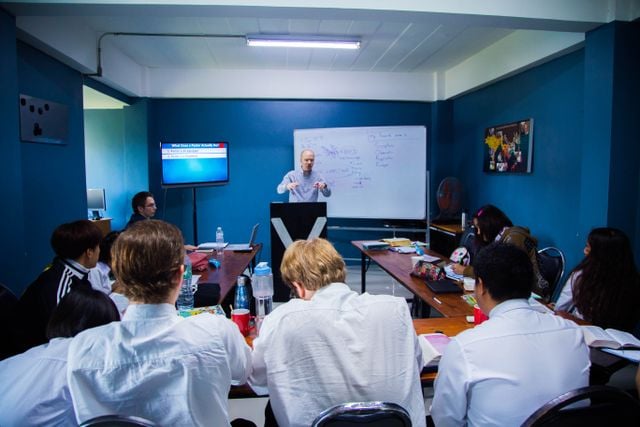



Speaking Spanish in business meetings takes more than the vocabulary you might pick up on an app. It demands confidence to introduce yourself clearly, contribute ideas professionally, and build lasting relationships across cultures. For Spanish learners advancing their careers, meetings are where classroom knowledge meets real-world application.
Whether you’re negotiating with clients in Mexico City, presenting to colleagues in Madrid, or interviewing for a position in Buenos Aires, the phrases you use shape professional perceptions. This comprehensive guide provides 60+ essential Spanish expressions used in authentic business contexts, helping you transition from learning Spanish to using it confidently in the workplace.
→Sign Up Now: Free Trial Spanish Lesson With a Native Teacher!←
Before we delve into specific areas such as introductions, opening a meeting, sharing opinions, negotiating, and closing discussions, it helps to focus on a small set of high-impact language. If you learn to understand and use just these six Spanish expressions, you are already well on your way to professional success in Spanish-speaking workplaces. These phrases cover the core functions that appear in almost every business meeting, from taking the floor and presenting ideas to managing disagreement and closing decisions with clarity.
- Para empezar, me gustaría plantear una idea.
To begin with, I’d like to put forward an idea.
This phrase gives you the floor in a natural, confident way and signals structure. Spanish meetings value organized contributions, and this immediately frames you as prepared. - Desde la experiencia que tengo en este tema…
Based on my experience in this area…
Rather than sounding assertive or confrontational, this phrase grounds your opinion in experience, which carries weight across Spanish-speaking business cultures. - Entiendo el planteamiento, aunque veo algunos puntos a revisar.
I understand the approach, although I see some points to revisit.
Disagreement in Spanish meetings often starts with acknowledgement. This expression protects relationships while opening space for discussion. - ¿Cómo encaja esto con los objetivos actuales?
How does this fit with our current objectives?
Asking the right question often has more impact than giving an answer. This phrase redirects discussion without interrupting authority. - Para avanzar, propongo lo siguiente.
To move things forward, I propose the following.
Spanish business communication values progress. This expression signals leadership and keeps meetings from stalling. - Entonces, quedamos en lo siguiente.
So, we agree on the following.
Clear endings matter. This phrase helps you summarise outcomes and close discussions decisively, a skill that stands out in multilingual meetings.
How to Introduce Yourself in a Business Meeting in Spanish
Making a good impression in business meetings in Spanish starts with a clear, confident introduction. A strong introduction helps you establish credibility from the moment you speak, much like a polished Spanish cover letter or a successful interview.
Spanish-speaking workplaces expect respectful, well-structured introductions, but the style varies across regions. In Mexico and Colombia, people often begin with usted and include job titles to show respect. In Spain, meetings shift to tú more quickly, and introductions feel more direct. Knowing these differences helps you adjust your tone so your introduction feels natural in the local business culture. Below are common Spanish business meeting expressions used in both formal and more relaxed workplace settings that you can safely use in any Spanish-speaking environment.
Formal Ways of Presenting Yourself in Spanish Business Settings
- Buenos días, mi nombre es Carlos Gómez.
Good morning, my name is Carlos Gómez. - Encantado/a de conocerlo/la.
Pleased to meet you. - Soy responsable del área de marketing.
I’m in charge of the marketing department. - Trabajo en el departamento de ventas.
I work in the sales department. - Represento a la empresa ABC.
I represent the company ABC. - Gracias por recibirme hoy.
Thank you for meeting with me .
Casual and Semi-Formal Introductions in Spanish at Work
- Hola, soy Ana.
Hi, I’m Ana. - Trabajo con el equipo de proyectos.
I work with the projects team. - Estoy a cargo de esta presentación.
I’m in charge of this presentation. - Formo parte del equipo de desarrollo.
I’m part of the development team. - Un gusto estar acá con ustedes.
Nice to be here with you all. - Gracias por sumarse a la reunión.
Thanks for joining the meeting.

How to Open a Business Meeting in Spanish
Opening business meetings in Spanish effectively helps establish structure, clarity, and professionalism from the start. Using the right business Spanish phrases allows you to get everyone’s attention, outline the purpose of the meeting, and guide the discussion with confidence. This type of Spanish business meeting vocabulary is especially important in formal settings or when working with international teams.
In Spanish-speaking workplaces, opening remarks tend to be direct and focused on organization. The expressions below reflect how Spanish is used at work to signal professionalism and move the group smoothly toward the meeting’s objectives.
Expressions in Spanish to Get Everyone’s Attention
- Buenos días a todos.
Good morning everyone. - Gracias por estar aquí hoy.
Thank you for being here today. - Vamos a comenzar la reunión.
Let’s begin the meeting. - Cuando quieran, empezamos.
Whenever you’re ready, we’ll start. - Gracias por su tiempo.
Thank you for your time. - Si les parece, damos inicio a la reunión.
If it works for you, let’s start the meeting.
Ways to Introduce the Agenda or a New Topic in Spanish
- El objetivo de esta reunión es…
The goal of this meeting is… - Hoy vamos a hablar de…
Today we’re going to talk about… - Me gustaría empezar con…
I’d like to start with… - Tenemos varios puntos para tratar hoy.
We have several points to cover today. - El primer tema en la agenda es…
The first item on the agenda is… - Después veremos…
After that, we’ll look at…
Useful Expressions to Use During a Business Meeting in Spanish
Once business meetings are underway, the right Spanish expressions help you take part actively without sounding abrupt or uncertain. Using appropriate business Spanish phrases allows you to interrupt politely, steer the discussion, and express agreement or disagreement with clarity and respect. This kind of Spanish workplace vocabulary is essential for professional communication, especially in meetings with mixed levels of formality.
For example, phrases like “Si me permiten añadir algo…” (“If you’ll allow me to add something…”) help you enter the conversation smoothly, while “Estoy de acuerdo con ese punto” (“I agree with that point”) shows alignment without interrupting the flow.
The expressions below reflect how Spanish is used in real business settings to keep discussions productive and professional.
How to Interrupt Politely in a Spanish Business Meeting
- Perdón que interrumpa, pero…
Sorry to interrupt, but… - Un momento, por favor.
One moment, please. - Si me permiten, quisiera agregar algo.
If you allow me, I’d like to add something. - Antes de seguir, me gustaría comentar algo.
Before we continue, I’d like to comment on something. - ¿Puedo hacer una observación?
May I make a comment?
Ways to Change or Redirect the Topic in Spanish
- Volviendo al tema principal…
Getting back to the main topic… - Me gustaría retomar el punto anterior.
I’d like to return to the previous point. - Pasando a otro tema…
Moving on to another topic… - En relación con lo que mencionamos antes…
In relation to what we mentioned earlier… - Para no desviarnos demasiado…
So we don’t stray too far…
How to Agree with Someone in a Meeting in Spanish
- Estoy de acuerdo.
I agree. - Coincido completamente.
I completely agree. - Eso tiene sentido.
That makes sense. - Estoy de acuerdo con lo que dices.
I agree with what you’re saying. - Comparto ese punto de vista.
I share that point of view.
How to Disagree Politely in Spanish at Work
- Entiendo tu punto, pero veo las cosas de otra manera.
I understand your point, but I see things differently. - No estoy del todo de acuerdo.
I don’t completely agree. - Desde mi perspectiva, sería mejor…
From my perspective, it would be better… - Tal vez podríamos considerar otra opción.
Maybe we could consider another option. - Tengo una opinión distinta al respecto.
I have a different opinion on that.
How to Share Ideas and Opinions in Spanish Meetings
Contributing ideas in business meetings in Spanish requires clear structure, confident delivery, and the right professional Spanish expressions. Whether you’re presenting a proposal, responding to a colleague, or asking for clarification, using appropriate Spanish workplace vocabulary helps your contributions sound thoughtful and professional rather than hesitant or abrupt.
For instance, “Desde mi punto de vista…” (“From my point of view…”) signals a considered opinion without sounding confrontational, while “Me parece que podríamos mejorar este aspecto” (“It seems to me that we could improve this aspect”) allows you to suggest changes diplomatically.
The phrases below reflect how business Spanish communication works in real meetings, supporting collaboration in both formal settings and team-based discussions.
Expressions to Give Your Opinion in Spanish
- En mi opinión…
In my opinion… - Desde mi punto de vista…
From my point of view… - Creo que esta opción es la más adecuada.
I think this option is the most suitable. - Me parece que podríamos mejorar este aspecto.
It seems to me that we could improve this aspect. - Considero que es una buena oportunidad.
I believe it’s a good opportunity.
Ways to Add Information or Expand on a Point in Spanish
- Quisiera agregar algo más.
I’d like to add something else. - Para complementar lo que se dijo…
To add to what was said… - Además, es importante tener en cuenta que…
In addition, it’s important to keep in mind that… - Me gustaría profundizar un poco más en este punto.
I’d like to go a bit deeper into this point. - Esto se relaciona con lo que mencionamos antes.
This relates to what we mentioned earlier.
How to Ask for Clarification or Repetition in Spanish
- ¿Podrías aclarar ese punto, por favor?
Could you clarify that point, please? - No me quedó del todo claro.
That wasn’t completely clear to me. - ¿Podrías repetirlo?
Could you repeat that? - ¿A qué te refieres exactamente?
What exactly are you referring to? - ¿Podrías dar un ejemplo?
Could you give an example?
Negotiation and Compromise in Spanish Business Meetings
Negotiation is one of the most challenging aspects of business communication in Spanish, as it requires balancing clarity, diplomacy, and cultural expectations. In Spanish business meetings, negotiation language tends to sound measured and collaborative rather than direct or confrontational, especially when discussing budgets, timelines, or differing priorities. Choosing the right professional Spanish expressions helps you protect your position while keeping the conversation constructive.
💡 Pro Tip: Spanish business communication favors diplomacy over directness. Phrases like “Me parece que…” (“It seems to me that…”) allow you to disagree, negotiate, or suggest changes without sounding confrontational.
For example, “Podríamos llegar a un punto intermedio” (“We could reach a middle ground”) opens space for compromise, while “En este momento no es viable” (“At the moment, it’s not feasible”) allows you to push back without sounding dismissive. The expressions below reflect how negotiation and compromise are handled in real Spanish workplace communication.
Ways to Suggest a Compromise in Spanish
- Podríamos llegar a un punto intermedio.
We could reach a middle ground. - Quizás una solución intermedia funcione mejor.
Maybe a middle-ground solution would work better. - Podemos ajustar esta propuesta.
We can adjust this proposal. - ¿Qué les parece si combinamos ambas ideas?
What do you think if we combine both ideas? - Podríamos evaluarlo desde otro enfoque.
We could look at it from another angle.
How to Push Back or Set Limits in Spanish
- En este momento no es viable.
At the moment, it’s not feasible. - Tenemos ciertas limitaciones.
We have certain constraints. - No contamos con ese margen ahora.
We don’t have that flexibility right now. - Preferiríamos mantener esta condición.
We would prefer to keep this condition. - Eso excede el alcance del proyecto.
That goes beyond the scope of the project.
Expressions to Ask for More Time or Delay a Decision
- Necesitamos un poco más de tiempo para evaluarlo.
We need a bit more time to evaluate it. - Podemos revisarlo con más detalle y retomar el tema luego.
We can review it in more detail and come back to it later. - ¿Les parece si lo dejamos para la próxima reunión?
Would it be okay to leave it for the next meeting? - Preferimos tomar la decisión más adelante.
We’d prefer to make the decision later. - Lo analizamos internamente y les damos una respuesta.
We’ll review it internally and get back to you.
How to Close a Business Meeting in Spanish
Closing business meetings in Spanish effectively is just as important as opening them. A clear and professional closing helps confirm decisions, assign responsibilities, and ensure everyone leaves with the same understanding of next steps. Using the right business Spanish phrases at this stage reinforces clarity, accountability, and professionalism.
For example, expressions like “Para resumir, los próximos pasos son…” (“To summarize, the next steps are…”) help organize outcomes clearly, while “Gracias a todos por su tiempo” (“Thank you all for your time”) allows you to end the meeting on a polite, professional note. The expressions below reflect how meetings and interviews are typically wrapped up in Spanish-speaking workplaces.
Expressions to Review Action Items and Responsibilities
- Para resumir, los próximos pasos son…
To summarise, the next steps are… - Quedamos en que…
We agreed that… - Entonces, cada uno se encargará de…
So, each person will be responsible for… - Vamos a darle seguimiento a estos puntos.
We’ll follow up on these points. - Les enviaremos un resumen por correo.
We’ll send you a summary by email.
Ways to Thank Participants and End a Meeting in Spanish
- Gracias a todos por su tiempo.
Thank you all for your time. - Agradecemos su participación.
We appreciate your participation. - Ha sido una reunión muy productiva.
It’s been a very productive meeting. - Si no hay nada más, damos por terminada la reunión.
If there’s nothing else, we’ll close the meeting. - Nos vemos en la próxima reunión.
See you at the next meeting.
Spanish Phrases to Help You Wrap Up an Interview
- Gracias por la oportunidad.
Thank you for the opportunity. - Quedo atento/a a cualquier novedad.
I look forward to hearing from you. - Ha sido un gusto conversar con ustedes.
It’s been a pleasure speaking with you. - Espero tener noticias pronto.
I hope to hear from you soon. - Muchas gracias por su tiempo y consideración.
Thank you very much for your time and consideration.
Formal vs Informal Language in Spanish Business Contexts
Formality in Spanish business communication depends on both the pronoun you choose and the country you’re in. Understanding how usted, tú, vos, and ustedes work helps you sound appropriate and professional across regions.
Usted is the formal singular form used in business meetings, interviews, and first-time interactions. Although it refers to the person you’re speaking to, it uses third-person singular verb forms. For example, “¿Cómo está usted?” uses está, not estás. In professional contexts, usted signals respect and distance and remains the safest choice when formality is expected.
Tú and vos are informal singular forms, with verb forms that differ from usted. Tú uses second-person singular verbs such as hablas, piensas, or tienes, and is common in Spain, Mexico, and many other countries. Vos uses its own conjugations, such as hablás, pensás, or tenés, and is widely used in Argentina, Uruguay, and parts of Central America. In modern workplaces, tú or vos often appear in internal teams and less hierarchical environments.
→Sign Up Now: Free Trial Spanish Lesson With a Native Teacher!←
In Latin America, ustedes functions as the neutral second-person plural, used in both formal and informal settings. Unlike usted, ustedes does not mark formality. It always takes third-person plural verb forms, such as hablan or deciden. In contrast, Spain distinguishes between vosotros for informal plural and ustedes for formal plural, a difference that does not exist in Latin American business Spanish. Choosing the right pronoun and verb form helps meetings feel natural and respectful, while mismatched formality often stands out more than vocabulary mistakes.
💡 Pro Tip: In Latin America, start with “usted” until colleagues indicate otherwise. In Spain, some modern workplaces use “tú” more quickly, but formality is safer initially.
Why Language Trainers’ Approach to Business Spanish Is Different
There is no single “correct” version of business Spanish. Effective professional communication depends on who you’re speaking to, where the interaction takes place, and how formality is expressed in that region or industry. Mastering these distinctions is what helps Spanish sound natural, confident, and appropriate in real workplace situations, even at intermediate levels.
Language Trainers addresses this complexity through fully personalized, face-to-face Spanish training delivered by native teachers with professional experience. Lessons are built around your role, industry, and objectives, whether you’re preparing for a high-stakes meeting, leading presentations, or just learning a few Spanish business idioms for improved communication at work. Instead of fixed syllabuses or generic content, training focuses on the specific language, register, and cultural context you need to communicate effectively at work.
Common Questions About Using Spanish in Business Meetings
1. What Level of Spanish Do I Need to Participate in a Business Meeting?
Participating in a business meeting in Spanish doesn’t require advanced fluency. A strong A2 level means you’re able to handle simple professional interactions, introduce yourself, understand basic explanations, and use set phrases. A B1 level allows you to follow discussions in more detail, express opinions, and respond spontaneously. At these language levels, practical communication skills matter far more than complex .
2. Is Business Spanish Different from Everyday Spanish?
Business Spanish focuses more on clarity, structure, and politeness than everyday conversation. It uses more neutral vocabulary, complete sentences, and formal expressions, especially in meetings or client interactions. While the grammar stays the same, tone and word choice shift noticeably. Informal slang and overly direct phrasing are usually avoided in professional settings.
3. Should I Use Usted or Tú in a Spanish Business Meeting?
The choice between usted and tú depends strongly on where you are working. In most of Latin America, usted is the default in business settings, especially with clients, managers, or anyone you’re meeting for the first time. In Spain, the norm is very different. Tú is the everyday default, even in many professional environments, and usted appears only in very formal, high-status, or tense situations, or when speaking with significant elders. Wherever you are, the safest strategy is to mirror the form your colleagues use and wait for them to offer the switch. .
4. What Are Some Useful Spanish Phrases for Business Meetings?
Useful Spanish phrases for business meetings include expressions that help structure conversation and show professionalism. Common examples are “El objetivo de esta reunión es…” (The goal of this meeting is…), “Desde mi punto de vista…” (From my point of view…), and “Para resumir…” (To summarize…). Learning these phrases helps you participate actively without searching for words mid-meeting.
5. What Are Friendly Ways to Interrupt in Spanish Meetings?
Polite interruptions in Spanish usually soften the action with respectful language. Phrases such as “Perdón que interrumpa, pero…” (Sorry to interrupt, but…) or “Si me permiten…” (If you allow me…) help you enter the conversation without sounding abrupt. This approach is common in both formal meetings and collaborative team discussions.
6. How Do I Sound Professional in Spanish Without Sounding Too Formal?
Sounding professional in Spanish means choosing clear, neutral expressions rather than overly rigid language. Using complete sentences, polite verbs, and respectful tone often matters more than strict formality. Expressions like “Me parece que…” or “Desde mi perspectiva…” strike a balance that feels professional without creating unnecessary distance.
7. How Do I Prepare for a Job Interview in Spanish?
Preparing for a job interview in Spanish works best when you focus on the questions you’re most likely to face and practise delivering clear, confident answers. Spanish interviews often favour concise explanations, formal phrasing, and examples that show initiative.
Steps to get ready for a job interview in Spanish:
• Review the most common Spanish interview questions and note key vocabulary
• Practise short, structured answers that highlight achievements and problem-solving
• Use formal verb forms when appropriate to match a professional tone
• Record yourself to check clarity, pace, and filler words
• Take a lesson with Language Trainers tutor for focused, interview-specific practice