

If you are visiting Paraguay, learning a few Guaraní phrases can change the way people receive you. Even a simple Mba’eichapa? [How are you? / Hello] or Aguyje [Thank you] shows that you are not treating the country as just another Spanish-speaking destination. Paraguay is proudly bilingual, and Guaraní is part of everyday life, humor, family, food, music, rural identity, and casual conversation. You do not need to speak it perfectly to make a good impression. In fact, many locals enjoy helping visitors try. The important thing is to start with useful phrases and understand the culture behind them.
In this Guaraní guide for travelers, we will look at the phrases tourists are most likely to need in Paraguay, from greetings and polite expressions to food, directions, shopping, socializing, and asking for help. We will also explain what Guaraní is, where it is spoken, how it works alongside Spanish and Jopara, and what pronunciation details can help you use these expressions with more confidence.
→Sign Up Now: Free Trial Guaraní Lesson With a Native Teacher!←
What Is Guaraní?
Guaraní, or Avañe’ẽ, is an Indigenous language from the Tupí-Guaraní family. It is one of the most important Indigenous languages in South America and one of the strongest examples of a Native American language still used widely in daily life today.
For tourists, Guaraní is especially important because it is not hidden away in museums, history books, or ceremonial contexts. In Paraguay, you can hear Guaraní in homes, markets, buses, football conversations, jokes, radio, music, political speeches, rural communities, and informal city life. It lives beside Spanish, and the two languages often mix naturally in everyday speech.
This is one of the first things visitors notice. Paraguay does not sound like Argentina, Uruguay, Bolivia, or Brazil. Its language landscape is different. A conversation may begin in Spanish, include Guaraní words for emotion or emphasis, shift into Jopara, and then return to Spanish again. Guaraní gives Paraguayan speech a rhythm and identity that tourists can recognize even before they understand every word.
Learning Guaraní also helps visitors understand Paraguay more respectfully. A phrase like Aguyje is not only a translation of “thank you.” It is a way of acknowledging the language that many Paraguayans associate with home, family, warmth, and national identity.
Is Guaraní a Language or a Dialect?
Guaraní is a language, not a dialect of Spanish. This is an important distinction for tourists to understand. It has its own grammar, pronunciation system, vocabulary, history, and literary tradition. It belongs to the Tupí-Guaraní language family, while Spanish belongs to the Romance language family. The two languages have influenced each other in Paraguay, but they are not varieties of the same language.
One reason people sometimes get confused is that Guaraní and Spanish are often used together in Paraguay. A local person might speak mostly Spanish but add Guaraní words for feelings, weather, humour, food, family, or emphasis. Another person, especially in a rural area, may speak much more Guaraní and only use Spanish when needed. This mixing can make Guaraní look like a “local version” of Spanish to an outsider, but that is not correct.
Guaraní is also not a single uniform block. There are different varieties, including Paraguayan Guaraní, Guaraní spoken in parts of Argentina and Bolivia, and Indigenous varieties used by Guaraní communities. For a tourist visiting Paraguay, the most useful focus is usually Paraguayan Guaraní and common everyday expressions heard in Jopara.
A simple example shows how different the language is from Spanish. In Guaraní, che means “I” or “my,” depending on the structure. This has nothing to do with the Argentine use of “che” as a casual attention-getter. A traveler who notices this immediately begins to see that Guaraní has its own internal logic, not just borrowed local colour.
Where Is Guaraní Spoken?
Guaraní is spoken mainly in Paraguay, where it has official status alongside Spanish and is deeply present in national life. It is also spoken in parts of Bolivia, Brazil, and Argentina, especially in regions connected historically and geographically to Guaraní-speaking .
For travelers, Paraguay is the place where Guaraní is most visible in daily life. You may hear it in Asunción, but it becomes even more noticeable outside the capital, in smaller towns, rural areas, family gatherings, markets, and informal conversations. In some places, Spanish may dominate official, educational, or business settings, while Guaraní carries more emotional, domestic, humorous, or community-based meaning.
Guaraní is also present in northeastern Argentina, especially in Corrientes and nearby areas, where it has cultural and historical importance. It is spoken in parts of Bolivia, especially in the south, and in areas of Brazil near Paraguay. It can also be heard in Spain through Paraguayan and other Guaraní-speaking migrant communities.
However, the tourist phrase guide in this article is mainly designed for visitors to Paraguay. That is where a few Guaraní phrases are most likely to help you connect with local people in everyday situations: greeting someone, saying thank you, talking about the heat, sharing tereré, asking someone to repeat something, or showing appreciation for Paraguayan culture.
Why Should Tourists Learn Guaraní Before Visiting Paraguay?
Tourists should learn a few Guaraní phrases before visiting Paraguay because language is one of the quickest ways to show respect. Many visitors arrive with Spanish and assume that will be enough. Spanish will help, of course, but Guaraní opens a different door. It tells people that you know Paraguay has its own cultural identity and that you are willing to meet it on its own terms.
Even a small amount of Guaraní can make interactions warmer. Saying Aguyje instead of only “gracias” can surprise people in a positive way. Saying Mba’eichapa? when greeting someone can make a conversation feel more local. Commenting Hakueterei! [It is so hot!] on a summer day can quickly become a shared joke, because everyone in Paraguay understands the power of the heat.
Guaraní is especially useful for informal situations. It can help you sound friendlier in markets, family homes, countryside hotels, bus stations, neighborhood shops, or while sharing tereré. It is not about pretending to be fluent. It is about showing curiosity.
This matters because Paraguay is often misunderstood by travelers who pass through quickly or see it only as a Spanish-speaking country between larger neighbors. Learning Guaraní helps you notice what makes Paraguay distinctive: its bilingual identity, its social warmth, its rural and urban contrasts, and the way people use language to create closeness.
A tourist who learns Guaraní also learns humility. The sounds may be new. The spelling may look unfamiliar. You may make mistakes. That is normal. What matters is the effort. In many cases, locals will appreciate the attempt and may even teach you more expressions on the spot.
How Do You Greet Someone in Guaraní?
Greetings are one of the easiest ways for tourists to use Guaraní naturally in Paraguay. A simple Mba’eichapa? [How are you? / Hello] can work as both a greeting and a friendly check-in, while Eguahẽ porã [Welcome] is a warm phrase you may hear when someone receives you. In Paraguay, greetings are not only functional. They help set the tone of the interaction, especially in small shops, family homes, countryside hotels, and informal conversations.
It is also worth remembering that many people will respond in Spanish, Guaraní, or Jopara depending on the situation. That is completely normal. The goal is not to force the conversation into Guaraní, but to show respect and interest. The following sections cover how to say hello, how to ask “How are you?”, and how to reply politely when someone greets you.
How to Say Hello in Guaraní
- Mba’eichapa?
[Hello / How are you?]
This is one of the most useful greetings for tourists because it works as both “hello” and “how are you?” in many everyday situations. - Mba’éichapa reiko?
[How are you living? / How are you?]
This is a fuller version of the greeting and can sound friendly when speaking to one person. - Mba’eichapa nde ko’ẽ?
[How is your morning?]
Use this as a morning greeting. It is more specific than a general hello and shows extra effort. - Mba’eichapa nde ka’aru?
[How is your afternoon?]
This is useful later in the day, especially in a relaxed conversation. - Mba’eichapa nde pyhare?
[How is your evening / night?]
This can be used as an evening or night greeting, depending on the situation.
How to Ask “How Are You?” in Guaraní
- Mba’eichapa reiko?
[How are you?]
A safe and useful phrase when greeting someone directly. - Mba’eichapa?
[How are you? / Hello]
Shorter and easier for beginners. This is the version most tourists should learn first. - Mbaé’chepa?
[How are you?]
Another form you may see or hear. Listen to how locals use it before making it your main phrase. - Ha nde?
[And you?]
Add this after replying to someone’s greeting. It keeps the exchange polite and conversational.
How to Reply Politely in Guaraní
- Iporã, ha nde?
[Good, and you?]
This is one of the most practical replies for tourists. Use it when someone asks how you are. - Cheko’ẽ porã, ha nde?
[I am having a good morning, and you?]
A polite morning reply. It fits naturally after someone asks about your morning. - Che ka’aru porã avei.
[I am fine this afternoon too.]
Useful in afternoon greetings. Avei means “too” or “also.” - Chepyhare porã avei.
[I am fine this evening / tonight too.]
A useful evening or night reply, especially if someone has asked about your evening. - Jajotopata.
[See you later / We will meet again.]
A friendly parting phrase. It feels warmer than a simple goodbye.
How Do You Use Polite Guaraní Phrases?
Polite phrases matter because they make everyday interactions feel softer and more personal. In Paraguay, a well-placed Aguyje [Thank you] can go a long way, especially when someone gives directions, serves food, shares tereré, or helps you understand something. Another useful phrase is Tereiko porãke [You’re welcome / Be well], which you may hear as a response to thanks.
Tourists should also know that politeness in Paraguay often works through tone, warmth, and social context, not only through direct equivalents of “please” or “sorry.” In many casual situations, people may use Spanish words such as “por favor,” “permiso,” or “disculpame” inside Jopara. That does not mean Guaraní is missing politeness; it means real Paraguayan speech often blends both languages. The sections below cover how to say thank you, how to handle please, sorry, and excuse me, and which polite phrases are especially useful for visitors.
How to Say Thank You in Guaraní
- Aguyje
[Thank you.]
This is the essential thank-you phrase for tourists. It is short, friendly, and widely appreciated. - Aguyjevete
[Thank you very much.]
Use this when someone has gone out of their way to help you. - Aguyjevete ndéve.
[Thank you very much to you.]
A warmer and more personal form of thanks. Good after receiving help, directions, or hospitality. - Tereiko porãke.
[You’re welcome / Be well.]
This can be used as a reply to thanks. It has a kind, well-wishing tone.
How to Say Please, Sorry, and Excuse Me in Guaraní
- Eñe’ẽ mbegueve.
[Please speak more slowly.]
This is one of the most useful polite phrases for travelers. Use it when someone is speaking too quickly. - Ere jeý péa.
[Please say that again.]
Helpful when you did not catch a phrase. Use a friendly tone and it will sound polite. - Ehaí chéve péa.
[Please write that down for me.]
Very useful for addresses, prices, names, or bus information. - Ikatúpa?
[Could you? / Is it possible?]
This is useful for making a request sound softer. Tourists may hear it in polite questions. - Permiso
[Excuse me.]
This is Spanish, but it is commonly useful in Paraguay and can appear naturally in Jopara. Use it when passing someone, entering a space, or politely getting attention. - Disculpame
[Sorry / Excuse me.]
Also Spanish, but practical in everyday Paraguayan interactions. Use it when apologizing lightly or interrupting someone politely.
Polite Guaraní Phrases Locals Will Appreciate
- Reñe’ẽkuaápa guaraníme?
[Do you speak Guaraní?]
A useful phrase if you want to show interest in the language. It can open a friendly conversation. - Reñe’ẽkuaápa inglépe?
[Do you speak English?]
Useful in tourist situations, though it is best to ask politely and not assume. - Añe’ẽkuaamichimi mante guaraníme.
[I speak only a little Guaraní.]
A humble and friendly phrase. It tells people you are learning and do not expect yourself to be perfect. - Eñe’ẽ chéve guaraníme.
[Speak to me in Guaraní.]
Use this with someone friendly who knows you are learning. In a formal or rushed situation, it may feel too demanding. - Mba’éichapa oje’e … guaraníme?
[How do you say … in Guaraní?]
A great learner’s phrase. It invites locals to teach you new words. - Ndaikuaái la ereséva.
[I don’t understand what you are saying.]
Useful when you need clarification. Say it gently so it does not sound abrupt. - Hesakãmbáma la ereséva.
[I understand what you are saying now.]
A good follow-up after someone explains something more clearly.
How Do You Ask for Directions in Guaraní?
Asking for directions in Paraguay often happens in a mix of Spanish, Guaraní, and Jopara, especially in cities, bus stations, markets, and small towns. A tourist may ask a question in Spanish and then hear a Guaraní word inside the answer or use a simple Guaraní phrase such as Ere jeý péa [Please say that again] or Ehaí chéve péa [Please write that down for me] when the directions become too fast. These phrases are especially useful because directions can involve local landmarks, neighborhood names, bus numbers, and informal references that are hard to catch the first time.
Public transport in Paraguay can also feel different from what some tourists expect. In Asunción and other urban areas, buses are common, but visitors often need local help to understand which bus to take, where to wait, and where to get off. Routes may be known by number, destination, neighbourhood, or local habit rather than by the kind of clear tourist signage you might expect in larger international cities. In smaller towns or rural areas, people may rely on buses, shared transport, taxis, rides from locals, or walking directions based on landmarks. For that reason, the most useful Guaraní phrases are not only about asking “Where is…?” They are also about slowing the conversation down, confirming what you heard, and asking someone to write a name or place for you.
The next sections cover basic place and transport words, followed by practical phrases for buses, taxis, and walking around.
Guaraní Words for Places, Streets, and Transport
- tape
[road / path / way]
Useful as a basic word connected to routes, roads, and ways of getting somewhere. - óga
[house / home]
You may see or hear this word in names of places, homes, shops, or community spaces. - tupa roga
[church / God’s house]
Useful because churches are often used as landmarks when people give directions. - Paraguái
[Paraguay / Asunción, depending on context]
The Guaraní form can appear in cultural or local contexts. Listen carefully, because place names may shift between Spanish and Guaraní usage. - taha
[police / police officer, in related forms]
Useful to recognize in emergency or safety contexts, especially in phrases involving the police. - tereré renda
[tereré place / place to drink tereré]
This is a useful kind of phrase to recognize socially, though locals may express it in different ways. - baño / sanitario
[bathroom / toilet]
These are Spanish words, but they are very practical in Paraguay. In many tourist situations, asking in Spanish or Jopara will be more natural than forcing a full Guaraní sentence.
Useful Guaraní Travel Phrases for Buses, Taxis, and Walking Around
- Moõpa oĩ…?
[Where is…?]
A useful starter for asking where something is. You can follow it with a place name, though many tourists will mix this with Spanish. - Ere jeý péa.
[Please say that again.]
Use this when someone gives directions too quickly or mentions a place name you did not catch. - Ehaí chéve péa.
[Please write that down for me.]
Very helpful for addresses, bus numbers, hotel names, or neighbourhoods. - Eñe’ẽ mbegueve.
[Please speak more slowly.]
A polite phrase for any travel situation where the answer is too fast. - Ndaikuaái la ereséva.
[I don’t understand what you are saying.]
Useful when you need the person to explain again. Say it gently so it sounds like a request for help, not a complaint. - Hesakãmbáma la ereséva.
[I understand what you are saying now.]
A good phrase to use after someone repeats or explains directions more clearly. - Reñe’ẽkuaápa inglépe?
[Do you speak English?]
Useful in hotels, tourist offices, or transport situations, but it is best asked politely and without assuming. - Añe’ẽkuaamichimi mante guaraníme.
[I speak only a little Guaraní.]
This can make the interaction warmer and more patient when you are trying to understand directions.
How Do You Order Food and Drinks in Guaraní?
Food is one of the friendliest places to use Guaraní in Paraguay because eating, sharing, and offering something to drink are deeply social. A simple Aguyje [Thank you] after someone serves you, or Heterei [Delicious] after a good meal, can make the exchange feel warmer. Tourists do not need to know complex food vocabulary to make a good impression. A few well-chosen words can show appreciation for the person serving the food and for Paraguayan hospitality.
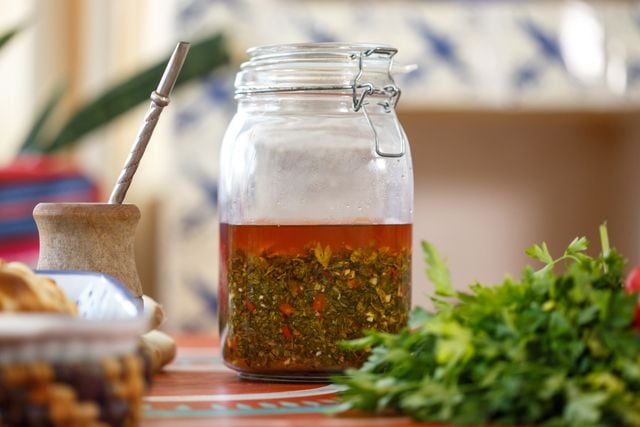
This is especially true with tereré. Tereré is a cold drink made with yerba mate and usually prepared with ice water and herbs. In Paraguay, it is more than a drink for hot weather. It is a social ritual, a reason to sit together, talk, rest, and share time. People often drink it from a guampa with a bombilla, passing it around in a group. If someone invites you to share tereré, they are often inviting you into a moment of conversation and connection, not simply offering refreshment. That is why phrases such as Ja’u la tereré [Let’s drink tereré] and Jaha! [Let’s go!] feel so natural in Paraguayan daily life.
The following sections cover food vocabulary, tereré expressions, and simple ways to compliment a meal.
How to Talk About Food in Guaraní
- Pekaruporãnte.
[Enjoy your meal / Have a nice meal.]
Useful when speaking to more than one person before they eat. - karu
[to eat / meal, depending on context]
A useful root to recognize in food-related expressions. - chipa
[Paraguayan cheese bread]
A must-know food word for tourists. Chipa is one of the most recognizable Paraguayan foods. - so’o
[meat]
Useful to recognize on menus or in conversations about traditional food. - ryguasu
[chicken]
Helpful for basic food conversations, especially if you are asking what something contains. - kesu
[cheese]
A common food word, borrowed from Spanish “queso” and adapted into Guaraní. - y
[water]
Short but important. In Guaraní, y is a full word and means water.
Essential Tereré Words and Phrases
- tereré
[cold yerba mate drink]
Essential in Paraguay. Knowing this word helps you understand one of the country’s most important social habits. - Ja’u la tereré.
[Let’s drink tereré.]
A very natural Jopara-style phrase. Use it casually with people you are getting to know. - Ja’umina.
[Let’s drink.]
A friendly invitation. You may hear it when people suggest getting something to drink together. - Jaha!
[Let’s go!]
A good response to an invitation such as Ja’umina. It sounds casual and enthusiastic. - guampa
[cup used for tereré or mate]
Useful because tereré is not usually served in an ordinary cup. - bombilla
[metal straw]
A Spanish word widely used in the region. It is the straw used to drink tereré or mate. - pohã ñana
[medicinal herbs]
Important tereré vocabulary. These herbs are often added to the water for flavour, freshness, or traditional uses. - yerba
[yerba mate leaves]
A Spanish word, but essential for understanding tereré culture in Paraguay.
How Do You Shop in Guaraní?
Shopping in Paraguay can be a very social experience, especially in markets, small stores, craft stalls, neighborhood shops, and countryside towns. A tourist who begins with Mba’eichapa? [Hello / How are you?] and ends with Aguyje [Thank you] will usually sound warmer than someone who only points and pays. Even if the rest of the exchange happens in Spanish, those Guaraní phrases can soften the interaction and show interest in local culture.
In markets and small shops, politeness often depends on tone, patience, and friendliness. Bargaining may happen in some contexts, but it is important not to treat every exchange like a negotiation. Start by greeting the seller, ask the price clearly, and avoid sounding impatient. If you do not understand the answer, use Ere jeý péa [Please say that again] or Ehaí chéve péa [Please write that down for me]. The sections below cover how to ask prices, useful numbers and buying phrases, and friendly expressions for market situations.
How to Ask “How Much Is This?” in Guaraní
- Mboý kóva?
[How much is this?]
One of the most useful shopping phrases for tourists. Use it while pointing politely to the item. - Mboý?
[How much?]
A shorter version. Useful in informal situations, but the full phrase is clearer. - Ere jeý péa.
[Please say that again.]
Helpful when you do not understand the price the first time. - Ehaí chéve péa.
[Please write that down for me.]
Useful if the price, address, or item name is difficult to catch. - Ndaikuaái.
[I don’t know.]
Useful if you are being asked something you cannot answer, though in shopping contexts a smile and clarification in Spanish may help.
Guaraní Numbers and Simple Buying Phrases
- peteĩ
[one]
Useful when buying one item or asking for one portion. - mokõi
[two]
Useful for small purchases, food, tickets, or drinks. - mbohapy
[three]
A practical number for ordering or buying in small quantities. - irundy
[four]
Useful to recognize when counting items or people. - po
[five]
A helpful number to know, especially in simple market exchanges. - heta
[a lot / many / very]
Useful in casual speech. You may hear it when someone talks about quantity, intensity, or abundance. - sa’i
[a little / few]
Useful when talking about small amounts, though tourists should listen to local usage before relying on it heavily. - Aipota kóva.
[I want this.]
Practical when pointing to an item. Use a polite tone so it does not sound too abrupt.
Friendly Guaraní Phrases for Markets and Small Shops
- Mba’eichapa?
[Hello / How are you?]
A friendly way to begin the interaction before asking for a price. - Iporã.
[Good / nice.]
Useful when reacting positively to an item, food, or recommendation. - Añe’ẽkuaamichimi mante guaraníme.
[I speak only a little Guaraní.]
A humble phrase that often makes the exchange friendlier. - Mba’éichapa oje’e … guaraníme?
[How do you say … in Guaraní?]
A great phrase in markets because sellers may enjoy teaching you the Guaraní name for a fruit, food, craft, or local product.
How Do You Socialize With Locals in Guaraní?
Socializing in Paraguay is often where Guaraní becomes most enjoyable for tourists. You might begin with Mba’éichapa nderéra? [What is your name?] or answer with Che cheréra… [My name is…], and the conversation may quickly move between Spanish, Guaraní, and Jopara. In many situations, the point is not to speak perfect Guaraní, but to show warmth, curiosity, and respect for a language that carries strong cultural identity.
Paraguayans often appreciate it when visitors make the effort, especially in relaxed social settings. Still, it is important to keep your tone humble. Guaraní can be playful and expressive, but some phrases are intimate, regional, or easy to misuse. Start with introductions, friendly reactions, thanks, and simple compliments before trying more emotional or informal expressions. The sections below cover how to introduce yourself, useful everyday phrases, and simple ways to say you like or love Paraguay.
How to Introduce Yourself in Guaraní
- Mba’éichapa nderéra?
[What is your name?]
Use this when asking one person’s name. It is one of the most useful social phrases for visitors. - Che cheréra…
[My name is…]
Use this to introduce yourself. Add your name after the phrase. - Mba’éichapa ndererajoapy?
[What is your surname?]
This is more specific than asking for someone’s first name. It is less necessary in casual tourist situations. - Chererajoapy…
[My surname is…]
Useful if you are filling out information or having a more formal conversation. - Moõguápa nde?
[Where are you from?]
A useful phrase when getting to know someone. Use it with a friendly tone. - Che … gua.
[I am from…]
Add your country or city before gua. For example, a visitor could use this structure to say where they are from. - Che roryete roikuaávo.
[Pleased to meet you.]
A warm phrase for meeting someone. It sounds more thoughtful than simply giving your name and moving on.
Friendly Guaraní Phrases for Everyday Conversations
- Mba’eichapa?
[Hello / How are you?]
A simple way to begin many casual conversations. - Iporã, ha nde?
[Good, and you?]
A natural reply when someone asks how you are. - Iporã.
[Good / nice.]
Very flexible. You can use it to respond positively to a place, experience, meal, or situation. - Hakueterei!
[It is so hot!]
Extremely useful in Paraguay, especially in summer. It works as a shared joke or conversation starter. - Ja’u la tereré.
[Let’s drink tereré.]
A very social phrase. It belongs to relaxed moments with friends, hosts, or people you are getting to know. - Ja’umina.
[Let’s drink.]
A casual invitation. You may hear it when friends suggest getting something cold to drink. - Jaha!
[Let’s go!]
A simple, enthusiastic response to an invitation. - Ahata aju.
[I am going, and I will come back.]
A warm way to leave because it suggests return rather than a final goodbye. You may hear it in friendly local contexts.
How to Say “I Like Paraguay” or “I Love Paraguay” in Guaraní
- Iporã Paraguay.
[Paraguay is beautiful / Paraguay is good.]
This is a safe and simple compliment. Use it when you want to say something positive about the country. - Rohayhu Paraguay.
[I love Paraguay.]
This is an affectionate tourist-friendly expression that locals may appreciate, especially because it shows enthusiasm for the country. - Aguyje, Paraguay.
[Thank you, Paraguay.]
A simple emotional phrase for social media captions, travel reflections, or farewell moments. - Che rory Paraguáipe.
[I am happy in Paraguay.]
A warm phrase, but use it after practising pronunciation because it is less familiar to beginners than Aguyje or Mba’eichapa. - Paraguay iporãiterei.
[Paraguay is very beautiful / very good.]
A stronger compliment than Iporã Paraguay. It is useful when talking about a place, trip, meal, or experience.
How Do You Ask for Help in Guaraní?
Asking for help in Guaraní is not only about emergencies. For tourists, it often means asking someone to repeat a phrase, speak more slowly, write something down, or explain what they mean. Two of the most useful phrases are Eñe’ẽ mbegueve [Please speak more slowly] and Ere jeý péa [Please say that again]. They are polite, practical, and useful in almost every travel situation.
In Paraguay, people are often patient when visitors try Guaraní, but you should make the interaction easy for the other person. Smile, keep your request short, and be ready to switch to Spanish or English if needed. If you are in a serious situation, prioritize being understood. A safe Spanish phrase may be better than uncertain Guaraní in an emergency. The sections below cover how to say you do not understand, how to ask someone to slow down, and the emergency phrases tourists should recognize.
How to Say “I Don’t Understand” in Guaraní
- Ndaikuaái.
[I don’t know.]
A short and useful phrase. Depending on context, it can also help show that you do not understand. - Ndaikuaái la ereséva.
[I don’t understand what you are saying.]
More complete and clearer than Ndaikuaái Use it gently so it sounds like a request for help. - Hesakãmbáma la ereséva.
[I understand what you are saying now.]
Use this after someone explains or repeats something successfully. - Añe’ẽkuaamichimi mante guaraníme.
[I speak only a little Guaraní.]
A helpful phrase that sets expectations and often makes the other person more patient. - Reñe’ẽkuaápa inglépe?
[Do you speak English?]
Useful in hotels, transport, medical situations, or tourist areas. Ask politely and do not assume the answer will be yes.
How to Ask Someone to Speak Slowly in Paraguay
- Eñe’ẽ mbegueve.
[Please speak more slowly.]
One of the most useful Guaraní phrases for tourists. Use it whenever the conversation moves too fast. - Ere jeý péa.
[Please say that again.]
Helpful when you missed a word, price, address, bus direction, or name. - Ehaí chéve péa.
[Please write that down for me.]
Very useful for hotel addresses, place names, phone numbers, directions, and transport information. - Mba’éichapa oje’e … guaraníme?
[How do you say … in Guaraní?]
A good learner’s phrase. Use it when the situation is relaxed and someone has time to teach you. - Eñe’ẽ chéve guaraníme.
[Speak to me in Guaraní.]
Use this only in friendly learning situations. In a shop, bus station, or rushed situation, it may sound too demanding.
Emergency Guaraní Phrases for Tourists
- Tereho!
[Go away!]
A strong phrase. Use it only if you need to tell someone firmly to leave. - Cherejá che’año!
[Leave me alone!]
Useful to recognize and use in an uncomfortable or unsafe situation. - Epytá!
[Stop!]
A short emergency phrase. Use it when you need someone to stop immediately. - Okái!
[Fire!]
Important to recognize in an emergency. - Ehenói tahachípe!
[Call the police!]
A serious emergency phrase. In a real situation, you can also use Spanish if that is faster or clearer. - Ekuerá pya’eke.
[Get well soon.]
Not an emergency phrase exactly, but useful in health-related conversations when someone is ill or recovering. - Help! / Ayuda!
[Help!]
If you are in danger and do not know the Guaraní phrase, use Spanish or English loudly and clearly. In emergencies, being understood matters more than using the local language perfectly.
How Can a Native Teacher Help You Learn Guaraní Before Your Trip?
A native teacher can help you learn Guaraní in a way that phrase lists alone cannot. For tourists, the challenge is not only remembering words like Mba’eichapa? [How are you? / Hello] or Aguyje [Thank you]. It is knowing when to use them, how formal or casual they sound, how they fit into Paraguayan daily life, and when Spanish, Guaraní, or Jopara would feel more natural.
This is where a teacher becomes a cultural guide as much as a language instructor. Guaraní is connected to family life, humor, rural identity, food, music, tereré, and the way Paraguayans express warmth and familiarity. A native teacher can explain why a phrase works in a market but may sound too casual in an official setting, why some expressions are perfect for socializing but not for emergencies, and why pronunciation details matter when words look short but carry strong meaning.
At Language Trainers, we believe language learning should stay human, whether your lessons are face-to-face or online. That matters especially with a language like Guaraní, where culture, tone, and real-life use are just as important as vocabulary. A personalized Guaraní course can be built around your trip, your route, your interests, and the kinds of conversations you actually want to have. One learner may need basic greetings and travel phrases before visiting Asunción, while another may want to connect with family, explore rural Paraguay, understand tereré culture, or learn more about Guaraní as part of South American identity.
With a native teacher, you can practice the phrases you will really use, hear natural pronunciation, ask cultural questions, and build confidence before you arrive. Instead of memorizing a long list, you learn how to use Guaraní respectfully and naturally in the situations that matter most to you.
If you are planning a trip to Paraguay and want to connect with the country through its language, contact Language Trainers to ask about a free trial Guaraní lesson.
→Sign Up Now: Free Trial Guaraní Lesson With a Native Teacher!←
5 Questions About Guaraní Phrases for Tourists
1. Do people in Paraguay speak Guaraní or Spanish?
People in Paraguay speak both Guaraní and Spanish. Paraguay is officially bilingual, and both languages are part of national life. In practice, the balance changes depending on the region, the situation, and the speaker. Spanish is common in government, education, business, tourism, and many urban settings, while Guaraní is very strong in family life, rural areas, informal conversation, humour, music, and everyday identity.
Many Paraguayans also use Jopara, a natural mix of Spanish and Guaraní. This means tourists may hear a Spanish sentence with Guaraní words inside it, or a conversation that moves between both languages. For visitors, Spanish is useful, but a few Guaraní phrases can make interactions feel much warmer.
2. Is Guaraní hard for English speakers to learn?
Guaraní can feel challenging for English speakers because it is very different from English and Spanish. The sounds, spelling, sentence structure, nasal vowels, and glottal stops may all feel unfamiliar at first. Words such as mba’e include a small break in the sound, and vowels with a tilde, such as ã in porã, need nasal pronunciation.
However, tourists do not need to master the whole language before traveling. Learning a small set of useful phrases is very achievable. Start with greetings, thanks, basic replies, and travel phrases such as Mba’eichapa? [How are you? / Hello], Aguyje [Thank you], Iporã [Good / nice], and Eñe’ẽ mbegueve [Please speak more slowly]. These phrases are enough to show respect and begin connecting with the language.
3. Can tourists use Spanish and Guaraní together?
Yes, tourists can use Spanish and Guaraní together, and this often reflects how language is used in Paraguay. Many everyday conversations include both languages, especially in Jopara. A tourist might ask most of a question in Spanish but include a Guaraní greeting, thank-you, or reaction. For example, you might begin with Mba’eichapa?, continue in Spanish, and end with Aguyje.
This is usually more natural than trying to force a full conversation in Guaraní before you are ready. The key is to use Guaraní respectfully and in simple, friendly ways. Greetings, thanks, food compliments, weather expressions, and tereré phrases are good places to start.
4. What is the most useful Guaraní phrase to learn first?
The most useful Guaraní phrase to learn first is probably Mba’eichapa? [How are you? / Hello]. It is short, friendly, and useful in many everyday situations. You can use it when entering a small shop, greeting someone at a hotel, meeting a local person, or starting a casual conversation.
A close second is Aguyje [Thank you]. This is one of the safest and most appreciated words for tourists because it fits so many situations: receiving directions, being served food, sharing tereré, buying something, or thanking someone for their patience. Together, Mba’eichapa? and Aguyje give you a simple but respectful way to begin and end many interactions.
5. Will locals appreciate tourists speaking Guaraní?
In many cases, yes. Paraguayans often appreciate it when visitors make the effort to use Guaraní, even if the pronunciation is not perfect. It shows that you recognize Paraguay’s culture instead of treating it as just another Spanish-speaking country. A small phrase can make people smile, start a conversation, or encourage someone to teach you more.
The important thing is to stay humble. Do not pretend to know more than you do, and avoid using slang or emotional phrases without understanding the context. Start with safe expressions such as Mba’eichapa?, Aguyje, Iporã, and Hakueterei!. If someone corrects you or laughs kindly, take it as part of the learning experience. In Paraguay, trying Guaraní can be a small but meaningful gesture of respect.
6. What is tereré, and what Guaraní phrases can tourists use when sharing it?
Tereré is a cold yerba mate drink that is especially important in Paraguayan daily life. It is more than a drink; it is a social ritual, a way to spend time with others, and a symbol of hospitality. Sharing tereré can happen at home, at work, in parks, with friends, or during casual conversations, so tourists may come across it often.
A few Guaraní phrases can make this moment feel more respectful and natural. You can say Aguyje [Thank you] when someone offers you tereré, Iporã [It’s good / nice] if you enjoy it, or Hakueterei! [It’s very hot!] when talking about the weather, since tereré is especially refreshing on hot days. If you are not sure what to do, it is fine to watch first, follow the group’s rhythm, and accept or refuse politely.