


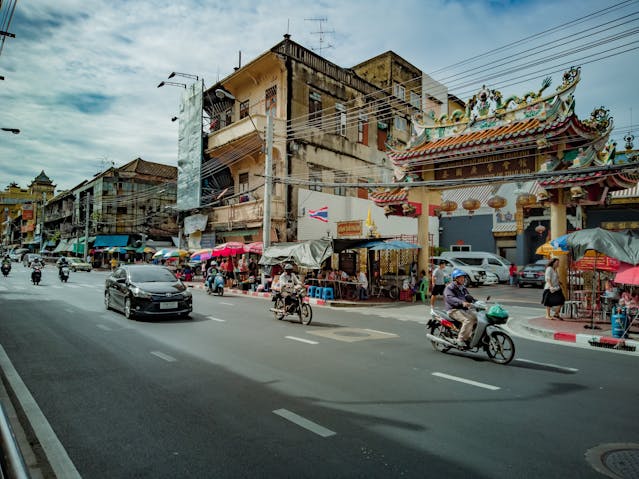
Traveling in Thailand feels much easier when you understand a few basic things about how people interact. Thai culture places a high value on politeness, calm speech, respect, and social harmony. People often speak softly, smile even in awkward moments, and avoid open confrontation when possible. Small gestures matter too. Taking off your shoes before entering a home or temple, dressing modestly at religious sites, and speaking with a respectful tone all help you make a good impression. Language is part of that same system of respect, which is why even a few simple Thai phrases often get such a warm response from locals.
That is one reason survival phrases matter so much in Thailand. Even in places where people speak some English, using a few words of Thai shows effort, cultural awareness, and goodwill. It helps in practical ways, too. You can greet people more naturally, ask prices more confidently, order food with fewer misunderstandings, and move through daily situations with less stress. In this article, we will go through useful Thai phrases for greetings, shopping, eating out, socializing, getting around, and emergencies, with notes on how and when each phrase is used. Let’s begin.
→Sign Up Now: Free Trial Thai Lesson With a Native Teacher!←
How to Greet People Politely in Thai
Greetings in Thailand are tied closely to respect. Thai people often soften their speech with polite particles, and these are one of the first things travelers should notice. Men usually add khrap at the end of a polite sentence, while women usually add kha. Those little endings matter because they make even a very basic phrase sound friendlier and more culturally appropriate. You may hear them constantly in shops, hotels, restaurants, and everyday conversation. Another important cultural point is the wai, the gesture where people press their palms together and bow slightly. You do not need to overuse it, but when someone greets you respectfully, returning the warmth matters.
The safest way to sound polite in Thai is not to speak loudly, not to rush, and not to worry about being perfect. A simple phrase said gently often works better than a long sentence said with tension. Thai people usually appreciate the effort, even when pronunciation is not perfect. That is especially true with greetings, because greetings set the tone for everything that follows.
A basic and essential Thai phrase is Sawasdee khrap / Sawasdee kha, which means “Hello” or “Goodbye.” Men should say Sawasdee khrap and women should say Sawasdee kha. This is the standard polite greeting and works in almost any situation, from entering a shop to greeting hotel staff or meeting someone for the first time.
Another very useful phrase is Sabai dee mai khrap / kha?, which means “How are you?” This is a warm and polite question that works well after saying hello, especially in more personal interactions. If you want to answer, Sabai dee khrap / kha means “I’m fine.” That response is simple, natural, and easy to remember.
If you are meeting someone for the first time, Yindee thii dai ruu jak means “Nice to meet you.” This is especially useful in more personal or social situations, such as meeting a guide, host, teacher, or friend of a friend. It sounds thoughtful and friendly rather than overly formal.
A Thai phrase that travelers should use often is Khop khun khrap / kha, meaning “Thank you.” In Thailand, thanking people matters a lot in daily interactions. You can use it with restaurant staff, drivers, shopkeepers, hotel workers, or anyone who helps you. Even when the interaction is small, gratitude in Thai usually gets an immediate smile.
One more extremely useful expression is Khor thot khrap / kha, which means “Excuse me” or “Sorry.” This phrase works in many situations. You can use it to get someone’s attention politely, to apologize lightly, or to move past someone in a crowded market. It is one of the most practical phrases in the language because it helps you sound respectful even when you are interrupting.
Thai Shopping Phrases for Markets and Stores
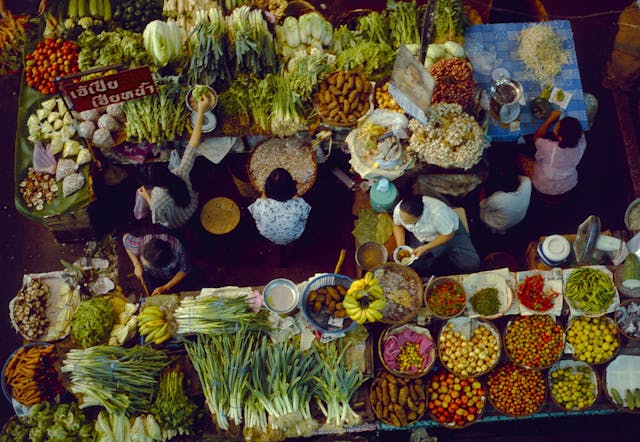
Shopping in Thailand changes a lot depending on where you are. In malls, supermarkets, and chain stores, prices are usually fixed, so bargaining is not expected. In local markets, souvenir stalls, and some independent shops, though, asking about the price and negotiating a little may be completely normal. The key is to keep the tone light. Bargaining in Thailand usually works better when it feels friendly rather than aggressive. A smile, a soft tone, and a bit of patience will usually take you further than sounding pushy.
It is worth remembering that Thailand values social ease. Even when you want a better price, sounding too intense may make the exchange uncomfortable. In many markets, the goal is not to “win” the negotiation but to reach a price both sides can accept without losing face. That is why the wording you choose matters. A gentle request feels much more natural than a hard demand.
The most basic shopping phrase in Thai is An-nee tao rai khrap / kha?, which means “How much is this?” This is the phrase you will use constantly in markets, stalls, and small shops. It is polite, direct, and easy to remember. If you are pointing at an item, this phrase does almost all the work you need.
If you want to ask more generally about cost, Raakhaa tao rai khrap / kha? means “What is the price?” This sounds slightly broader and is useful when the context is already clear. In practice, this and An-nee tao rai? are both extremely helpful for browsing.
For bargaining, one of the most useful phrases is Lot noi dai mai khrap / kha?, which means “Can you lower the price a little?” This is the closest thing to asking for a discount politely in a market setting. It sounds much softer than demanding a better deal, which is why it works well in Thai culture.
Another helpful bargaining phrase is Mee suan lot mai khrap / kha?, which means “Is there a discount?” This is a good option when you want to sound a little less direct. It works especially well in shops where bargaining may be possible but not guaranteed. It opens the door without making the exchange feel tense.
A final practical phrase is Lawng dai mai khrap / kha?, which means “Can I try it on?” This is useful when shopping for clothes, hats, shoes, or accessories. In a market setting, trying something on before discussing the price may help you decide whether the item is worth bargaining for at all.
What Thai Phrases Can I Use at a Restaurant?
Eating in Thailand is one of the best parts of the trip, and for many travelers it becomes one of the strongest memories. Thai food is full of contrast, with sweet, spicy, sour, salty, creamy, and herbal flavors often appearing in the same dish. Depending on where you go, you are very likely to come across classics such as pad thai, tom yum, green curry, massaman curry, som tam, khao soi, and, of course, mango sticky rice. Street food stalls, night markets, casual restaurants, and small local places are often where the most memorable meals happen, so learning a few restaurant phrases makes a real difference.
It also helps to remember that food culture in Thailand is practical and direct, but still polite. You do not need to sound overly formal, but adding khrap if you are male or kha if you are female will make your requests sound much smoother. Another important point is spice. Many travelers discover very quickly that “Thai spicy” is not the same as “tourist spicy,” so knowing how to ask for less heat may save you from a painful meal. In restaurants and food stalls, short, clear phrases are often the most useful.
One of the best Thai phrases to know is Mai phet khrap / kha, which means “Not spicy.” This is essential for anyone who wants to enjoy Thai food without taking too much risk. If you still want some spice, Phet nit noi khrap / kha means “A little spicy.” These two phrases are some of the most practical in the whole article because they help you control the meal before it arrives.
If you want to order, Sang aa-han khrap / kha means “I would like to order.” In many situations, you can simply point and say the dish name, but this phrase helps you begin more naturally and politely. It is especially useful in a sit-down restaurant when you are ready to speak to the server.
A Thai phrase travelers should use often is Aroy mak, which means “Very delicious.” Complimenting the food in Thailand usually goes over well, whether you are eating in a family-run restaurant, a market stall, or a more polished place. Saying Aroy mak with a smile is a very easy way to show appreciation and warmth.
When the meal is over, Check bin khrap / kha means “Can I have the bill, please?” This is one of the most useful restaurant phrases in Thai because it is short, widely understood, and used exactly when you need it. In many places, especially casual ones, staff may not rush to bring the bill unless you ask, so knowing this phrase helps the meal end smoothly.
Another useful phrase is Nam plao, which means “Water.” In practice, travelers often combine it with a gesture or a simple request, because ordering water is constant in Thailand’s climate. Even a single word like Nam plao can be enough in the right context, especially if you are at a food stall or simple café.
Thai Phrases for Socializing and Being Polite
Socializing in Thailand usually feels warm, but it is shaped by politeness, calm tone, and respect. Thai people often come across as friendly and easygoing, but that friendliness usually sits inside a culture that values self-control and social harmony. Speaking too loudly, sounding overly blunt, or showing irritation too openly may create discomfort. That is why polite expressions matter so much. They do more than make speech sound nicer. They help you move through Thai social situations without sounding careless or too direct.
This is one of the reasons simple phrases carry so much weight. In Thailand, a polite marker, a soft response, or a respectful question may matter more than a long sentence. Travelers do not need to speak a lot of Thai to make a good impression. A few well-used phrases, said gently, already show that you are trying to meet people on their own cultural terms. That effort is often appreciated immediately.
One phrase you will hear all the time is Mai pen rai, which means “No problem,” “It’s okay,” or “Never mind.” This expression is one of the most useful and culturally important phrases in Thai. It is not just a practical response. It reflects a broader social attitude of staying calm and not making a problem bigger than it needs to be. Travelers hear it constantly, and learning to use it helps you sound much more natural.
Another useful Thai expression in social situations is Khun cheu arai?, which means “What is your name?” This is especially helpful when you are meeting someone in a more personal setting, whether that means a guide, a host, a classmate, or someone you strike up a conversation with while traveling. It is simple, friendly, and easy to use.
To answer that question, men can say Phom cheu… and women can say Chan cheu…, both meaning “My name is…” This is one of the most basic but useful ways to move from a simple greeting into a more real interaction. It makes a conversation feel more open and personal very quickly.
Another Thai phrase that works well in social settings is Sanuk mai?, which means “Are you having fun?” This phrase feels especially relevant in Thailand, where the idea of sanuk, meaning enjoyment or fun, is culturally important. It works well in relaxed travel situations, from a day trip to a market or a meal with new friends.
Finally, Chok dee means “Good luck.” This is a warm and positive phrase that fits naturally into many conversations. You can use it casually with someone you have just met or more personally with someone you know a little better. It is a nice way to sound thoughtful without sounding overly formal.
How to Ask for Directions and Get Around in Thai
Getting around in Thailand is usually quite manageable, especially in major cities and tourist areas, but it still helps a lot to know a few Thai travel phrases. In places like Bangkok, Chiang Mai, Phuket, or Krabi, travelers often move between hotels, markets, temples, train stations, piers, and airports in the same day. English is common in many tourist-facing businesses, but not everywhere, and once you step into local buses, smaller neighborhoods, or less touristy areas, a few simple phrases become much more useful. They help not only with practical movement but with confidence. Asking in Thai often gets a warmer response and may make people more willing to help.
Culturally, it is worth remembering that Thai people usually appreciate a calm and polite tone when giving or receiving directions. Even when you are confused or in a hurry, sounding gentle works better than sounding intense. A short phrase with khrap if you are male or kha if you are female will usually do more than a longer sentence said impatiently. Another useful Thai expression in this context is one that helps you ask for a location clearly without overcomplicating things.
A very important phrase is Horng nam yoo tee nai khrap / kha?, which means “Where is the toilet?” This is one of the first Thai travel phrases many visitors end up needing, whether they are in a market, restaurant, station, or temple area. It is simple, polite, and practical.
Another useful Thai expression for getting around is Khun rao yoo tee nai mai?, which means “Do you know where this is?” This works especially well if you are showing someone an address, a map pin, or the name of a hotel on your phone. In real travel situations, that is often more effective than trying to pronounce a long location perfectly.

If you need more direct help, Chuay chan haa roong raem chan means “Can you help me find my hotel?” This is especially useful when you are arriving somewhere new, dealing with a confusing neighborhood, or trying to get back late in the day. It is longer than some of the other phrases, but it is clear and highly practical.
A very simple but powerful Thai expression is Hai chuay leua, which means “Can you help?” This is broad enough to work in many travel situations, from needing help with directions to asking for assistance with transport. Because it is so flexible, it is one of the most useful Thai expressions a traveler can know.
Finally, Gee mong? means “What time?” This is a handy phrase when you are asking about departure times, opening hours, or when transport leaves. On its own, it is short and natural, and in context it often gets the point across quickly.
How to Ask for Help in Thai During an Emergency
Emergencies are the kind of situation where even a few survival phrases become incredibly valuable. Most trips to Thailand are smooth, but travelers still run into real problems now and then, whether that means getting lost, feeling unwell, needing a doctor, or trying to explain that something is wrong. In those moments, having a few Thai emergency phrases ready can reduce panic and help you communicate the basics faster. That matters even more if you are outside the main tourist areas, in a rural place, or dealing with someone who does not speak much English.
In Thai culture, people are often helpful and responsive when someone genuinely needs assistance, but calm communication still matters. If you can ask for help clearly and politely, people are more likely to understand what you need quickly. That is why Thai emergency phrases are not only about vocabulary. They are about making yourself understandable in a stressful situation without sounding chaotic. Another useful Thai expression in an emergency is one that keeps your message short and direct, because that is usually what works best when something has gone wrong.
One of the most important phrases is Chuay! Chan tua khon!, which means “Help, I am lost!” This is especially useful if you are disoriented and need immediate assistance finding your way. Even if your pronunciation is not perfect, the key word chuay for “help” is worth learning well.
Another essential phrase is Phom tong gaan hai mor maa raak sa khrap / kha, which means “I need a doctor.” This is longer, but it can be extremely useful if you are sick, injured, or helping someone else get medical attention. In a travel emergency, being able to express this clearly matters a lot.
A very practical Thai emergency phrase is Kun pood paasaa anggrit dai mai?, meaning “Can you speak English?” In a stressful situation, this may be the quickest way to move the conversation forward, because it helps you find someone who can understand the details better. It is useful in hospitals, transport hubs, police situations, and unexpected travel problems.
Another useful Thai expression in this context is Phom mai sabai khrap / Chan mai sabai kha, which means “I am not well.” This is a very natural and practical phrase if you feel sick, weak, dizzy, or unwell but do not yet know how to explain the problem in detail. In many situations, this may be the most important thing to communicate first.
Finally, Mai khao jai means “I don’t understand.” This is important because in difficult situations, people may start speaking quickly, pointing, or giving instructions you cannot follow. Being able to say that you do not understand is often the first step toward getting clearer help.
Summary: 30 Thai Survival Phrases for Travelers
Here is a takeaway table with all 30 Thai survival phrases mentioned throughout the article, so you can find them quickly whenever you need them.
| Category | Thai Phrase | English Meaning |
| Greetings | Sawasdee khrap / Sawasdee kha | Hello / Goodbye |
| Sabai dee mai khrap / kha? | How are you? | |
| Sabai dee khrap / kha | I’m fine | |
| Yindee thii dai ruu jak | Nice to meet you | |
| Khop khun khrap / kha | Thank you | |
| Shopping | An-nee tao rai khrap / kha? | How much is this? |
| Raakhaa tao rai khrap / kha? | What is the price? | |
| Lot noi dai mai khrap / kha? | Can you lower the price a little? | |
| Mee suan lot mai khrap / kha? | Is there a discount? | |
| Lawng dai mai khrap / kha? | Can I try it on? | |
| Eating Out | Mai phet khrap / kha | Not spicy |
| Phet nit noi khrap / kha | A little spicy | |
| Sang aa-han khrap / kha | I would like to order | |
| Aroy mak | Very delicious | |
| Check bin khrap / kha | Can I have the bill, please? | |
| Socializing and Being Polite | Mai pen rai | No problem / It’s okay / Never mind |
| Khun cheu arai? | What is your name? | |
| Phom cheu… / Chan cheu… | My name is… | |
| Sanuk mai? | Are you having fun? | |
| Chok dee | Good luck | |
| Getting Around | Horng nam yoo tee nai khrap / kha? | Where is the toilet? |
| Khun rao yoo tee nai mai? | Do you know where this is? | |
| Chuay chan haa roong raem chan | Can you help me find my hotel? | |
| Hai chuay leua | Can you help? | |
| Gee mong? | What time? | |
| Emergencies | Chuay! Chan tua khon! | Help, I am lost! |
Learn Thai for Real Travel Situations with a Native Teacher
Learning a few Thai phrases before a trip is helpful, but learning them with a native teacher makes a much bigger difference. A native Thai teacher does not just teach you what the words mean. A native Thai teacher can show you how those words actually sound in real life, how polite particles are used naturally, how soft or direct a phrase should feel, and what kind of tone fits the situation. That matters a lot in Thailand, where respect, calm speech, and cultural awareness shape so many everyday interactions. Before your trip, a native teacher can guide you through important do’s and don’ts too, from temple etiquette and greetings to how to sound polite in shops, restaurants, and social situations.
At Language Trainers, our one-to-one Thai lessons are designed around the learner and the situations they are most likely to face. That means your teacher can focus on your pace, your confidence level, and the travel moments that matter most to you, whether that is greeting people politely, ordering food, asking for help, or helping you learn the Thai alphabet the easy way. Face-to-face lessons are especially valuable because they give you direct practice with pronunciation, listening, rhythm, and real conversational timing, all with immediate feedback. That kind of personalized support helps you build useful travel Thai much faster than memorizing phrases on your own. As Amy , from LA, said about her ongoing 30-hour online Thai course, “My lessons are going well and I am enjoying learning Thai. My tutor, Manita,is awesome and has taught me a lot about the language as well as the culture.”
That combination matters before a trip to Thailand, because knowing the language is only part of the experience. Knowing how to behave, how to sound respectful, and how to understand the culture behind the words makes travel much smoother and much more rewarding.
If you would like to prepare for your trip with expert guidance, contact Language Trainers and ask for a free trial lesson.
→Sign Up Now: Free Trial Thai Lesson With a Native Teacher!←
Frequently Asked Questions About Thai Phrases for Travelers
1. Do I need to speak Thai to travel in Thailand?
No, you do not need to speak Thai to travel in Thailand, especially in major tourist areas where many people speak at least some English. Still, knowing a few basic Thai phrases makes everyday situations much easier and usually leads to warmer reactions from locals. Even simple phrases like hello, thank you, and ‘how much is this’ show respect and effort.
2. What Thai phrases should tourists learn first?
The most useful Thai phrases for travelers are usually Sawasdee khrap / kha for “hello,” Khop khun khrap / kha for “thank you,” An-nee tao rai? for “how much is this?”, Mai phet for “not spicy,” and Horng nam yoo tee nai? for “where is the toilet?” These cover greetings, shopping, food, and practical daily needs. They are easy to use and come up constantly while traveling.
3. How do I sound polite in Thai?
The easiest way to sound polite in Thai is to add khrap if you are male or kha if you are female at the end of simple phrases. These small polite particles make speech sound softer and more respectful, which matters a lot in Thai culture. A calm tone and a smile usually help just as much as the words themselves.
4. Can you bargain in Thailand, and what should you say?
Yes, bargaining is common in markets, souvenir stalls, and some smaller shops, but not in malls, supermarkets, or most fixed-price stores. The best way to bargain is politely and with a light tone, not aggressively. Useful phrases include Lot noi dai mai? meaning “Can you lower the price a little?” and Mee suan lot mai? meaning “Is there a discount?”