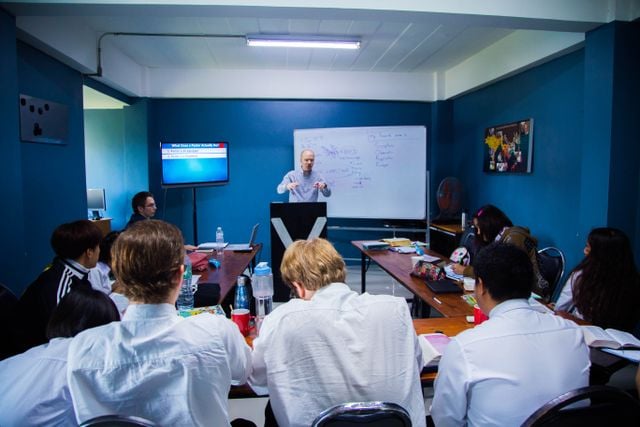



Vietnamese business communication is not just about knowing words like hợp đồng [contract], cuộc họp [meeting], khách hàng [client], or tài chính [finance]. Those terms are useful, of course, but doing business in Vietnam also means understanding how people greet each other, how hierarchy shapes a meeting, why a simple “yes” may not always mean full agreement, and why relationships often come before decisions.
This is where Vietnamese business vocabulary and etiquette work together. If you know how to say Xin chào anh/chị [Hello, sir/madam], Cảm ơn anh/chị đã dành thời gian [Thank you for your time], or Anh/chị có thể giải thích thêm không? [Could you explain further?], you are not only translating English into Vietnamese. You are showing respect for the structure of the conversation.
For professionals working with Vietnamese clients, suppliers, colleagues, or partners, this matters. Vietnam’s business culture places strong value on seniority, personal trust, indirect communication, and protecting someone’s reputation or “face”. Meetings may include polite silence, several rounds of discussion, careful relationship-building, and a slower path toward agreement than some Western professionals expect.
Learning Vietnamese business vocabulary gives you the words. Understanding Vietnamese business etiquette helps you use those words well.
→Sign Up Now: Free Trial Vietnamese Lesson With a Native Teacher!←
Why Vietnamese Business Vocabulary Matters for Professionals
Vietnamese business vocabulary matters because it helps you follow what is actually happening in a professional conversation. Even if a meeting is partly conducted in English, key Vietnamese words may still appear when people talk about departments, roles, deadlines, contracts, payment, delivery, or next steps.
For example, if you hear hợp đồng [contract], hóa đơn [invoice], giao hàng [delivery], thời hạn [deadline], or phòng kinh doanh [sales department], you immediately have a better sense of the topic being discussed. These words are not decorative. They are the practical vocabulary of Vietnamese office life, sales, finance, logistics, and management.
Vocabulary also helps with hierarchy. Vietnamese workplaces often use titles and role words carefully. Terms such as giám đốc [director], phó giám đốc [deputy director], trưởng phòng [department head], nhân viên [employee], and thực tập sinh [intern] help you understand who has authority, who may be giving input, and who may be responsible for a decision.
This is important because business conversations in Vietnam are often shaped by status and seniority. Knowing someone’s role can help you decide how formal to be, who to greet first, and whose opinion may carry the most weight in the room.
Business Vietnamese also makes follow-up clearer. A phrase such as Vui lòng xác nhận giúp tôi [Please confirm for me] can be useful when checking details after a meeting. Tôi sẽ gửi email xác nhận [I will send a confirmation email] helps you show that you understand the next step. Xin lỗi, tôi chưa hiểu rõ [Sorry, I don’t quite understand] gives you a polite way to ask for clarification without sounding abrupt.
In other words, learning Vietnamese business vocabulary is not only about sounding impressive. It helps you avoid misunderstandings, recognize key signals, and show that you are taking the professional relationship seriously.
What Should You Know About Vietnamese Business Culture?
Vietnamese business culture is relationship-driven, respectful, and often indirect. For foreign professionals, one of the biggest mistakes is assuming that a meeting in Vietnam will follow the same rhythm as a meeting in London, New York, Sydney, or Toronto. The agenda may matter, but so does the atmosphere. The contract may matter, but so does trust. The words people say matter, but so do silence, tone, order of greeting, body language, and what is left unsaid.
A business meeting in Vietnam may begin formally, especially if senior people are present. Greetings often include a handshake and a slight bow of the head. In a group, it is respectful to greet the most senior person first rather than treating everyone as equal from the beginning. Business cards should be offered and received with both hands, and it is polite to take a moment to read the card before putting it away.
Vietnamese communication can also be more indirect than many foreign professionals expect. People may avoid saying “no” clearly in order to keep the conversation harmonious. A phrase that sounds positive, such as “we will think about it” or “we will try”, may not mean that an agreement has been reached. Silence during a meeting may not mean discomfort or lack of preparation. It can mean that people are thinking carefully, avoiding open disagreement, or giving the topic the seriousness it deserves.
Another point to understand is that personal relationships matter. The first meeting may not be the moment when everything is decided. It may be the moment when people begin to understand who you are, whether you are reliable, and whether they want to continue the conversation. Small gestures, polite language, patience, and respectful follow-up can matter as much as a strong proposal.
Why Hierarchy Matters in Vietnamese Business Culture
Hierarchy is one of the most important parts of Vietnamese business culture. Age, seniority, job title, and social status can all influence how people speak, sit, greet, negotiate, and make decisions. This does not mean every Vietnamese company works in the same way, but professionals should not ignore hierarchy when entering a business setting.
One simple example is greeting order. In a Vietnamese business meeting, it is usually respectful to greet the most senior or important person first. This may be the director, department head, host, elder, or highest-ranking representative. If you are introduced to several people, avoid jumping straight into casual conversation with whoever seems friendliest. Wait, observe, and follow the structure of the room.
Titles also matter. In English, some workplaces quickly move to first names. In Vietnam, that can feel too informal too soon, especially with senior people or new contacts. Addressing someone with a title, or using respectful forms such as anh [older brother / respectful address for a man], chị [older sister / respectful address for a woman], or professional titles when appropriate, helps show that you understand the social distance.
Hierarchy also affects decision-making. The person who speaks the most may not always be the final decision-maker. Junior staff may contribute information, but senior figures often guide the final direction. Some participants may avoid openly contradicting someone above them, especially in front of others. For this reason, a foreign professional should be careful not to pressure a junior employee for an immediate answer if the decision clearly belongs to someone more senior.
This is also why business cards are important. A card is not just contact information; it tells you someone’s name, position, company, and level within the organization. Giving and receiving a business card with both hands, reading it carefully, and treating it respectfully are small but meaningful signs that you recognize the person’s role.

What Does “Saving Face” Mean in Vietnamese Business?
“Saving face” in Vietnamese business means protecting someone’s dignity, reputation, and social standing. It is one of the key ideas foreign professionals need to understand because it affects how disagreement, mistakes, criticism, negotiation, and feedback are handled.
In some business cultures, directness is seen as honesty. In Vietnam, direct criticism in public can easily embarrass someone or make them lose face. For example, saying “This is wrong” in front of a group may damage the relationship, even if the point itself is valid. A more careful approach would be to ask a question, suggest an alternative, or discuss the issue privately.
This also explains why Vietnamese professionals may avoid saying “no” directly. Instead of rejecting an idea openly, someone may say Tôi sẽ suy nghĩ thêm [I will think about it], Để tôi xem lại [Let me review it], or use a softer expression that leaves room for discussion. These phrases should not be treated as automatic agreement. They often mean that more time, internal discussion, or clarification is needed.
Silence can also be part of saving face. If a proposal creates disagreement, people may pause rather than challenge it immediately. If someone gives a short answer, avoids a firm commitment, or moves the conversation sideways, it may be a sign that the topic needs to be handled more delicately.
For foreign professionals, the practical lesson is simple: be clear, but not blunt. Follow up, but do not corner people. Ask for confirmation, but avoid forcing public disagreement. If something needs to be corrected, do it respectfully and preferably in private. Vietnamese business communication often rewards patience, tact, and emotional control.
Why Business Relationships Matter in Vietnam
Business relationships in Vietnam are built through trust, familiarity, and repeated contact. A strong product, service, or proposal is important, but it may not be enough on its own. Many Vietnamese professionals want to know who they are dealing with before making important decisions, especially when money, reputation, long-term cooperation, or risk is involved.
This is why first meetings may feel slower than expected. They may include polite conversation, questions about your background, discussion of your company, or even personal topics such as family, travel, hobbies, or your experience in Vietnam. These questions are not necessarily distractions. They can be part of building rapport.
Face-to-face meetings are especially valued because they allow people to read tone, body language, sincerity, and respect more easily than email alone. Emails and documents are still important, but in-person conversations often carry more weight when a relationship is new.
Hospitality also plays a role. You may be offered tea, coffee, water, snacks, or a meal. Accepting hospitality politely can show that you are open to the relationship, not only focused on the transaction. Business meals, social events, and follow-up conversations can all help build the trust needed for future cooperation.
Reciprocation is another important part of the relationship. If someone gives time, information, hospitality, or help, it is good manners to acknowledge it and respond appropriately. A simple phrase such as Cảm ơn anh/chị rất nhiều [Thank you very much] matters, but so does following up when promised, sending documents on time, confirming details, and showing that you are reliable.
In Vietnam, business often develops through a combination of professionalism and personal connection. The vocabulary helps you communicate, but the relationship gives your words more weight.
Essential Vietnamese Business Greetings and Polite Phrases
Vietnamese business greetings are closely connected to respect, age, and professional distance. In English, you might use “hello” with almost anyone, but Vietnamese often asks you to think about who you are speaking to. A greeting for a senior client, a department head, or an older business partner will usually sound more formal than one used with a close colleague.
This is why phrases with anh [older brother / respectful address for a man] and chị [older sister / respectful address for a woman] are so useful in professional Vietnamese. They help you sound polite without being stiff. In formal situations, it is also common to greet the most senior person first, use a handshake with a slight bow of the head, and keep your tone calm and respectful.
The phrases below cover greetings, thanks, goodbyes, and introductions in Vietnamese business settings.
How to Say Hello in Vietnamese Business Settings
- Xin chào [Hello] is the safest general greeting in Vietnamese. It works in meetings, emails, calls, and first-time introductions.
- Xin chào anh [Hello, sir / hello to a man] is a polite greeting for a male colleague, client, or business contact, especially if he is older than you or in a professional setting.
- Xin chào chị [Hello, madam / hello to a woman] is the equivalent polite greeting for a female colleague, client, or business contact.
- Chào anh/chị [Hello] is slightly less formal than Xin chào anh/chị, but still polite and very common in workplace situations.
- Chào mọi người [Hello, everyone] is useful when greeting a group, especially at the start of a meeting or presentation.
- Rất vui được gặp anh/chị [Very nice to meet you] is a good phrase for first meetings. It sounds professional and respectful without being overly complicated.
How to Say Thank You in Vietnamese at Work
- Cảm ơn [Thank you] is the basic phrase for thanks. It is useful in any professional situation, but it can sound more complete when you add the person you are addressing.
- Cảm ơn anh [Thank you, sir / thank you to a man] is polite when thanking a male colleague, client, or partner.
- Cảm ơn chị [Thank you, madam / thank you to a woman] is polite when thanking a female colleague, client, or partner.
- Cảm ơn anh/chị rất nhiều [Thank you very much] is useful when someone has given you time, information, help, or a useful introduction.
- Cảm ơn anh/chị đã dành thời gian [Thank you for your time] is especially useful at the start or end of a meeting, presentation, or business call.
- Cảm ơn anh/chị đã hỗ trợ [Thank you for your support] works well in follow-up emails after someone has helped with documents, introductions, scheduling, or project information.
How to Say Goodbye in Vietnamese After a Meeting
- Tạm biệt [Goodbye] is the basic Vietnamese goodbye. It is clear and easy to use, but in business settings it is often warmer with a respectful address added.
- Tạm biệt anh/chị [Goodbye, sir/madam] is a polite way to end a professional conversation with one person.
- Hẹn gặp lại anh/chị [See you again] is useful when you expect to meet the person again. It sounds warmer than a simple goodbye.
- Hẹn gặp lại mọi người [See you all again] is useful at the end of a group meeting.
- Cảm ơn anh/chị. Hẹn gặp lại [Thank you. See you again] is a natural way to close a meeting politely.
- Tôi sẽ gửi email xác nhận [I will send a confirmation email] is helpful when leaving a meeting with clear next steps. It shows professionalism and avoids confusion.
How to Introduce Yourself in Vietnamese for Business
- Xin tự giới thiệu [Allow me to introduce myself] is a formal and useful way to begin a professional introduction.
- Tôi là ___ [I am ___] is the simplest way to say your name or role.
- Tôi là ___, đến từ công ty ___ [I am ___, from ___ company] is one of the most useful introduction phrases for business meetings.
- Tôi làm việc tại ___ [I work at ___] is useful when explaining your company or organization.
- Tôi phụ trách ___ [I am responsible for ___] helps you explain your role. For example, Tôi phụ trách marketing [I am responsible for marketing].
- Rất vui được làm việc với anh/chị [I am very happy to work with you] is a polite phrase for beginning a professional relationship.
Vietnamese Business Vocabulary for Company Roles and Departments
Company vocabulary is especially important in Vietnam because professional conversations often reflect hierarchy. Knowing who is the giám đốc [director], who is the trưởng phòng [department head], and who is the nhân viên [employee] helps you understand how decisions may move through the organization.
These words are also useful because meetings in Vietnam may include people with different levels of authority, and the person speaking most often is not always the final decision-maker. If you understand titles and department names, you can follow the structure of the conversation more easily and show respect to the right people.
The lists below cover job titles, company departments, and workplace relationship words that professionals are likely to hear in Vietnamese offices, meetings, emails, and business introductions.
Vietnamese Job Titles and Seniority Words
- Giám đốc [Director] is one of the most important business titles to recognize. This person may be a senior decision-maker, so they should be greeted and addressed with particular respect.
- Phó giám đốc [Deputy director] refers to someone in a senior leadership position below the director.
- Trưởng phòng [Department head / manager] is a useful title in many companies. A trưởng phòng may be responsible for a team, project, or department.
- Quản lý [Manager] is a general word for someone who manages people, operations, or a business area.
- Nhân viên [Employee / staff member] is a common workplace word for an employee.
- Thực tập sinh [Intern] refers to an intern or trainee. It is useful in office contexts where junior staff may support meetings, documents, or scheduling.
- Đối tác [Partner] is important in business development, negotiations, and cooperation between companies.
- Khách hàng [Customer / client] is essential in sales, service, marketing, and account management.
- Nhà cung cấp [Supplier] is useful when discussing logistics, purchasing, contracts, or operations.
Vietnamese Department Names in a Company
- Phòng kinh doanh [Sales department / business department] is one of the most useful department names. It often appears in conversations about clients, sales, revenue, and commercial growth.
- Phòng marketing [Marketing department] is straightforward and commonly used in modern business contexts.
- Phòng nhân sự [Human resources department] is useful when discussing hiring, contracts, employees, salaries, or internal policies.
- Phòng kế toán [Accounting department] is important for invoices, taxes, payment, budgets, and financial paperwork.
- Phòng tài chính [Finance department] refers to finance more broadly and may appear in discussions about budgets, investment, reporting, or financial planning.
- Phòng họp [Meeting room] is not a department, but it is a very practical office word. You may hear it when someone tells you where a meeting will take place.
- Văn phòng [Office] is one of the first workplace words to learn. It can refer to the physical office or a company workplace more generally.
Vietnamese Words for Colleagues and Workplace Relationships
- Đồng nghiệp [Colleague] is useful when talking about people you work with. For example, đồng nghiệp của tôi means [my colleague].
- Sếp [Boss] is widely used in everyday workplace conversation. It is less formal than a full job title, but very common.
- Cấp trên [Superior / higher-level manager] refers to someone above you in the workplace hierarchy.
- Cấp dưới [Subordinate] refers to someone below another person in the hierarchy.
- Nhóm [Team / group] is useful in project work and internal communication.
- Đội ngũ [Team / staff / workforce] is a slightly broader word, often used when talking about a company’s people or team as a whole.
- Người phụ trách [Person in charge] is very helpful when you need to know who is responsible for a task, project, or decision.
- Ai phụ trách dự án này? [Who is in charge of this project?] is a practical question when roles are unclear. It is direct enough to be useful, but still neutral and professional.
Vietnamese Vocabulary for Meetings and Schedules
Meetings in Vietnam are not only about the agenda. They are also a way to build trust, understand hierarchy, and read the tone of the relationship. A first meeting may focus less on closing a deal and more on learning who is in the room, how serious the partnership is, and what needs to happen next.
This is why meeting vocabulary is so important. Words such as cuộc họp [meeting], lịch họp [meeting schedule], chương trình nghị sự [agenda], and thời hạn [deadline] help you follow the practical side of the conversation. Phrases such as Anh/chị có thể giải thích thêm không? [Could you explain further?] or Vui lòng xác nhận giúp tôi [Please confirm for me] help you stay clear without sounding too blunt.
The vocabulary below covers meetings, scheduling, questions, and clarification in Vietnamese business settings.
Vietnamese Words for Meetings and Agendas
- Cuộc họp [meeting] is the general word for a business meeting. You may hear it when someone is arranging, confirming, or referring back to a meeting.
- Lịch họp [meeting schedule] refers to the time and structure of meetings. It is useful when confirming availability or checking when a discussion will take place.
- Phòng họp [meeting room] is practical office vocabulary. If someone says phòng họp, they are probably directing you to the room where the meeting will happen.
- Chương trình nghị sự [agenda] is useful in more formal meetings. It refers to the list of topics to be discussed.
- Chủ đề [topic] helps you understand what the meeting is about. For example, chủ đề hôm nay means [today’s topic].
- Dự án [project] is one of the most common business words. It appears in meetings about planning, progress, deadlines, responsibilities, and results.
- Báo cáo [report] can refer to a written report or a verbal update. It is useful in meetings where teams present progress or results.
- Ghi chú [notes] refers to notes taken during a meeting. You may hear it when someone asks for meeting notes or a written summary afterwards.
- Thời hạn [deadline] is essential for project work. It tells you when something must be finished or delivered.
- Trình bày [to present / presentation] is useful when someone is presenting information, slides, results, or a proposal.
How to Schedule a Meeting in Vietnamese
- Chúng ta có thể lên lịch một cuộc họp không? [Can we schedule a meeting?] is a polite and practical way to suggest a meeting.
- Chúng ta có thể lên lịch một cuộc họp sớm được không? [Can we schedule a meeting soon?] is useful when the matter is important but you still want to sound respectful.
- Anh/chị rảnh lúc nào? [When are you free?] is a natural way to ask about availability. Use anh/chị to keep the tone polite.
- Cuộc họp diễn ra lúc mấy giờ? [What time is the meeting?] helps you confirm the meeting time.
- Cuộc họp ở đâu? [Where is the meeting?] is useful when checking the location, especially in an office building, hotel, or coworking space.
- Tôi sẽ gửi email xác nhận [I will send a confirmation email] is a helpful phrase after agreeing on a time. It shows professionalism and reduces the chance of confusion.
- Vui lòng xác nhận giúp tôi [Please confirm for me] is useful in emails or messages when you need someone to confirm the time, place, agenda, or attendees.
How to Ask Questions in a Vietnamese Business Meeting
- Tôi có một câu hỏi [I have a question] is a simple way to enter the conversation without interrupting too abruptly.
- Có câu hỏi nào không? [Are there any questions?] is useful if you are leading or presenting in a meeting.
- Ai phụ trách dự án này? [Who is in charge of this project?] helps clarify responsibility, especially when several departments or seniority levels are involved.
- Thời hạn là khi nào? [When is the deadline?] is a direct but neutral question that works in planning and project meetings.
- Chúng ta bắt đầu lúc mấy giờ? [What time do we start?] is useful when confirming the start time of a meeting, presentation, or event.
- Anh/chị nghĩ sao? [What do you think?] is a polite way to invite someone’s opinion. It is especially useful when you want to encourage input without sounding confrontational.
- Điều này có phù hợp không? [Is this suitable?] can help you check whether a proposal, schedule, or option works for the other person.
How to Ask for Clarification in Vietnamese
- Xin lỗi, tôi chưa hiểu rõ [Sorry, I don’t quite understand] is one of the most useful clarification phrases in Vietnamese business. It sounds polite and avoids blaming the other person.
- Anh/chị có thể giải thích thêm không? [Could you explain further?] is useful when you need more detail, especially in meetings about contracts, timelines, or technical topics.
- Anh/chị có thể nhắc lại không? [Could you repeat that?] helps when you missed a word, number, name, or instruction.
- Anh/chị có thể nói chậm hơn không? [Could you speak more slowly?] is helpful if the conversation is moving too quickly.
- Ý anh/chị là…? [Do you mean…?] lets you check your understanding before responding. This can be useful in Vietnam, where indirect answers may require careful confirmation.
- Tôi muốn xác nhận lại… [I would like to confirm…] is useful before repeating a date, price, responsibility, or next step.
- Để tôi xem lại [Let me review it] is a useful phrase to recognize. It may mean that the person needs more time to think, discuss internally, or avoid giving a direct answer too soon.
Vietnamese Business Vocabulary for Sales, Finance, and Contracts
Once the conversation moves from introductions to actual business, certain words appear again and again: clients, prices, invoices, contracts, delivery, suppliers, and payment. These are the terms that help you follow the commercial side of a Vietnamese business relationship.
This vocabulary is especially important because misunderstandings around money, deadlines, contracts, or delivery can create real problems. Knowing words such as khách hàng [customer / client], hóa đơn [invoice], hợp đồng [contract], giao hàng [delivery], and chuyển khoản [bank transfer] helps you understand what is being discussed and what needs to be confirmed in writing.
The lists below cover sales, finance, contracts, and logistics vocabulary in Vietnamese.
Vietnamese Sales and Customer Vocabulary
- Khách hàng [customer / client] is one of the most important business words in Vietnamese. It can refer to a customer, client, or buyer depending on the context.
- Sản phẩm [product] is useful in sales, marketing, production, and customer conversations.
- Dịch vụ [service] refers to a service offered by a company. It is essential if your business sells expertise, support, software, consulting, training, or hospitality.
- Đơn hàng [order] is useful when discussing purchases, customer requests, shipping, or delivery.
- Giá [price] is one of the first commercial words to learn. You may hear it in negotiations, quotations, sales calls, or supplier discussions.
- Giảm giá [discount] is useful when talking about offers, promotions, or negotiated prices.
- Doanh thu [revenue] refers to income from sales before costs are deducted.
- Thị trường [market] is essential when discussing customers, competitors, growth, or business strategy.
- Đối thủ cạnh tranh [competitor] is useful in marketing, sales, and strategic conversations.
- Giá trị [value] helps when discussing the value of a product, service, proposal, or business opportunity.
Vietnamese Finance and Payment Vocabulary
- Tiền [money] is basic but essential. You may hear it in many financial contexts.
- Tài chính [finance] is used when discussing finance, financial planning, budgets, or financial departments.
- Ngân hàng [bank] is useful for payments, transfers, accounts, and business banking.
- Tài khoản [account] can refer to a bank account or another type of account, depending on the context.
- Chuyển khoản [bank transfer] is very useful in payment discussions. It tells you that money will be transferred electronically.
- Hóa đơn [invoice] is essential for billing, accounting, and payment follow-up.
- Thuế [tax] appears in accounting, contracts, invoices, and legal discussions.
- Chi phí [cost / expense] helps you talk about what something costs or what the business spends.
- Lợi nhuận [profit] refers to the money left after costs are deducted.
- Lãi suất [interest rate] is useful in banking, loans, finance, and investment conversations.
Vietnamese Contract and Agreement Vocabulary
- Hợp đồng [contract] is one of the most important Vietnamese business words. It appears in negotiations, legal discussions, employment, sales, partnerships, and supplier agreements.
- Ký hợp đồng [to sign a contract] is useful when discussing the formal moment of agreement.
- Thỏa thuận [agreement] can refer to an arrangement or agreement, sometimes less formal than a contract.
- Điều khoản [terms / clauses] is useful when reading or discussing contract conditions.
- Đề nghị [offer / proposal] appears in negotiations and business proposals.
- Chấp nhận đề nghị [accept an offer] is useful when discussing approval or agreement.
- Từ chối đề nghị [decline an offer] means to reject an offer. In practice, refusals may be expressed indirectly, so pay attention to tone and follow-up.
- Cam kết [commitment] is useful when discussing responsibilities, promises, or obligations.
- Xác nhận [confirmation / to confirm] is a key word for follow-up. You may see it in phrases such as email xác nhận [confirmation email].
- Tôi đồng ý [I agree] is a clear agreement phrase, but in Vietnamese business settings it is still wise to confirm details in writing after the meeting.
Vietnamese Logistics and Delivery Vocabulary
- Giao hàng [delivery] is essential for sales, ecommerce, shipping, and supplier conversations.
- Vận chuyển [shipping / transport] refers to the movement of goods from one place to another.
- Kho hàng [warehouse] is useful when discussing stock, storage, and distribution.
- Nhà cung cấp [supplier] refers to the company or person providing goods or services.
- Chuỗi cung ứng [supply chain] is useful in larger business conversations about sourcing, production, logistics, and delivery.
- Xuất khẩu [export] refers to sending goods or services out of the country for sale.
- Nhập khẩu [import] refers to bringing goods or services into the country.
- Bảo hành [warranty] is important in product sales, customer service, and contracts.
- Thời gian giao hàng [delivery time] helps you ask when something will arrive.
- Đã giao hàng [delivered] is useful for confirming that an order has been completed.
Vietnamese Business Etiquette for Meetings
Business meetings in Vietnam are shaped by respect, hierarchy, and relationship-building. A meeting is not only a place to exchange information; it is also a chance to show that you understand the people in the room, the order of seniority, and the importance of trust. For foreign professionals, this means that the way you greet people, exchange business cards, ask questions, and respond to silence can matter as much as the proposal itself.
How to Greet Vietnamese Business Partners
In Vietnamese business culture, greetings should usually begin with the most senior person in the room. This may be the director, the department head, the host, or the oldest person present. A handshake is common, often with a slight bow of the head, but the tone should stay respectful rather than overly familiar. Physical gestures such as hugging, kissing, or touching someone casually are usually too intimate for a first business meeting.
Language matters here too. A simple Xin chào [Hello] is useful, but Xin chào anh/chị [Hello, sir/madam] often sounds more polite in a professional setting. If you know someone’s title, using it shows respect. Vietnamese names and titles can be different from Western naming habits, so it is worth paying attention to how your host introduces people and following that model.
How to Exchange Business Cards in Vietnam
Business cards are treated with care in Vietnam because they represent the person, their position, and their company. When giving or receiving a card, use both hands. Do not take the card quickly and put it away without looking at it. Spend a moment reading the name, title, and company details, as this shows that you recognize the person’s role.
This small gesture is especially important in a hierarchical business culture. A card tells you who the senior decision-makers are, who belongs to which department, and how people fit into the organization. If you have bilingual business cards, with one side in English and one in Vietnamese, that can also show preparation and respect for the local language.
How to Communicate Politely in Vietnamese Meetings
Polite communication in Vietnamese meetings often means being clear without being too blunt. Direct criticism, public disagreement, or forceful questioning can feel uncomfortable because they may make someone lose face. Instead of saying something like “That is wrong,” it is usually better to ask a softer question, suggest another possibility, or request clarification.
Useful phrases include Xin lỗi, tôi chưa hiểu rõ [Sorry, I don’t quite understand], Anh/chị có thể giải thích thêm không? [Could you explain further?], and Tôi muốn xác nhận lại… [I would like to confirm…]. These phrases help you keep the conversation professional while avoiding a tone that sounds confrontational.
It is also important to avoid interrupting senior people or pushing for immediate answers before the group has had time to consider the issue. A calm tone, patient follow-up, and written confirmation after the meeting can help prevent misunderstandings.
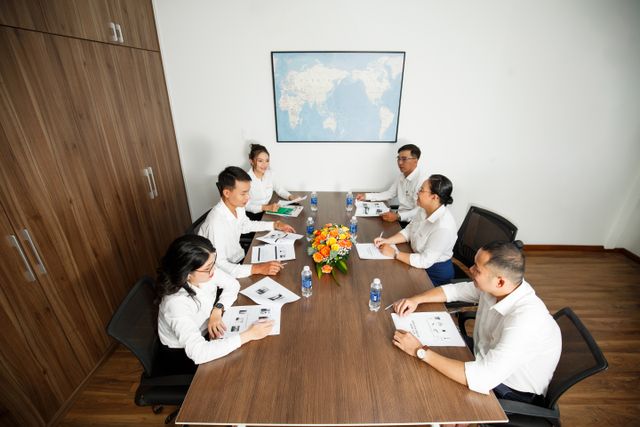
How to Understand Silence and Indirect Answers in Vietnam
Silence in a Vietnamese business meeting does not always mean that something has gone wrong. It may mean that people are thinking carefully, giving space to a senior person, avoiding open disagreement, or choosing not to respond too directly in front of others. Foreign professionals sometimes rush to fill silence, but waiting calmly can be more respectful.
Indirect answers also need careful attention. A phrase such as “we will think about it,” “we will try,” or “let us review it” may not mean yes. It may mean that the person needs more time, that the decision must be discussed internally, or that there is hesitation they do not want to express too directly. In Vietnamese, phrases such as Để tôi xem lại [Let me review it] or Tôi sẽ suy nghĩ thêm [I will think about it more] should be followed up politely rather than treated as final agreement.
Vietnamese Business Etiquette for Gifts, Meals, and Hospitality
Vietnamese business relationships often extend beyond the meeting room. Meals, tea, coffee, small gifts, and social invitations can all help build trust. These moments should not be treated as empty formalities. They are often part of the relationship-building process, especially when working with partners, clients, suppliers, or senior contacts for the first time.
What to Know About Gift-Giving in Vietnamese Business Culture
Gift-giving can be a thoughtful gesture in Vietnamese business culture, especially when visiting a partner, attending a festive occasion, or thanking someone for hospitality. The gift does not need to be expensive. In fact, something modest, tasteful, and meaningful is often better than something flashy. Local products from your own country, good-quality souvenirs, books, or carefully chosen company gifts can work well.
Presentation matters. Gifts are usually given with both hands, and it is common for the recipient to respond modestly. Some gifts should be avoided because of negative associations, such as handkerchiefs, items connected with mourning, or anything that could feel too personal or inappropriate. The safest approach is to choose something respectful, not overly extravagant, and suitable for the business relationship.
What to Know About Business Meals in Vietnam
Business meals in Vietnam are often about more than eating. They give people time to talk more freely, understand each other personally, and build trust outside the formal structure of a meeting. If you are invited to a meal, it is usually a good idea to accept unless you have a strong reason not to.
At the table, follow the host’s lead. Wait for the host or senior person to begin before eating, and be open to trying what is offered. If tea, coffee, water, or snacks are offered at a meeting, accepting them politely can show appreciation for the hospitality. In some contexts, the best dishes may be offered to guests, so refusing too abruptly can feel cold.
Conversation during meals may include personal topics such as family, travel, or life outside work. This can surprise foreign professionals who are used to keeping business and personal life separate, but in Vietnam these conversations often help build rapport. Sensitive topics such as politics, religion, or the Vietnam War are better avoided unless your host introduces them carefully.
How to Show Respect to Senior Vietnamese Business Partners
Respect for seniority is central to Vietnamese business etiquette. Senior partners should usually be greeted first, served first, and acknowledged carefully in conversation. If business cards are exchanged, offer your card to the most senior person first. If you are entering a room or sitting down for a meal, wait for cues from the host rather than assuming the seating order does not matter.
Language can also show respect. Using anh, chị, titles, or formal phrases helps create the right tone. So does avoiding public disagreement, speaking calmly, and giving senior people time to respond. If you need to raise a concern, it is usually better to do it privately or indirectly rather than challenging someone in front of the group.
Showing respect does not mean being passive. It means understanding how authority, age, and reputation work in the business setting. When you combine clear communication with patience and cultural awareness, Vietnamese partners are more likely to see you as professional, considerate, and serious about the relationship.
How Can Vietnamese Lessons Help You Do Business in Vietnam?
Doing business in Vietnam requires more than memorizing a list of vocabulary. You may need to understand when to use a formal greeting, how to address a senior partner, how to ask for clarification without sounding too direct, or how to follow up after a meeting in a way that feels professional and respectful. These are the kinds of details that are hard to learn from a phrasebook alone.
This is where personalized Vietnamese lessons can make a real difference. At Language Trainers, we take a human approach to language learning. Before creating a course plan, we assess each learner’s goals, needs, strengths, and weaknesses. Someone preparing for meetings with Vietnamese suppliers may need contract, logistics, and negotiation vocabulary. Someone relocating to Ho Chi Minh City may need office phrases, email language, and everyday workplace conversation. Another learner may already know some Vietnamese but need help sounding more natural, polite, and confident in professional settings.
A native teacher can help you go beyond basic Vietnamese phrases for travelers and act as a cultural guide. They can help you practice pronunciation, understand tones, choose respectful forms of address, and recognize the difference between a clear “yes” and a more indirect response that needs follow-up. They can also explain the cultural logic behind business cards, hierarchy, hospitality, silence, saving face, and relationship-building.
Our Vietnamese lessons taught by native teachers can be taken face-to-face or online, depending on your location, schedule, and professional goals. The aim is not just to help you learn Vietnamese words, but to help you use them in real business situations with more confidence and cultural awareness.
As Matthew House from Canberra, who took a 35-hour online Vietnamese course, shared:
“Thuy is the best Vietnamese teacher I’ve ever worked with. Thank you for pairing me up with her.”
If you are planning to work with Vietnamese clients, colleagues, suppliers, or business partners, contact Language Trainers to ask about a free trial Vietnamese lesson.
→Sign Up Now: Free Trial Vietnamese Lesson With a Native Teacher!←
5 Questions About Vietnamese Business Vocabulary and Etiquette
1. What Vietnamese business words should professionals learn first?
Professionals should start with the words they are most likely to hear in meetings, emails, contracts, and everyday office conversations. Useful first terms include cuộc họp [meeting], hợp đồng [contract], khách hàng [client / customer], hóa đơn [invoice], thời hạn [deadline], dự án [project], báo cáo [report], and đồng nghiệp [colleague].
It is also helpful to learn words that show company structure, such as giám đốc [director], trưởng phòng [department head], nhân viên [employee], phòng kinh doanh [sales department], and phòng kế toán [accounting department]. These words help you understand who is in the room, who may have decision-making power, and which department is responsible for each part of the work.
2. Do Vietnamese professionals use English in business meetings?
Yes, English is used in many Vietnamese business settings, especially in international companies, foreign-invested businesses, technology firms, tourism, finance, and meetings with overseas partners. In larger cities such as Ho Chi Minh City and Hanoi, many professionals are comfortable using English for presentations, emails, contracts, and technical discussions.
However, Vietnamese remains the main language in many domestic companies and local business settings. Even when a meeting includes English, Vietnamese may still appear when people discuss internal details, roles, prices, timelines, contracts, or follow-up tasks. Learning basic Vietnamese business vocabulary can help you follow the conversation more closely and show respect for the people you are working with.
3. How formal should Vietnamese business communication be?
Vietnamese business communication should usually begin on the formal and respectful side, especially when speaking to someone senior, older, or unfamiliar. It is better to start with polite phrases such as Xin chào anh/chị [Hello, sir/madam], Cảm ơn anh/chị đã dành thời gian [Thank you for your time], and Rất vui được gặp anh/chị [Very nice to meet you] than to sound too casual too soon.
Formality can become more relaxed once the relationship develops, but hierarchy and respect still matter. In emails, meetings, and first introductions, use professional language, avoid direct criticism, and be careful with humor or sarcasm, as these may not always translate well. A polite tone helps protect the relationship, especially when discussing sensitive topics such as deadlines, prices, mistakes, or contract terms.
4. How do you greet someone in Vietnamese business culture?
In Vietnamese business culture, it is common to greet the most senior person first. A handshake with a slight bow of the head is often appropriate, especially in formal meetings. You should avoid overly familiar gestures such as hugging, kissing, or touching someone casually, particularly when meeting a business partner for the first time.
A useful verbal greeting is Xin chào anh/chị [Hello, sir/madam]. If you are greeting a group, you can say Chào mọi người [Hello, everyone]. If you are meeting someone for the first time, Rất vui được gặp anh/chị [Very nice to meet you] adds a professional and respectful tone.
5. Why is saving face important in Vietnamese business culture?
Saving face is important in Vietnamese business culture because it protects a person’s dignity, reputation, and social standing. Public embarrassment, direct criticism, or open disagreement can damage trust and make a business relationship uncomfortable, even when the issue itself is small.
For this reason, Vietnamese communication often avoids blunt rejection or confrontation. A person may say they will think about something, review it, or try, rather than saying “no” directly. Foreign professionals should be clear, but tactful: ask for clarification, confirm details in writing, and raise concerns privately when possible. This approach helps keep the conversation respectful while still moving the work forward.