


Speaking Portuguese at a Brazilian beach starts with understanding its soundscape. The language lives in the music drifting from portable speakers, the vendors calling out their products, and the friendly greetings exchanged between strangers. Words like opa (hey), amigo (friend), quanto custa (how much does it cost), and tá tranquilo? (all good?) shape the rhythm of the day more than textbook phrases ever will. Brazilian beaches function as social spaces where interaction flows naturally, and the Portuguese you hear there reflects that warmth, informality, and spontaneity.
In this guide, I walk you through an entire beach day from my perspective as a Brazilian. I show the expressions you hear from morning to sunset, the vocabulary you need to navigate food, vendors, and conversations, the differences between beaches in Brazil and Portugal, and the slang that makes real beach Portuguese so alive. I finish with a 20-minute exercise you can use immediately to start sounding natural on the sand.
What a Day at a Brazilian Beach Sounds Like (A Story Told Through Portuguese)
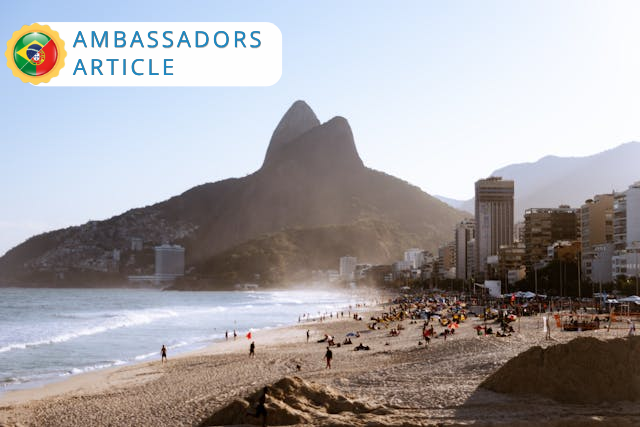
For me, the beach starts speaking long before I step on the sand. As I get closer to the shore, I already hear people talking loudly while Brazilian songs drift from portable speakers playing genres like sertanejo, samba, and funk, each soundtrack blending into the next as families and groups set up their umbrellas.
Mixed with the music are the unmistakable voices of vendors weaving through the crowd, calling out everything imaginable for sale. “Milho verde!” (corn on the cob), “Queijo coalho!” (grilled cheese on a stick), “Água de coco bem gelada!” (ice-cold coconut water). Some vendors carry coolers, some carry grills, some carry racks of clothes, and once, I even saw someone advertising “Vende-se carro” (car for sale) right there on the beach. It was so unexpected that I laughed out loud, but nobody around me found it strange. Scenes like that are just part of the rhythm of Brazilian beaches.
When I want to buy something, I usually get a vendor’s attention with “com licença” (excuse me), polite but light. Other times I use “opa!” (a friendly “hey!”), a classic informal call we use constantly, though in other contexts it might mean “oops,” “sorry” if you bump into someone, or even express surprise. If I’m sitting at a kiosk and need the waiter, I say “Amigo!” (friend). Even if we’ve never met, that word sets the tone warm, relaxed, and open. This is Portuguese shaped by place.
Throughout the day, I hear people greeting each other casually with “E aí?” (what’s up?) or checking in with “Tá tranquilo?” (all good?). Kids run past shouting, groups joke about who will carry the umbrella, and vendors make comments that get entire sections of the beach laughing. It’s noise, but it’s human noise—the sound of a space built for connection.
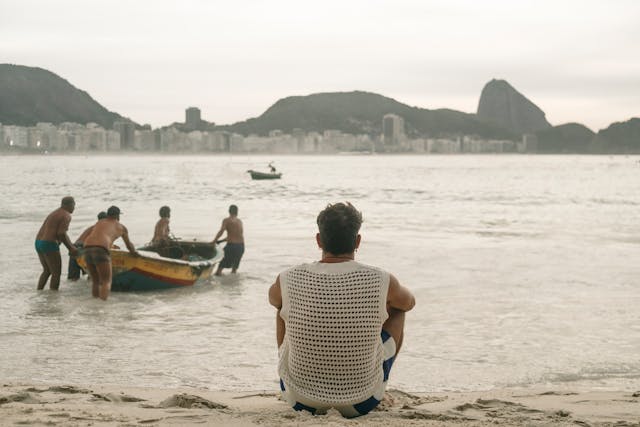
And when the sun begins to set, everything softens. The sky turns orange, pink, and purple, and the ocean reflects it like glass. I always stop and watch. No matter how many times I’ve seen it, that moment still feels magical. On Brazilian beaches, even the end of the day speaks its own language—quieter, slower, but still unmistakably alive.
Why the Beach Is the Best Classroom for Learning Brazilian Portuguese
A Brazilian beach creates the perfect environment for learning Portuguese because the language unfolds naturally around you. Every interaction becomes a mini-lesson, every vendor becomes a teacher, and every sound becomes real-world listening practice. The beach compresses immersion, culture, and communication into a single vibrant space where Portuguese feels alive rather than academic.
Here is why Brazilian beaches turn into powerful language classrooms the moment your feet touch the sand.
Immersion in Real Brazilian Portuguese at Every Moment
On the beach, Portuguese surrounds you in its most authentic form. Conversations happen at different speeds, accents mix together, and expressions flow naturally: greetings like “E aí?” (what’s up?) drift from one group to another, vendors call out products in quick rhythmic patterns, and friends tease each other in relaxed, melodic Brazilian intonation. This constant exposure forces your ear to adapt, helping you understand real speech rather than textbook examples.
Interaction With Vendors That Teaches Practical Portuguese
Brazilian beaches are social marketplaces. Vendors walk by offering milho verde (corn), queijo coalho (grilled cheese), açaí, drinks, clothes, sunscreen—everything. Each interaction becomes a functional speaking exercise. You ask “Quanto custa?” (how much is it?), negotiate prices, react with “Está caro!” (that’s expensive!) or “Barato!” (cheap!), and learn the friendly tone behind “Amigo!” (friend!) when calling someone over. These exchanges mirror everyday Portuguese far more closely than controlled classroom dialogues.
Learning Through the Soundscape of Brazilian Music and Voices
At the beach, Portuguese is never silent. Sertanejo, samba, and funk blend with laughter, greetings, and casual conversations happening all around you. This layered soundscape trains your listening skills in a realistic environment. You learn to distinguish voices, identify recurring expressions, and hear the musicality of Brazilian speech. Even without speaking, your comprehension grows simply by being surrounded by the rhythm of Portuguese.
Understanding Social Dynamics That Shape Brazilian Portuguese
Brazilian beach culture is famously warm and informal. People speak to strangers, joke easily, and use affectionate language patterns like “chefe” (boss), “querido” (dear), or “amigo” (friend) even with someone they just met. This environment teaches the sociolinguistic side of Portuguese: when to be polite, when to be informal, how tone changes meaning, and why warmth matters as much as vocabulary. The beach reveals the cultural logic behind the language.
Essential Portuguese for the Beach: Vocabulary You Need From Morning to Sunset
A full day at the beach in Brazil follows a natural rhythm, and so does the language you hear and use. From the moment you arrive and look for a place to sit, to the moment you pack up at sunset, each stage of the day brings a different set of interactions. The Portuguese that appears in these moments is practical, friendly, and rooted in lived experience. Below, I walk you through the vocabulary that truly matters on the sand—phrases I use myself every time I go to the beach.
Portuguese for Arriving and Setting Up Your Spot on the Beach
When I arrive, the first challenge is always finding the perfect place to sit—somewhere close to the water but not too close, ideally under a rented umbrella if the sun is strong. The moment you approach the chairs, the attendant usually asks “Vai querer cadeira e guarda-sol?” (Do you want a chair and an umbrella?). If you need help, you get someone’s attention with “com licença” (excuse me) or the very Brazilian “opa!” (a friendly hey!). Setting up is all about small negotiations and practical questions: choosing the spot, asking the price, or checking whether there’s shade.
Useful Vocabulary for Arriving and Setting Up
- A praia – the beach
- A cadeira – beach chair
- O guarda-sol – umbrella
- Alugar – to rent
- Quanto custa? – how much does it cost?
- Pode colocar aqui? – can you set it up here?
- Mais perto da água – closer to the water
- Mais longe da água – farther from the water
- Tem sombra? – is there shade?
- Com licença – excuse me
- Opa! – friendly hey!
- Preços – prices
- Troco – change (money)
Portuguese for Swimming, Playing, and Being in the Water
Once I’m settled, I almost immediately head to the water. The ocean in Brazil is a social place too—kids yelling “Vem, a onda tá boa!” (Come, the waves are good!), friends challenging each other with “Vamos mais fundo!” (Let’s go deeper!), and surfers passing by with a quick “E aí, beleza?” (Hi, all good?). Whether you’re swimming, jumping over waves, or just cooling off, you hear a mix of excitement, warnings, and playful language everywhere.
Useful Vocabulary for Swimming and Water Activities
- O mar – the sea
- A onda – the wave
- A água – the water
- Tá gelada! – it’s cold!
- Entrar no mar – to go into the sea
- Cuidado! – careful!
- Mergulhar – to dive
- Boia – float
- Vento – wind
- Correnteza – current
- Vamos nadar? – shall we swim?
- Tá fundo – it’s deep
- Fica perto – stay close
- Vem pra cá! – come here!
- A prancha – surfboard
Portuguese for Ordering Food, Drinks, and Talking to Vendors
At Brazilian beaches, food and drinks are never far away. Vendors walk constantly along the sand selling snacks, coconut water, beer, grilled cheese on a stick, peanuts, and açaí. Many of them announce their products loudly so everyone nearby hears what is available. When I want to buy something, I usually start with “amigo!” (friend!) or “com licença” (excuse me) to get their attention. Prices are often spoken rather than written, so asking “quanto custa?” (how much does it cost?) becomes a normal part of the interaction. These exchanges are short, friendly, and often repeated many times throughout the day.
Useful Vocabulary for Ordering Food and Talking to Vendors
- Comida – food
- Bebida – drink
- Água de coco – coconut water
- Cerveja – beer
- Suco – juice
- Açaí – açaí bowl
- Milho – corn
- Queijo coalho – grilled cheese on a stick
- Amendoim – peanuts
- Quanto custa? – how much does it cost?
- Tem comida? – do you have food?
- Que bebidas você tem? – what drinks do you have?
- Pode ser um? – can I have one?
- Está caro – it’s expensive
- Está barato – it’s cheap
- Amigo! – friend!
- Com licença – excuse me
Portuguese for Socializing, Watching the Waves, and Relaxing
After swimming and eating, the beach slows down into its most social moment. People sit under umbrellas talking, listening to music, and watching the waves roll in. Conversations start easily. Someone nearby might greet you with “E aí?” (what’s up?) or ask “Tá tranquilo?” (all good?). Even strangers often end up chatting for a few minutes about the weather, the waves, or the sunset. Brazilian beach culture encourages relaxed, friendly communication, and these simple expressions keep conversations flowing naturally.
Useful Vocabulary for Socializing and Relaxing
- E aí? – what’s up?
- Tá tranquilo? – all good?
- Tudo bem? – everything good?
- Beleza – cool / great
- Que vista bonita – what a beautiful view
- Olha o pôr do sol – look at the sunset
- Vamos relaxar – let’s relax
- Vamos conversar – let’s talk
- O vento – the wind
- O horizonte – the horizon
- A paisagem – the scenery
- A areia – the sand
- Que dia lindo – what a beautiful day
Portuguese for Packing Up and Leaving as the Sun Goes Down
At the end of the day, the beach slowly changes rhythm. The light softens, the heat fades, and people begin packing their chairs and towels while watching the sunset over the ocean. In Brazil, this moment often feels almost ceremonial. Groups pause conversations to look at the horizon, someone points and says “Olha o pôr do sol” (look at the sunset), and friends begin talking about heading home before the sky turns dark. When I start packing up, I usually thank the kiosk staff or the person who rented the chairs with a simple “obrigado” (thank you), gather my things, and say “vamos embora” (let’s go) to whoever came with me.
Useful Vocabulary for Packing Up and Leaving the Beach
- O pôr do sol – the sunset
- A toalha – towel
- A bolsa – bag
- As coisas – belongings / things
- Guardar – to pack away / put away
- Vamos embora – let’s go / let’s head out
- Já está ficando tarde – it’s getting late
- Obrigado / obrigada – thank you
- Até amanhã – see you tomorrow
- Boa noite – good evening / good night
- O horizonte – the horizon
- O céu – the sky
- As cores – the colors
Brazil vs Portugal: How Beach Culture and Portuguese Change Across the Atlantic
The biggest difference between beaches in Brazil and Portugal lies in how social the environment feels, and that difference directly shapes the Portuguese you hear. Brazilian beaches function as lively social spaces where strangers talk easily, vendors circulate constantly, and conversations happen everywhere. Portuguese beaches tend to feel quieter and more structured, with fewer spontaneous interactions and most communication happening inside cafés or restaurants rather than on the sand. These cultural contrasts are part of the broader differences between European and Brazilian Portuguese, where tone, vocabulary, and everyday interaction patterns often reflect the social environments in which the language is used.
Having spent much of my life in Brazil and time studying in Portugal, I’ve experienced beaches in both countries many times. The Atlantic Ocean connects them, yet the atmosphere, behavior, and even the language you hear on the sand feel noticeably different. The Portuguese language remains the same at its core, but the culture around the beach shapes how people speak and interact.
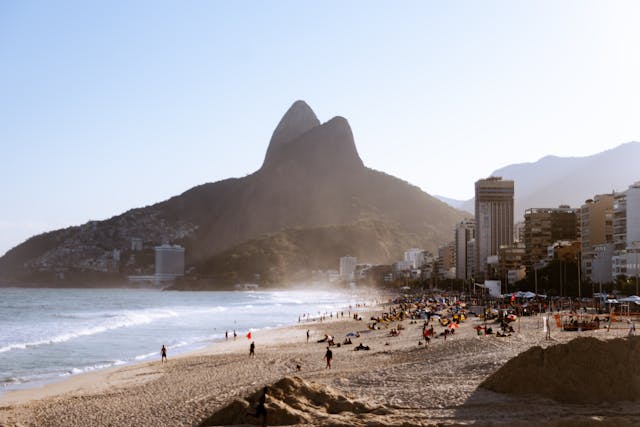
In Brazil, the beach is an extremely social and energetic environment. The moment I arrive and put my towel on the sand, I become part of a constant flow of interaction. Vendors walk by every few minutes asking “Quer alguma coisa?” (Do you want something?), offering everything from água de coco (coconut water) to grilled cheese on a stick, peanuts, shrimp, beachwear, and sometimes completely unexpected items. I once saw someone trying to sell a car right there on the beach, which made me laugh because it perfectly captured how informal and entrepreneurial Brazilian beaches can be. Prices are rarely displayed, so asking “Quanto custa?” (How much does it cost?) becomes part of the routine.
The soundscape is another big difference. Brazilian beaches tend to be lively and full of energy. Portable speakers play popular Brazilian music, people talk across umbrellas, and it’s very common for strangers to start chatting after a few minutes sitting near each other. A simple greeting like “E aí?” (What’s up?) can quickly turn into a longer conversation about where someone is from, how the water is that day, or which beach nearby has the best sunset. The language reflects that warmth. Words like “amigo” (friend), “chefe” (boss), or “meu amigo” (my friend) appear naturally even between people who just met.
Beaches in Portugal create a very different rhythm. The atmosphere is generally quieter and more reserved. Vendors walking along the sand are rare compared with Brazil, so most food and drinks come from cafés or restaurants near the beach rather than from people circulating among umbrellas. You usually see price boards or menus rather than negotiating directly with someone carrying a cooler. Because of that structure, the language used around Portuguese beaches often happens inside cafés rather than directly on the sand.
Another contrast appears in how people organize space. In Portugal, many beachgoers spread out and maintain a sense of personal distance. Groups often sit farther apart, and spontaneous conversations between strangers happen less frequently. In Brazil, umbrellas tend to cluster closer together, and social boundaries soften quickly. Someone nearby might comment on the waves or the heat, and suddenly you’re sharing a conversation, a playlist, or even snacks.
Clothing styles reveal cultural differences as well. In Brazil, beachwear is extremely casual and minimal, especially bikinis and swim shorts designed for very warm temperatures. In Portugal, the climate is cooler and the beach aesthetic often feels slightly more conservative, with more variety in swimwear styles and more people wearing light layers or covering up when they leave the water.
Despite all these contrasts, one element feels equally powerful in both places: the scenery. Brazilian beaches often stretch across wide, flat landscapes where the horizon seems endless. Portuguese beaches frequently sit below dramatic cliffs or rocky coastlines that create a completely different visual character. Standing in front of the ocean in either country reminds me that the same Atlantic connects these two cultures. The language may shift in tone and behavior, but the experience of watching the sea remains just as unforgettable.
How Brazilians Really Speak at the Beach: Slang, Contractions, and Natural Expressions
One of the biggest surprises for students learning Portuguese is how different real beach conversations sound compared with textbook Portuguese. The grammar is the same, but the style changes. Sentences become shorter, words get reduced, and Portuguese slang expressions appear constantly in casual conversations. Brazilian beaches are relaxed social environments, so people speak in a warm, informal way that prioritizes connection over perfect phrasing.
This is where learners often notice the gap between classroom Portuguese and everyday Brazilian speech. A textbook might teach “se bronzear” (to tan), but on the sand you are much more likely to hear “pegar um bronze” (to catch a tan). Similarly, Brazilian beaches have their own cultural vocabulary that reflects how people experience the place. Someone who spends every day by the ocean might be jokingly called a “rato de praia” (literally “beach rat,” meaning a person who lives at the beach). Meanwhile, a group arriving with bags full of homemade food and coolers might be labeled “farofeiros.”
The word farofeiro has a very specific cultural meaning in Brazil. It refers to day-trip beachgoers, often coming from inland towns, who arrive in large groups carrying everything they need for the entire day. The name comes from farofa, a toasted cassava flour dish that is commonly packed in large containers for these trips. The term is sometimes playful and sometimes slightly critical, depending on the tone and context.
Brazilian Portuguese also contains many expressions inspired by beach imagery that people use in everyday life. For example, the phrase “não é a minha praia” literally means “it’s not my beach,” but the real meaning is “that’s not my thing” or “that’s not my cup of tea.” Another expression, “nadar, nadar e morrer na praia,” translates literally as “to swim and swim and die on the beach.” Brazilians use it to describe someone who worked hard toward success but failed at the last moment.
Expressions like these show how deeply beach culture is woven into Brazilian Portuguese. Learning them does more than expand vocabulary. It reveals how Brazilians describe experiences, joke with friends, and interpret everyday situations through the language of the coast.
Brazilian Beach Slang and Expressions – Quick Takeaway
- farofeiro – a day-trip beachgoer who brings large amounts of food and supplies
Example: “Nossa, hoje só tem farofeiro na praia.”
(Wow, today the beach is full of farofeiros.) - pegar um bronze – to get a tan
Example: “Vamos pegar um bronze antes de entrar no mar.”
(Let’s get a tan before going into the sea.) - rato de praia – someone who spends all their time at the beach
Example: “Ele virou um rato de praia depois que se mudou para o Rio.”
(He became a beach rat after moving to Rio.) - não é a minha praia – it’s not my thing
Example: “Surfe não é a minha praia, prefiro nadar.”
(Surfing isn’t my thing, I prefer swimming.) - nadar, nadar e morrer na praia – to almost succeed but fail at the last moment
Example: “O time nadou, nadou e morreu na praia no campeonato.”
(The team almost won the championship but failed at the end.) - tirar onda – to show off
Example: “Ele pegou a prancha nova para tirar onda na praia.”
(He brought his new surfboard to show it off at the beach.)
Common Mistakes Tourists Make When Speaking Portuguese at the Beach
Speaking Portuguese at a Brazilian beach involves more than vocabulary. The biggest difficulties tourists face usually relate to tone, informality, and understanding how social interaction works in that environment. Brazilian beaches operate as relaxed communal spaces where conversations start easily and language reflects warmth rather than formality. Visitors who rely strictly on classroom Portuguese often make small sociolinguistic mistakes that make their speech sound distant or overly formal.
1. Speaking Too Formally
Many learners assume that politeness in Portuguese requires formal expressions such as “por gentileza” (kindly) or long, carefully structured sentences. On Brazilian beaches, this level of formality feels out of place. People tend to speak simply and directly. A relaxed “com licença” (excuse me) or a friendly “moço” (sir) or “moça” (miss) sounds much more natural in this setting.
2. Waiting Quietly Instead of Calling Someone
In many countries, people wait silently for a waiter to approach. On Brazilian beaches, especially at kiosks, that approach rarely works. Vendors and staff expect customers to signal that they need something. Calling out “moço!” (sir!) or “com licença!” (excuse me!) in a friendly tone is normal and polite. Remaining silent often means waiting much longer than necessary.
3. Focusing Too Much on Perfect Grammar
Another mistake involves worrying too much about grammatical accuracy in casual conversations. Beach Portuguese tends to be relaxed and abbreviated. Instead of saying “você está tranquilo?” (are you okay?), people often say “tá tranquilo?” (all good?). In this context, tranquilo refers more to the situation being fine or under control rather than to someone’s emotional state. These shorter forms dominate everyday speech. Trying to maintain perfectly structured textbook Portuguese can make speech sound unnatural in informal environments.
4. Avoiding Conversations With Strangers
Brazilian beach culture encourages spontaneous conversation. Someone sitting nearby might comment on the weather, the waves, or the sunset. Tourists sometimes respond briefly or withdraw from these interactions because they feel unsure about their language skills. Engaging in these small conversations creates the most authentic learning moments and reflects the social nature of Brazilian beach life.
5. Hesitating to Ask About Prices or Recommendations
Another common hesitation involves asking questions such as “quanto custa?” (how much does it cost) or requesting suggestions from locals. These questions are completely normal at Brazilian beaches because prices are not always displayed and people frequently ask vendors or other beachgoers for advice. Asking about food, drinks, or the best place to watch the sunset fits naturally into the culture.
Understanding these small cultural patterns makes speaking Portuguese at the beach much easier. Warmth, simplicity, and openness guide communication in this environment. Once visitors adjust to that style, conversations begin to flow naturally.
A 20-Minute Activity to Learn Brazilian Beach Portuguese Fast
When I teach beach Portuguese to beginners, I start with mindset, not vocabulary. The beach in Brazil is a social environment where communication matters more than perfection. I usually tell students something simple before we begin: relax. Brazilians will usually help you if you make an effort. Smiling, trying a few words, and staying open to interaction already puts you halfway into the conversation.
Once that idea is clear, I introduce vocabulary as a system, not as isolated words to memorize. A Brazilian beach works like a small ecosystem of repeated situations. People ask about prices, react to what vendors say, order food or drinks, ask where something is, or comment on the weather and the ocean. When learners understand those patterns, they understand how conversations actually unfold.
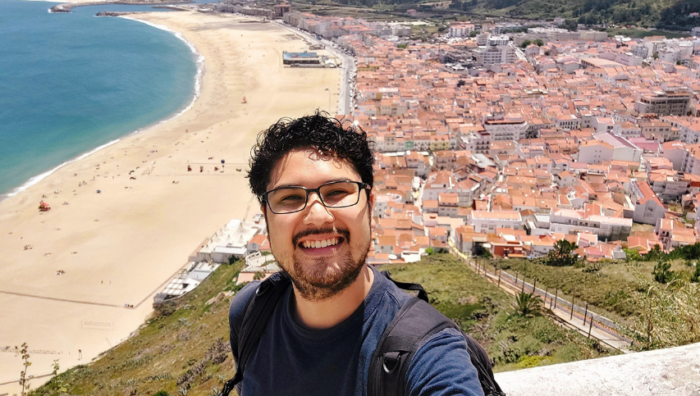
“A small number of well-chosen words, combined with curiosity and social awareness, is often enough to start real conversations—even on a busy Brazilian beach.” – Lucas Abiko
For a quick classroom activity, I recreate that environment. I divide students into three roles: vendors, beachgoers, and observers. The “vendors” walk around the room offering imaginary items like água de coco (coconut water), milho (corn), or cerveja (beer). The “beachgoers” must interact using a few key functional phrases: asking “quanto custa?” (how much does it cost), reacting “tá caro!” (that’s expensive) or “tá barato!” (that’s cheap), and ordering something simple. The observers listen and note which expressions helped the conversation move forward.
After a few minutes, we rotate roles. The important point is not memorizing sentences. The goal is to experience how Portuguese operates in real interactions. Students quickly notice that communication happens through small building blocks: attention-getters, price questions, reactions, and short responses. That discovery builds confidence far more effectively than rehearsing scripted dialogues.
At the end of the activity, I ask students one final question: What words helped you survive the conversation? Almost always, they mention the same few expressions. That moment reveals an important truth about language learning. A small number of well-chosen words, combined with curiosity and social awareness, is often enough to start real conversations—even on a busy Brazilian beach.
Learn Portuguese With Native Teachers Who Bring Culture Into Every Lesson
Learning Portuguese becomes much easier when the language is taught through real experiences rather than abstract grammar rules. Brazilian Portuguese is deeply connected to everyday life, social interaction, and cultural habits. A teacher who understands those contexts helps students move beyond vocabulary lists and start communicating naturally in situations like ordering food, asking locals for recommendations, or chatting with people on the beach.
At Language Trainers, Portuguese courses focus on exactly that kind of practical learning. Lessons are taught by native-speaking instructors who design classes around the student’s goals, interests, and travel plans. Some learners want to prepare for business meetings, while others want to feel comfortable navigating everyday conversations during a trip. The teaching approach adapts to those needs, combining cultural insight with structured language practice so that students gain confidence in real-world situations.
Personalized speaking practice often makes the biggest difference. One of our students, Mark Feldman, took Portuguese lessons in person in Los Angeles before spending a summer traveling along Brazil’s coastline.
“My goal was simple: I wanted to talk to people when I got to Brazil instead of relying on English everywhere. My teacher focused heavily on speaking practice and real-life scenarios like ordering food, asking about prices, or chatting with locals. When I finally arrived in Rio and started traveling down the coast, those conversations felt surprisingly natural. I wasn’t fluent, but I could connect with people, and that changed the whole experience of the trip.”
Experiences like Mark’s show why learning with native teachers matters. Language is not just a set of words to memorize. It is a way of interacting with people and understanding the culture around you. When lessons reflect real situations—from beaches and restaurants to markets and everyday conversations—Portuguese stops feeling like a subject and starts becoming a tool for connection.
Contact Language Trainers now to start learning Portuguese with a native teacher and prepare for your own conversations in Brazil. Whether you want to travel along Brazil’s coastline, connect with locals on the beach, or do business in Rio, our teachers design personalized lessons that help you communicate naturally and confidently.
Frequently Asked Questions About Brazilian Portuguese for Travel and Beach Conversations
1. What Portuguese phrases do I need to know for a Brazilian beach?
Some of the most common Portuguese phrases for Brazilian beaches include “quanto custa?” (how much does it cost), “com licença” (excuse me), “tem bebida?” (do you have drinks), “água de coco” (coconut water), and “tá caro” (that’s expensive). These expressions help you order food, talk to vendors, and interact naturally with locals.
Brazilian beaches are highly social environments, so simple greetings such as “E aí?” (what’s up) or “tudo bem?” (all good) often start conversations. Learning a small set of practical phrases usually makes beach interactions much easier and more enjoyable.
2. Do people speak English at Brazilian beaches?
English is not widely spoken at most Brazilian beaches, especially outside major tourist areas such as Rio de Janeiro or Florianópolis. Vendors, kiosk staff, and local beachgoers usually communicate primarily in Portuguese.
Learning a few basic Portuguese expressions helps visitors order food, ask about prices, and interact with locals more easily. Even simple phrases often lead to friendlier interactions because Brazilians appreciate when visitors try to speak their language.
3. What is the difference between Brazilian Portuguese and Portuguese from Portugal?
Brazilian Portuguese and European Portuguese share the same grammar and vocabulary foundation, but pronunciation, rhythm, and everyday expressions differ significantly. Brazilian Portuguese tends to sound more open and melodic, while European Portuguese often sounds faster and more compressed.
Vocabulary and cultural expressions vary as well. Certain words, slang, and informal phrases used in Brazil—especially in social environments like beaches—may sound unfamiliar to speakers from Portugal.
4. How can I learn Brazilian Portuguese quickly before traveling to Brazil?
The fastest way to learn Brazilian Portuguese before traveling is through focused speaking practice with a native teacher who teaches real-life communication. Lessons built around travel situations—ordering food, asking for prices, and making small talk—help learners gain confidence quickly.
You can also combine lessons with free Portuguese learning resources such as vocabulary guides, listening exercises, and cultural articles that reinforce what you learn in class. Language Trainers offers personalized Portuguese courses with native instructors, available both online and in person. These tailored lessons focus on practical communication so students feel comfortable speaking Portuguese in everyday situations throughout Brazil.